
By Emmy Powell
Communications Specialist
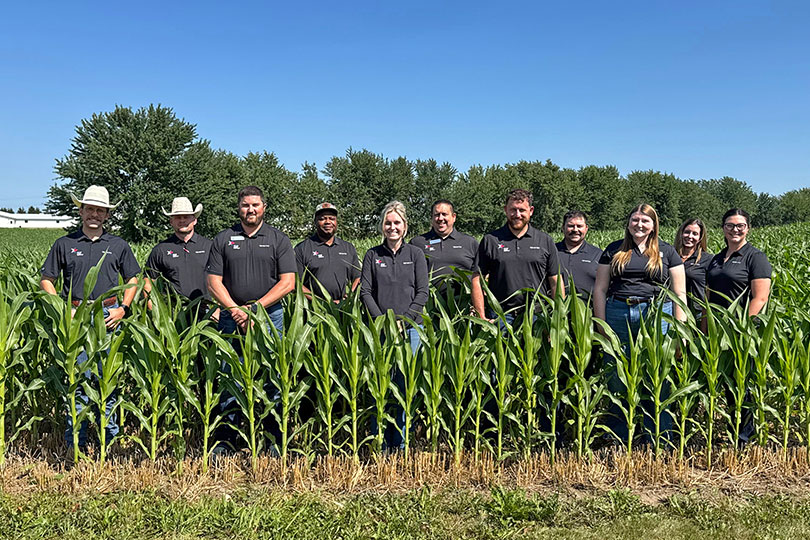
Trade was top of mind for members of Texas Farm Bureau’s (TFB) AgLead XVII class as they traveled across Canada to learn more about agriculture in the neighboring country.
During the weeklong trip, the class met with government officials, agricultural organizations, researchers and farmers while learning how policy, trade and innovation shape Canadian agriculture.
Tariffs and the U.S.-Mexico-Canada Agreement (USMCA) were among the most common topics discussed during the trip, reinforcing the importance of trade between the two countries.
“One message we heard over and over was that producers on both sides of the border want a stable trade relationship,” Paul Hayes, Hood-Somervell County Farm Bureau member, said. “For many Canadian farmers, it’s easier to move products into the U.S. than across Canada. Just like us, they want to focus on farming and ranching, and they know that depends on strong trade partnerships.”
Canada is consistently one of the United States’ top two trading partners, and the U.S. is Canada’s largest trading partner.
“Canada depends on the U.S., and the U.S. depends on Canada,” he said. “No matter where we went, people emphasized the value of keeping those relationships strong because they’re critical to agriculture and rural economies in both countries.”
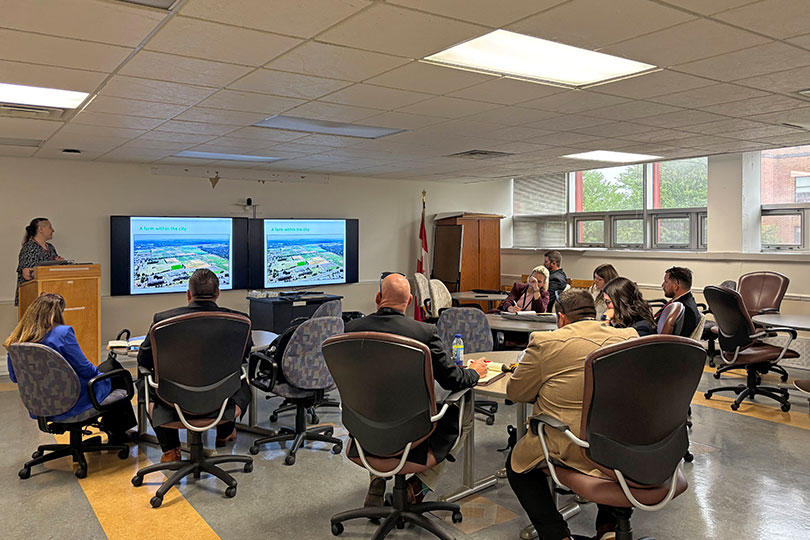
The trip also gave participants the opportunity to see agriculture from both Canadian and American perspectives.
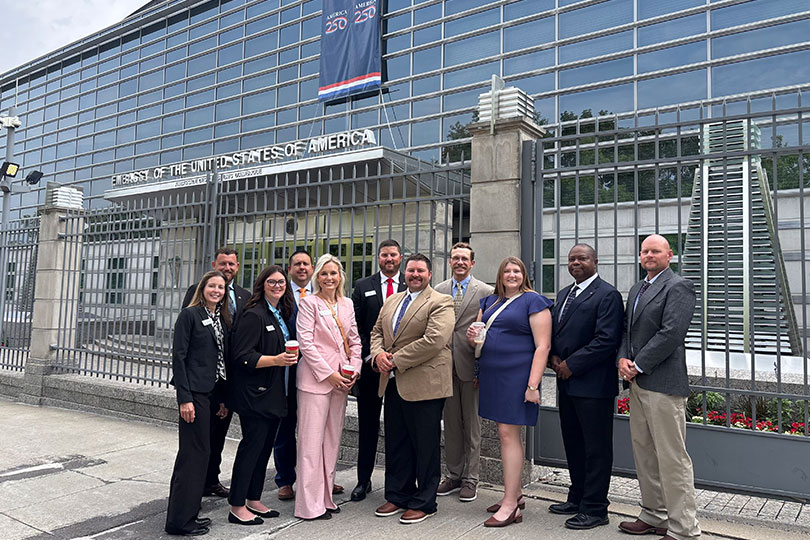
In Ottawa, the cohort learned about Canada’s governmental structure and agricultural priorities before meeting with officials at the U.S. Embassy to better understand how American interests are represented abroad.
“It was interesting to hear both perspectives,” Kylie Kitten, Hale County Farm Bureau member, said. “We learned how Canadian agriculture and government operate, but we also got to see the work being done through the U.S. Embassy to support American agriculture and strengthen that relationship.”
One of Kitten’s favorite experiences came during a discussion with a Canadian farmer who shared how he connects consumers, first responders and local communities with agriculture.
“While we’re from different countries, farmers and ranchers are facing many of the same challenges,” she said. “We’re all trying to grow a crop, support our families and navigate things happening beyond the farm and ranch. It was a reminder that agriculture in our two countries is more alike than different.”
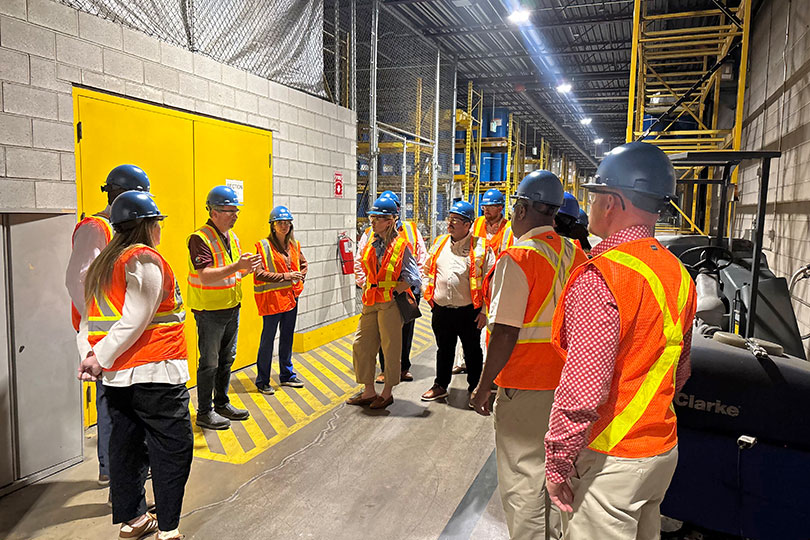
The cohort also met with representatives from Agriculture and Agri-Food Canada, the Canadian Agri-Food Trade Alliance, the Canadian Cattle Association and the Ontario Federation of Agriculture. They toured Parliament Hill, research facilities, agribusinesses and farms across Ontario.
About AgLead
The international trip is part of AgLead, TFB’s two-year leadership development program that helps farmers, ranchers and agricultural professionals strengthen their leadership, communication and advocacy skills while broadening their understanding of issues affecting agriculture.
AgLead XVII kicked off the two-year program in February in Waco.
The cohort’s next session will be in Austin and Washington, D.C., in September.
For more information about the program, visit texasfarmbureau.org/aglead.
Leave A Comment