
What is the New World screwworm?
The New World screwworm (Cochliomyia hominivorax) is a flesh-eating parasite that targets warm-blooded animals, including cattle, horses, sheep, goats, birds, wildlife and even pets.
Unlike other flies, the screwworm lays eggs near open wounds and mucous membranes. When the eggs hatch, the larvae burrow into living tissue, feeding as they grow—causing painful, often deadly wounds.
Identifying the screwworm
The name screwworm refers to the maggots’ feeding behavior. They burrow into the wound or tissue feeding as they go like a screw being driven into wood. Maggots cause extensive damage by tearing at the hosts’ tissue with sharp mouth hooks. The wound can become larger and deepen as more maggots hatch and feed on living tissue.
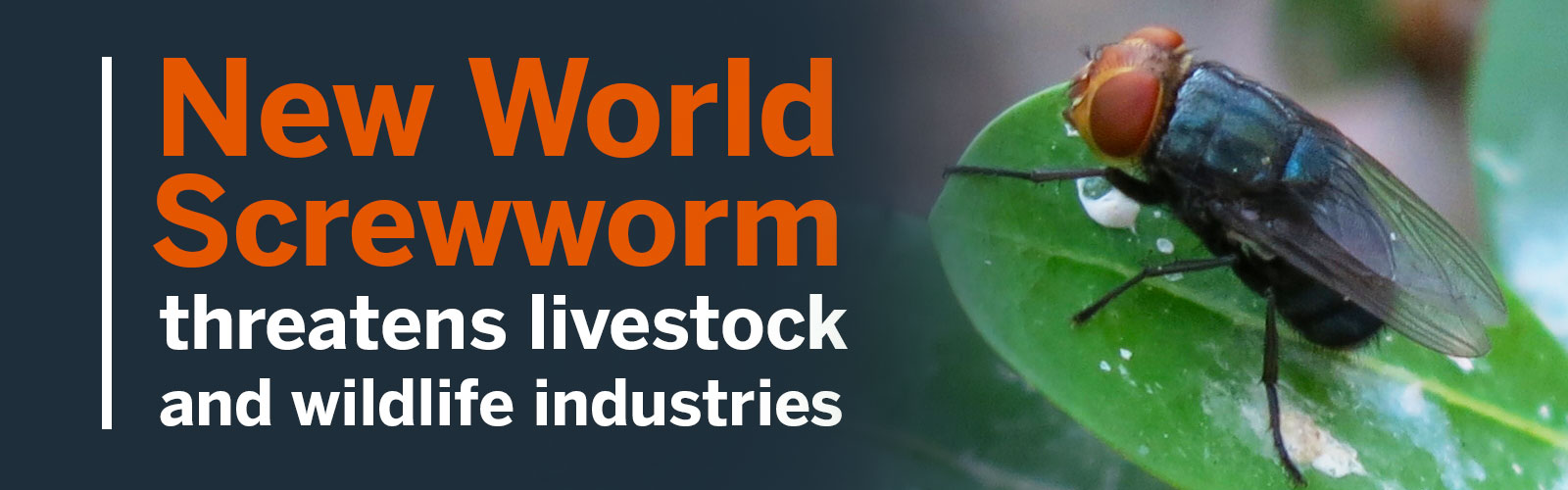
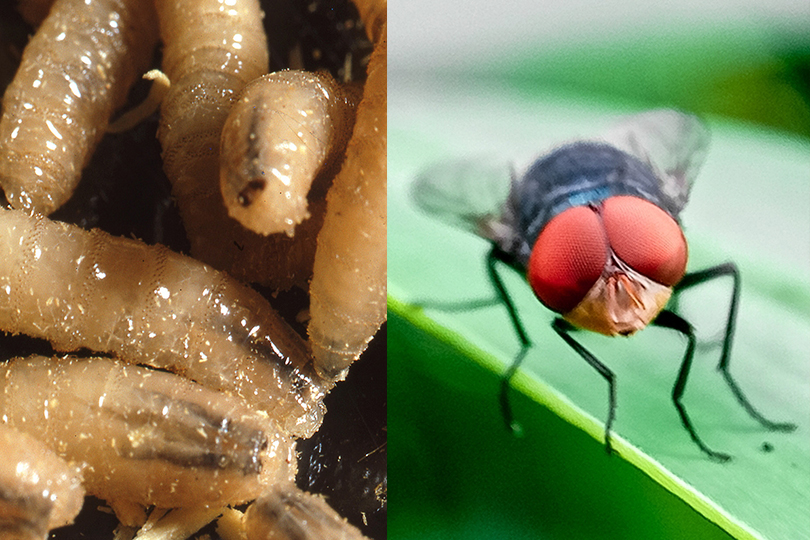
Adult screwworm flies are about the size of a common housefly. They have orange eyes, a metallic blue or green body and three dark stripes along their backs.
NWS larvae have a series of backwardly protruding spines around a tapered body, giving a screw-like appearance, helping to identify the pest.
Mexican livestock imports suspended
The U.S. Department of Agriculture (USDA) suspended livestock imports from Mexico to prevent the spread of the New World screwworm (NWS) into the U.S.
This suspension will continue on a month-by-month basis until a significant window of containment is achieved, according to USDA.
Texas Farm Bureau continues to engage with USDA staff and cattle industry leaders. While the suspension poses economic and supply chain challenges, the potential devastation of a screwworm outbreak in Texas would be far worse.
Where is the screwworm now?
New World screwworm was first confirmed in Texas on June 3. Additional cases have since been announced.
Visit screwworm.gov for an updated map of confirmed cases, situational updates, and additional information from USDA.
Protect your livestock
The New World screwworm is attracted to open wounds and mucous membranes where they lay their eggs.
Any wounds should be examined for an infestation of larval flies/maggots.
It is recommended to:
- Inspect livestock daily, especially around wounds, eyes, ears, nostrils, navels, and reproductive organs.
- Treat open wounds, scratches and scabs.
- Monitor newborn livestock and breeding stock closely.
- Inspect your clothing, boots, vehicles and equipment on your farm and ranch
Signs of an infestation
Signs of an NWS infestation may include:
- Fly larvae (maggots) in wounds
- Foul odor or smell of decay
- White or cream-colored runny substance (the eggs) in and around a wound
- Bloody or light-colored drainage from a cut or wound
- A cut or wound that rapidly worsens or grows
- Irritated or unusual behavior
- Head shaking
- Fever and other signs of secondary infection
- Reduced appetite
Reporting an infestation
Early detection and reporting are critical.
If you suspect a case:
- Isolate the animal.
- Contact your veterinarian.
- Report to the Texas Animal Health Commission (TAHC) immediately.
TAHC Regional Offices (8 a.m.–5 p.m.):
- Amarillo: 806-641-7000
- Beeville: 361-358-3234
- Giddings: 979-212-5440
- Laredo: 956-568-5741
- Stephenville: 512-556-6277
- Sulphur Springs: 903-919-3748
After Hours or Weekends:
TAHC Headquarters On-Call Veterinarian: 1-800-550-8242
Know Your Zone
The Texas Animal Health Commission has an interactive map that allows Texans to enter an address and determine whether they are located in a New World screwworm zone.
The map also provides information on movement restrictions and response measures that may apply in your area.
What are USDA and TAHC doing?
State and federal officials have prepared for this situation and are implementing an aggressive response plan from the New World Screwworm Playbook.
Current efforts include:
- Increased surveillance, trapping, and inspections in affected areas
- Quarantines and movement restrictions when necessary
- Targeted releases of sterile New World screwworm flies in response areas
- Sterile fly dispersal operations along the U.S.-Mexico border and into South Texas
- Construction of a domestic sterile fly production facility at Moore Air Base in Edinburg
Additional Resources
In the news
Sterile fly dispersal drives effort to stop NWS spread
Bellinger named senior advisor for NWS preparedness
Abbott expands disaster declaration for New World screwworm
New World screwworm confirmed in three-week-old calf in Texas
APHIS to host New World screwworm listening sessions
USDA to combat screwworm with Texas sterile insect facility
TFB urges quick passage by Congress of ‘STOP Screwworms Act’
TFB urges support for domestic sterile fly facility
USDA suspends Mexican livestock imports over screwworm concerns
U.S., Mexico reach agreement to combat screwworm threat
USDA tells Mexico to fight screwworms or face trade restrictions