
By Emmy Powell
Communications Specialist
Students in grades K-5 took a virtual field trip to a pumpkin farm through Texas Farm Bureau’s (TFB) Farm From School program.
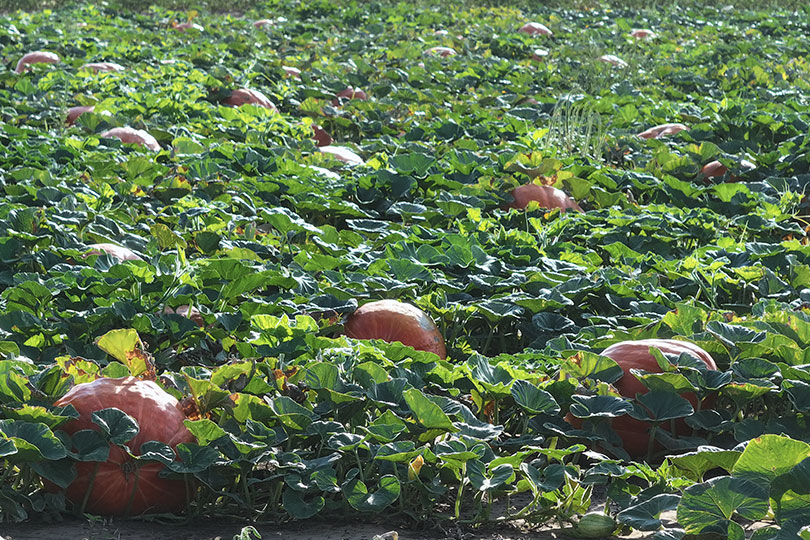
During the session, Lindsey Pyle, co-owner of Pumpkin Pyle in Floydada, shared how pumpkins grow, the role bees play in pollination and the work it takes to grow and sell pumpkins.
The Pyles grow about 63 varieties of pumpkins.
Before planting, they prepare the fields with a wheat cover crop to help protect young pumpkin plants from West Texas winds and heavy rain. The pumpkin vines can spread 15 to 20 feet in different directions.
“The bees move pollen from one flower to the other,” Pyle said. “Growing pumpkins absolutely doesn’t happen without bees,” Pyle said.
Students also learned how weather affects pumpkin production. Pumpkins need about 30 inches of water annually, and the Pyles use pivot and drip irrigation to water their fields.
Hot, dry conditions this summer reduced the number of pumpkins produced per plant. Instead of the typical five or six pumpkins, plants produced about two or three, Pyle said.
“Our yields are way down,” she said. “The plants are trying to survive in 100 degrees.”
They must manage pests and diseases, including grasshoppers, squash bugs and powdery mildew, to protect the crop.
Crop rotation is another important part of pumpkin production. Pyle said they wait three years before planting pumpkins in the same field again.
Harvesting pumpkins requires significant labor.
“All of this has to be harvested by hand,” Pyle said. “There’s no machine that will pick these pumpkins.”
Workers cut pumpkins from the vines by hand and place them in large cardboard bins to minimize handling and damage. Tractors, trailers and forklifts help move the pumpkins, and modified school buses are used to transport harvested pumpkins through the fields.
With the help of about 100 to 150 employees, they harvested an estimated 21 million pounds of pumpkins this year.
After harvest, pumpkins are transported to the farm’s warehouse and shipped to customers, including grocery stores, pumpkin patches and corn mazes.
The Pyles also make pumpkin honey from their honeybees.
More information about Farm From School
Through Farm From School, K-5 students virtually meet with a farmer, rancher or agricultural professional once a month. This semester, students have learned about oysters and will learn about grain sorghum and beef cattle in upcoming sessions.
Students in grades 6-12 learned about turfgrass production in September and will learn about drones in November.
Registration for the Spring 2027 program is open through Jan. 11.
Educators can register at texasfarmbureau.org/aitc.
Click here for more information about the Farm From School program.
Visit texasfarmbureau.org/aitc for more information and the latest announcements on TFB’s Agriculture in the Classroom® activities.
Leave A Comment