
By Shelby Shank
Field Editor
A warm, wet spring has helped crops and pastures grow across Texas, but it has also created ideal conditions for several damaging pests.
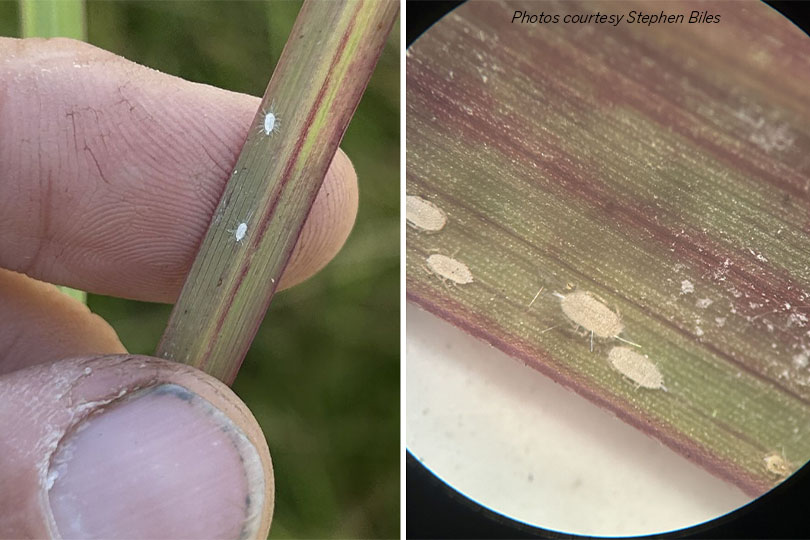
The biggest concern is the pasture mealybug, an invasive pest that has spread rapidly over the past month.
Unlike many pasture pests that cause temporary damage, the mealybug can kill forage grasses in a short amount of time.
The pest threatens Bermuda hay, Bahia grass and native bluestem grasses that ranchers rely on to feed livestock.
So far, it has been detected throughout South Texas, along the Gulf Coast, in Central Texas and as far west as Gillespie County. Drier conditions farther west may help slow its spread.
Treatment options remain limited as there are currently no labeled pasture insecticides proven effective against the pest.
Ranchers are encouraged to closely monitor their pastures and contact their local Texas A&M AgriLife Extension office if they suspect an infestation.
Rice growers are also closely monitoring rice delphacid populations.
The insect feeds on plants by sucking sap and can cause plant death or reduced grain weights. It is expected to move into Southeast Texas rice fields by mid-June.
To help manage the pest, Texas recently received an emergency Section 18 label for Courier SC insecticide. The product is an insect growth regulator that primarily targets immature nymphs.
Corn growers are facing concerns from both corn leafhoppers and corn leaf aphids.
Corn leafhoppers can spread plant diseases that reduce yields. While populations are currently concentrated in South Texas, the pest could move northward as the season progresses. Farmers are encouraged to protect their crops through the R1 growth stage.
Corn leaf aphids are a concern for farmers in North Texas and the Panhandle. It’s recommended that farmers begin scouting fields before tasseling and treat when populations reach economic thresholds.
The two-spotted cotton leafhopper, also known as cotton jassid, has only been detected in nursery settings this year. No infestations have been reported in commercial cotton fields at this time.
“Farmers and ranchers have done a good job managing through challenging weather conditions this spring,” said Brant Wilbourn, Texas Farm Bureau associate director of Commodity and Regulatory Activities. “Regular scouting and early identification remain some of the most effective tools farmers and ranchers have to minimize damage and protect their fields.”
Leave A Comment