
By Emmy Powell
Communications Specialist
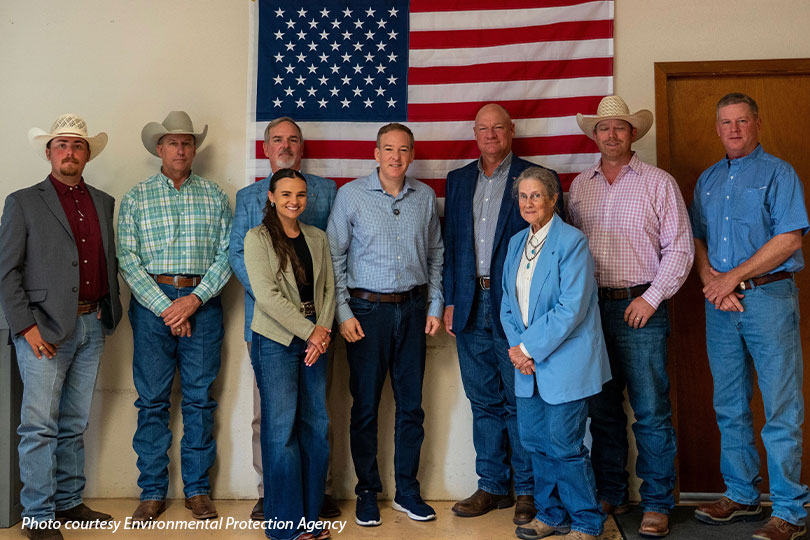
Texas Farm Bureau leaders recently met with U.S. Environmental Protection Agency (EPA) Administrator Lee Zeldin to discuss pressing regulatory concerns and the impact of federal policies on agriculture.
The roundtable conversation focused on diesel exhaust fluid (DEF) requirements, crop protection tools and animal health threats like New World screwworm.
Texas Farm Bureau (TFB) Secretary-Treasurer Brian Adamek said the willingness of agency officials to engage directly with farmers stood out the most.
“The fact that they’re willing to come out and have conversations with producers and are addressing the issues that are facing us right now and making some changes that’ll help us, it was a great conversation and step,” Adamek said.
Among the top concerns raised was the impact of diesel exhaust fluid (DEF) requirements on farm equipment. The group noted that DEF sensor failures can bring work to a halt at critical times in the season.
“When we’re trying to do our work in the field and we get slowed down by something as simple as an emissions code, we can’t wait three or four days,” he said. “We have storms and other problems chasing us. We can’t wait for technicians to get out there and solve a problem that’s not detrimental to the engine.”
Recent EPA action to provide flexibility on DEF requirements was viewed as a positive step.
“We have a lot of regulations in this country that other countries don’t have,” Adamek said. “We spend probably $80,000 more per tractor, because they don’t have to have those emissions on their tractors. The administration understands that and is willing to come out and listen.”
In addition to equipment regulations, the conversation with EPA highlighted the importance of maintaining access to crop protection tools and preparing for potential animal health threats.
“We got into pesticides and herbicides that are important in our arsenal, because quite frankly, I don’t know if producers could farm or ranch without them,” he said.
The growing concern over New World screwworm and the need for rapid access to treatment options was also discussed.
“We need to be able to have all the tools to be able to combat the screwworm once it does get to Texas. That includes fast tracking any kind of medicines that we could treat cattle and other livestock with,” Adamek said.
He stressed that ongoing communication between government agencies and the agricultural community is essential to developing workable policies.
“For them to come out and get the other side of the story with producers, that’s great,” Adamek said. “If they based everything on environmental issues, we wouldn’t be able to function.”
Several county Farm Bureau leaders participated in the roundtable with Adamek.
Members in attendance included Warren Seidel, Warner Seidel, Chad Hahn, Keith Bowman, Gonzales County Farm Bureau President Haley Clampit, Live Oak County Farm Bureau Vice President Harriet Lamm and Tel Lindemann.
As regulatory discussions continue, this collaboration is important.
“The administrator was very open to us about what’s going on and that he’s working for us, and they want what’s best for agriculture,” Adamek said.
The meeting was hosted at the Gonzales County Farm Bureau Office on April 11.
Leave A Comment