
By Julie Tomascik
Editor
The first case of New World screwworm (NWS) in U.S. wildlife has been confirmed in a hunter-harvested elk in Pecos County, according to the U.S. Department of Agriculture (USDA).
The female elk was harvested on a game ranch, and a sample collected from the animal was confirmed positive for NWS Oct. 21 at the USDA Agricultural Research Service’s Knipling-Bushland U.S. Livestock Insects Research Laboratory in Kerrville.
The detection marks another development in the ongoing NWS outbreak that has affected livestock in Texas and New Mexico since the first U.S. case was confirmed in a Zavala County calf in June.
The Texas Animal Health Commission (TAHC) will modify an existing NWS infested zone following the latest detection. USDA and the Texas Parks and Wildlife Department (TPWD) are also conducting additional wildlife surveillance in the area.
Hunters urged to inspect wildlife
TPWD is encouraging hunters and landowners to watch for signs of NWS in wildlife and inspect harvested animals before field dressing or moving carcasses.
“We encourage all hunters and landowners to be vigilant for signs of New World screwworm while they are out in the field this season,” Alan Cain, TPWD Wildlife Division director, said. “The partnership between TPWD biologists and local hunters and landowners expedited the identification and confirmation of this new detection.”
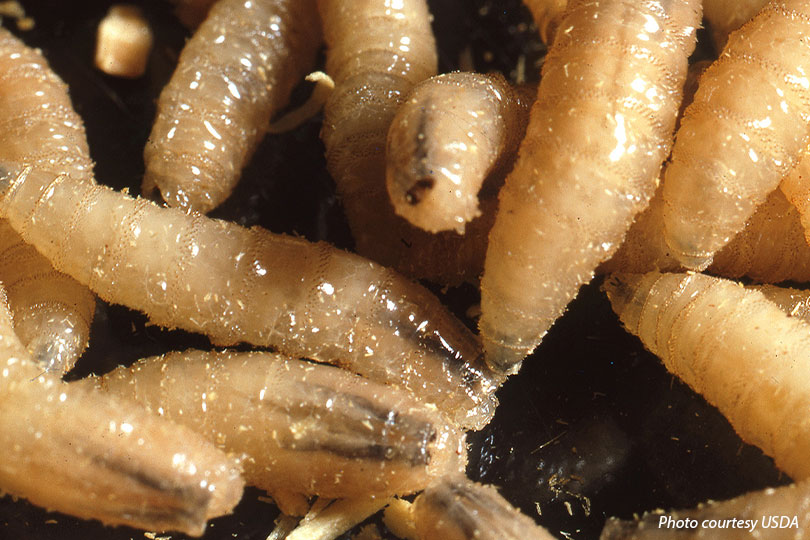
NWS is a parasitic fly whose larvae feed on the living tissue of warm-blooded animals. Infestations can cause severe tissue damage and may be fatal if left untreated.
Hunters should watch for open or enlarging wounds, foul odors and visible maggots. Infested animals may also exhibit unusual behavior, including head shaking, weakness, loss of appetite or isolation from other animals.
TPWD recommends thoroughly inspecting harvested animals, particularly around the eyes, ears, nose, mouth and genital areas. Hunters should also check the feet, between the toes and other areas for wounds or signs of infestation.
Early detection and reporting are critical to limiting the spread of NWS among wildlife, livestock and companion animals.
Suspected NWS infestations in wildlife should be reported to a local TPWD wildlife biologist or by calling 512-389-4505.
Suspected cases in livestock and companion animals should be reported to TAHC at 1-800-550-8242.
Additional information, including inspection guidance for hunters and landowners, is available at screwworm.texas.gov.
Leave A Comment