
By Emmy Powell
Communications Specialist
Texas students in grades 6-12 learned about forestry and lumber production during the final spring semester session of Texas Farm Bureau’s (TFB) Farm From School program.
The virtual field trip highlighted a sawmill and explained how trees are transformed into lumber products used in homes, decks and construction projects across the country.
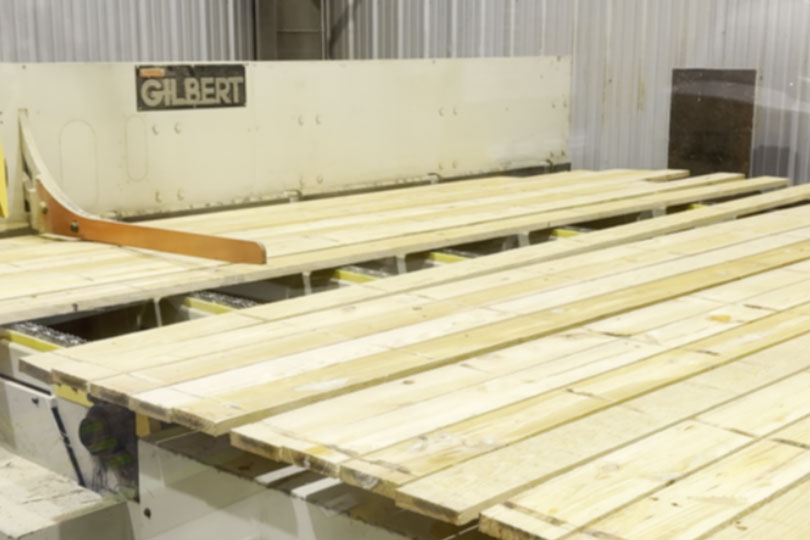
During the session Damon Burris, a forester with Steely Lumber Company in Huntsville, showed students several parts of the mill—including the head rig, resaw, board edger and gang saw—where logs are processed into dimensional lumber such as 2x4s, 2x6s and decking boards.
Pine timber in East Texas is grown on a 28- to 32-year rotation.
“We plant baby tree seedlings, and at about 28 to 32 years old, depending on the soil and the weather, they reach full maturity, and we do a final harvest and then immediately replant it,” Burris said. “We are tree farmers. We’re just like any other farmer growing a crop. It just takes 28-plus years for us to get from A to B to the end product, and then we start all over again.”
Burris explained how advanced technology and scanners help maximize the value of every log.
“We input market prices into the computers daily,” he said. “The system measures the logs, identifies knots and determines the best products to cut from each one.”
Steely Lumber processes about 45 truckloads of logs and produces around 300,000 board feet of lumber daily.
Students learned that nearly every part of the tree is utilized.
Sawdust and wood shavings are used to make wood pellets, and bark is turned into mulch and potting soil. Wood chips are used for playground materials or paper production.
Burris also taught students where knots on trees come from.
“Pine trees are a shade intolerant species. So, everywhere there’s a limb, as the tree gets older, that limb will die and fall off when it gets too much shade. The area where the limb came off the tree, that’s called the knot,” he said. “If you look at a piece of lumber, you’ll see that dark circle in it. That’s going to be where the knot was. All trees have limbs, so all trees have knots.”
The virtual visit finished with a look at the mill’s dry kiln system, where lumber is dried to reduce moisture content before treatment and use in construction.
In addition to learning about forestry and lumber production, students explored career opportunities connected to the industry, including forestry, welding, electrical work, mechanics, IT and emerging technology fields.
“We’re definitely advancing in technology every year,” Burris said. “AI and computer systems are becoming a bigger part of the sawmill industry.”
Burris noted that one of his favorite parts of the job is interacting with people and helping landowners manage their timber resources.
“I really enjoy showcasing what we do,” he said. “I don’t think many people realize the lumber business is agriculture, and it’s something we’re really proud of.”
This spring, students in grades 6-12 also learned about bull production.
Students in K-5 grades learned about onion production, peanut shelling, peaches and wheat milling.
Registration for Fall Farm From School opens June 4.
More information about TFB’s Ag in the Classroom programs is available through Texas Farm Bureau Ag in the Classroom.
Leave A Comment