
By Emmy Powell
Communications Specialist
Texas students in grades K-5 learned how grain sorghum is grown, harvested and used during this month’s virtual visit through Texas Farm Bureau’s (TFB) Farm From School program.
Zachary Mengers, a fifth-generation South Texas farmer, shared about his family’s operation and the crop’s role in agriculture.
“My family’s been farming here in this area since 1911, so a little over 100 years,” he told the students. “And we grow corn, cotton, grain sorghum, sesame, and we also raise cattle.”
Mengers explained the growth stages of grain sorghum, from when it first emerges from the ground to the development of its seed head and pollination.
The crop takes about 100 to 120 days from planting to harvest.
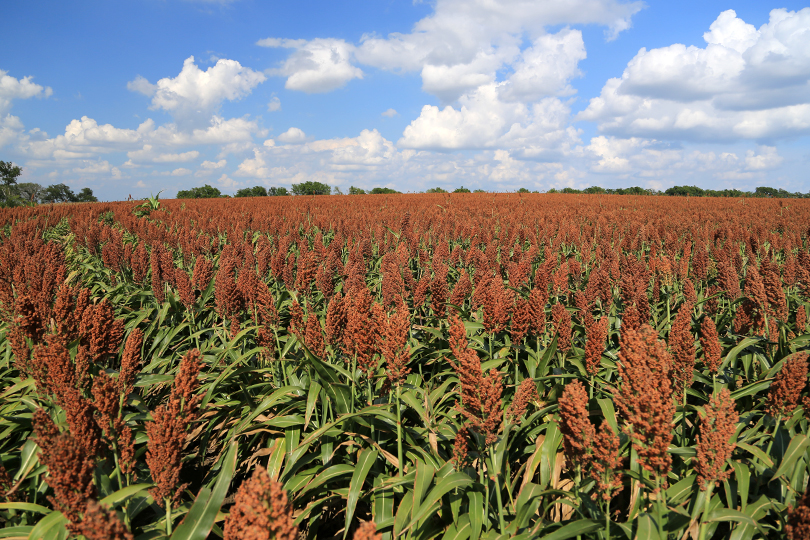
As the grain matures, its color changes from green to yellow, red and eventually dark maroon. Mengers said the color helps farmers know when the grain is nearing harvest. It must also reach the proper moisture level, around 15%, before it can be harvested and stored.
Grain sorghum is a drought-tolerant crop, making it a good fit for South Texas.
“Down here in South Texas, rain is scarce sometimes,” Mengers said. “Whenever we do get a good rain, it obviously helps.”
But too much rain near harvest can also create problems. Prolonged wet conditions can cause seeds to sprout while still on the plant, and that reduces grain weight and yields, Mengers said.
Students also learned about the different uses for grain sorghum. Much of the grain is used for livestock feed for cattle, goats and pigs. Sorghum can also be ground into flour and used to make foods like bread and pizza dough.
Farmers can harvest the crop can for hay or silage, too.
During the virtual visit, students toured the combine, and Mengers demonstrated how the equipment harvests and separates the grain from the stalks and other plant material.
The combine has a 40-foot header that can cut 16 rows at a time. Mengers said he can harvest about 200 to 250 acres per day. His family harvests between 2,000 and 3,000 acres of grain sorghum annually, depending on crop rotation and rainfall.
Students also asked about pests that can impact sorghum production. Mengers discussed wild hogs, stink bugs and worms as some of the challenges farmers face when growing the crop.
More information about Farm From School
This fall, students in grades K-5 have also learned about oysters and pumpkins. They will learn about cattle in December.
Students in grades 6-12 have learned about turfgrass production and agricultural spray drones.
Registration for the spring 2027 program is open through Jan. 11.
Educators can register at texasfarmbureau.org/aitc.
Click here for more information about the Farm From School program.
Visit texasfarmbureau.org/aitc for more information and the latest announcements on TFB’s Agriculture in the Classroom® activities.
Leave A Comment