
By Shelby Shank
Field Editor
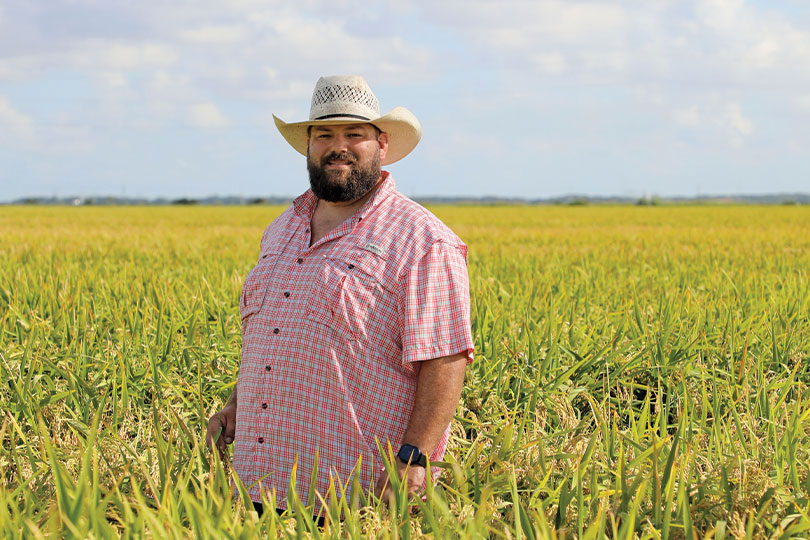
As soon as Dillon Berglund could walk, he was in the rice fields with his dad.
“There were times I’d fall in the mud, and he’d have to go back home to change my clothes,” Berglund said. “I’ve been out here ever since, and I wouldn’t want to do anything else.”
At eight years old, Berglund’s role in the fields had grown. He carried a shovel in his hand and walked the levees with the farm crew to check water levels.
His dad began farming rice in the late 1980s and later gave Berglund his first farm after college.
“Dad asked if I wanted to work for him or work with him,” Berglund said. “And I said, ‘I think I want to work with you.’”
Today, Berglund grows commercial and seed rice in El Campo and Louisiana.
“As far back as I can remember, I always wanted to be a farmer,” he said. “It’s never changed. This has always been it.”
Growing rice to feed consumers
Berglund’s passion for rice comes from more than his childhood memories in the fields.
“It’s really just a passion of the crop and being able to sell it directly to consumers and feed the world,” he said.
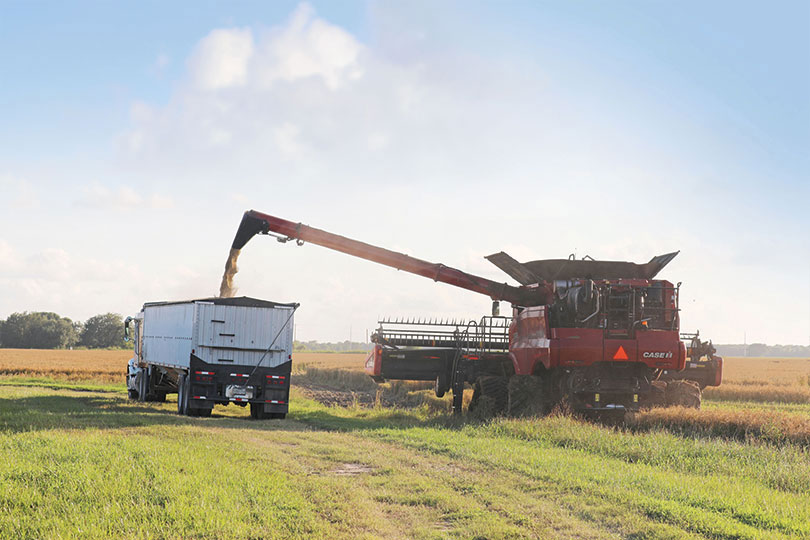
Most of his crop is seed rice, which is stored after harvest and sold to farmers for the following year’s production.
Berglund also grows commercial rice for specific markets. Some goes to Campbell’s Soup, which uses a variety selected for its ability to retain its shape while in the can and on the shelf.
“It’s pretty fulfilling knowing that I’m growing a crop that is feeding consumers,” Berglund said.
Planting begins in March. Once the rice reaches eight inches tall, water is gradually introduced, and the crop remains under a shallow flood for the rest of the growing season.
When the rice reaches maturity, deciding when to drain the fields is critical.
“If you drain too late, you’ll get chalky rice. If you drain too early, you’ll get chalky rice,” Berglund said. “And at that point, it just goes to dog food.”
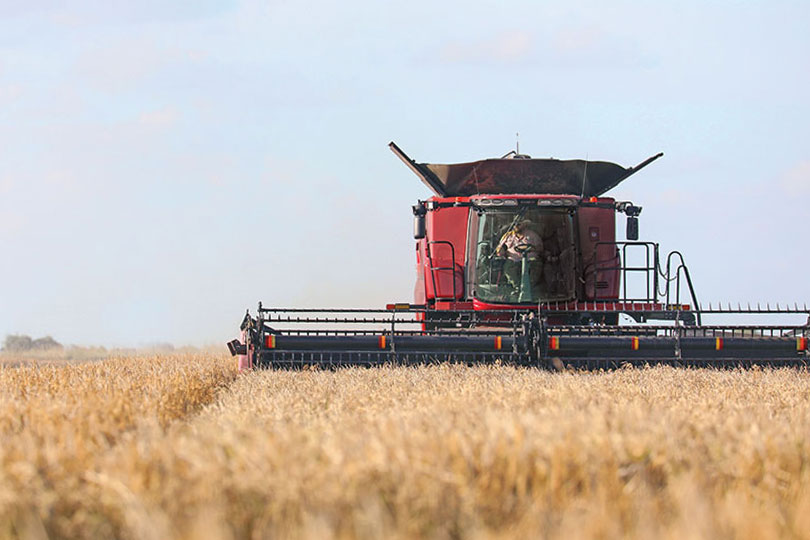
After draining, Berglund gives the soil two weeks to dry before harvesting.
“If we’re lucky, we don’t get any rains during that time, and we get to cut dry,” he said. “It doesn’t happen near as often as we’d like it to, but that’s the risk we take.”
Water challenges
Rice has long been a defining crop along the Texas Gulf Coast, where flat land, climate and access to water create favorable growing conditions.
But water is becoming increasingly difficult and expensive to access.
“We have a good aquifer under us,” Berglund said. “We have to drill about a thousand feet down to get it, and to drill a water well here could cost you over a million dollars today.”
His wells require 300-horsepower motors and pump roughly 4,000 gallons of water per minute, adding significant costs to production.
Those costs have contributed to declining rice acreage in Texas as farmers consider growing other crops.
“Texas raises the highest quality of rice in the United States, but we also have some of the highest costs of production,” Berglund said. “And that is the leading reason why we are dwindling in farm acres across the state.”
Expanding across state lines
Water availability also influenced Berglund’s decision to expand his farm into Louisiana.
The opportunity came when Berglund learned of a large tract of land available—something he said is increasingly difficult to find in Texas.
“It was worth the risk of trying it and expanding that way to see how it goes,” said Berglund, who is a Wharton County Farm Bureau member. “And it’s gone well so far, and we’re in our second year up there.”
Farming seven hours away from home is not easy, but Louisiana offers surface water.
Rather than drilling deep wells, Berglund pumps water from the bayou, runs it through the fields and returns it to the bayou.
“The cost of water is almost half of what we pay here,” Berglund said.
The reward of harvest
After months of planting, watering and waiting, harvest gives Berglund the opportunity to see the results of his work.
“You stress so much about putting seed in the ground, and there’s a lot of faith that goes into it, making sure that it gets the soil and moisture it needs to come up,” he said. “But when harvest comes around, you know you did a good job, and you get to see how your work turned out.”
It’s a feeling Berglund has known since he was a boy walking through rice fields with his dad. And years later, he’s still there, growing the crop he always knew would be part of his life.
Leave A Comment