
By Julie Tomascik
Editor
Protecting groundwater and landowners from orphaned oil and gas wells and deteriorating P-13 water wells was the focus of Texas Farm Bureau’s testimony before state lawmakers this week.
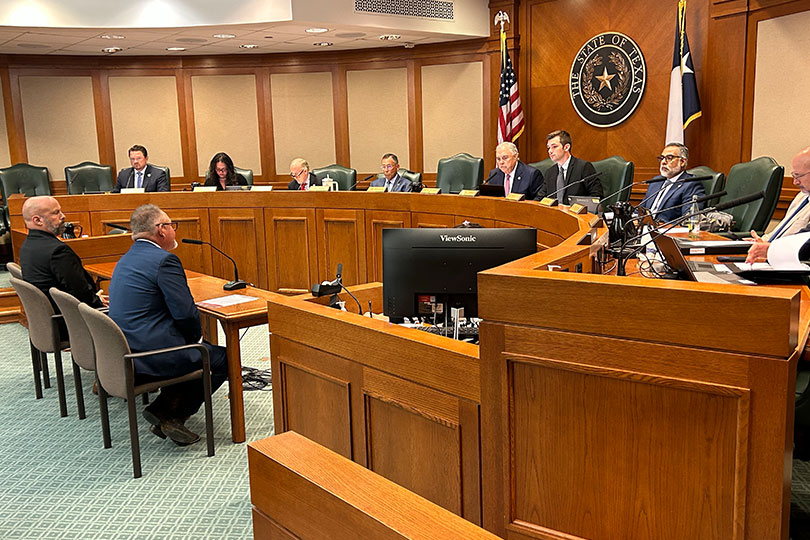
Warren Cude, TFB vice president and District 6 state director, testified before the Texas House Committee on Energy Resources as lawmakers considered interim charges related to both issues.
“For Texas Farm Bureau, orphaned wells are not simply an energy issue. They are a property rights issue, a water quality issue and a public safety issue,” Cude said. “Many agricultural operations rely entirely on groundwater for livestock, irrigation and domestic use. Contamination of these resources can have significant economic and environmental consequences.”
The Railroad Commission of Texas has plugged more than 40,000 orphaned wells over the last two decades, according to TFB. But preventing inactive wells from becoming orphaned is more cost-effective than addressing them after they are abandoned.
Cude asked lawmakers to consider stronger financial assurance requirements that better reflect the costs of plugging wells, remediating sites and restoring the surface. He also called for earlier intervention when wells remain inactive for extended periods and continued prioritization of wells that pose the greatest risks to groundwater, surface water, agricultural operations and public safety.
P-13 water wells present another concern for landowners.
Some wells originally drilled for oil and gas development were later converted to water wells. As those wells deteriorate, they can create pathways for saltwater, hydrocarbons and other oilfield waste to migrate into the environment.
In some cases, the landowner neither drilled the well nor caused the problem but can be left dealing with the consequences.
“When a P-13 well is leaking oilfield waste or contaminating groundwater, the burden should not fall on a landowner who did not create the problem,” Cude told the lawmakers. “Someone must be responsible for protecting groundwater and remediating contamination.”
TFB supports giving the Railroad Commission clear authority to hold an operator accountable and responsible for plugging a well if previous plugging work failed. If no responsible operator can be identified, the organization supports allowing the commission to take action to properly plug the well and address contamination.
Current law leaves uncertainty about the commission’s authority over P-13 wells, which can leave landowners caught in the middle while contamination concerns remain unresolved.
Cude also noted the need for dedicated funding. Delaying action on abandoned and leaking P-13 wells can increase risks to groundwater and make future remediation more expensive.
“Groundwater is one of Texas’ most valuable natural resources and the foundation of agricultural production across much of this state,” Cude said. “Improperly plugged P-13 wells pose a preventable threat to that resource.”
TFB urged the committee to clarify responsibility for P-13 wells, provide the Railroad Commission with authority to address them and ensure adequate funding is available for plugging and remediation.
Good job Warren. Being a lifetime oilfield hand. I still believe that plugging wells or converting to landowner water wells should be done properly