
By Julie Tomascik
Editor
The U.S. Department of Agriculture (USDA) is expanding its response to New World screwworm with plans to invest $25 million in a new sterile fly dispersal facility in Arizona.
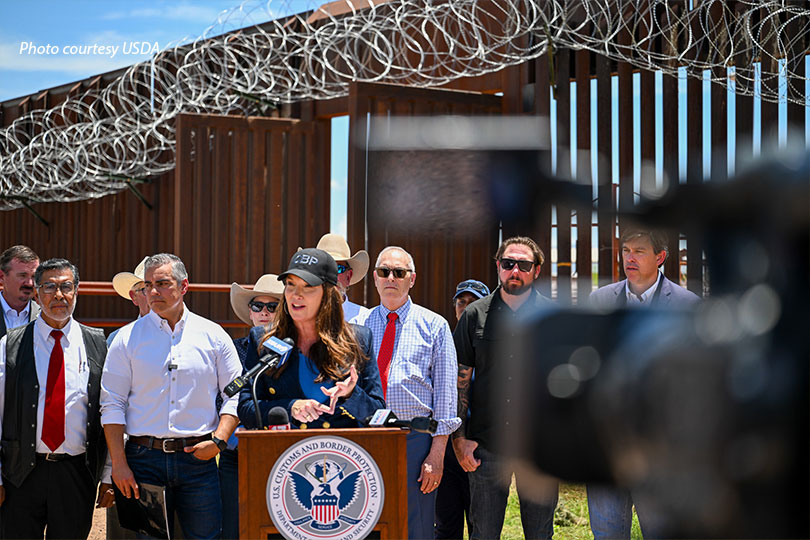
U.S. Secretary of Agriculture Brooke Rollins announced the investment Wednesday, July 29, during a visit to the Douglas, Arizona port of entry, where livestock imports from Mexico are scheduled to resume Aug. 24 under USDA’s phased reopening plan.
The facility in Douglas will complement existing sterile fly production and dispersal efforts in Texas, Mexico and Panama.
“Protecting American agriculture begins with protecting our borders and ensuring we have the strongest animal health safeguards anywhere in the world,” Rollins said. “The Douglas Port of Entry will reopen only because USDA has implemented one of the most rigorous livestock inspection protocols in history, giving us confidence we can safely resume this critical trade while ensuring cattle crossing the border are free from New World screwworm. Together with our partners in Arizona, we’re strengthening the infrastructure needed to protect American ranchers for generations to come.”
The Arizona facility is the latest investment in USDA’s expanding sterile fly strategy. It will provide another distribution point along the southwest border and allow USDA to move sterile flies more efficiently if additional response efforts are needed.
USDA will continue working with the Arizona Department of Agriculture and state leaders to identify the specific location and operational plan for the facility. The department said construction could be completed in as little as several months, depending on the selected site and available infrastructure.
In Texas, USDA has already established a sterile fly dispersal facility at Moore Air Base in Edinburg.
Construction is also underway on the USDA’s domestic sterile fly production facility at the base. When completed, the facility is expected to produce up to 300 million sterile flies per week.
The Arizona facility announcement comes as USDA prepares to reopen the Douglas port to cattle imports from Mexico.
Every animal entering through the port will undergo multiple veterinary inspections before crossing into the United States. Any animal that fails to meet import requirements will be denied entry, and livestock imports through the port would immediately stop if New World screwworm is detected.
USDA said reopening plans for additional southern ports will depend on continued progress in Mexico’s eradication efforts and ongoing risk assessments.
Leave A Comment