
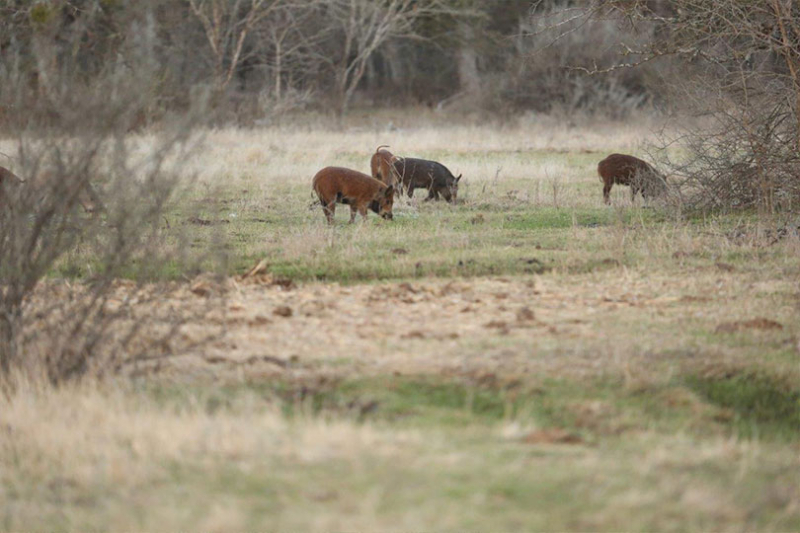
The U.S. Department of Agriculture (USDA) is investing $35 million in partnerships to combat the destructive impacts of feral swine and protect American agriculture, landscapes and human and livestock health.
This partnership opportunity is part of a broader $105 million investment for the Feral Swine Eradication and Control Pilot Program led by USDA’s Natural Resources Conservation Service (NRCS) and USDA’s Animal and Plant Health Inspection Service (APHIS). The funding was included in the Working Families Tax Cuts Act.
“We are collaborating with our partners at USDA and across the country to help combat feral swine and keep our farms, ranches and landscapes safe,” NRCS Chief Colton L. Buckley said. “These invasive species cause more than $3.4 billion in damage each year, including damage to agricultural landscapes. Thanks to the Working Families Tax Cuts Act, NRCS is able to expand this effort, giving producers and partners more resources to protect working lands and strengthen the long-term resilience of agricultural operations.”
Applications are available for feral swine eradication and control projects in 14 states, including Texas, where the invasive pests pose significant threats to agriculture and natural resources.
Eligible applicants include state governments, local governments, tribal organizations, higher education institutions and nonprofit organizations.
The applications must be submitted by Sept. 21.
Feral swine damage crops, pastures, fences and water resources through rooting and wallowing. They also compete with native wildlife and can spread diseases that threaten livestock, wildlife and, in some cases, people.
“Feral swine are a costly and persistent problem for Texas farmers and ranchers,” Tracy Tomascik, Texas Farm Bureau associate director of Commodity and Regulatory Activities, said. “They move across property lines, so effective control requires cooperation among landowners, agencies and other partners. This funding can help expand those coordinated efforts and reduce damage to agricultural lands.”
According to USDA, feral swine cause an estimated $3.4 billion in damage nationwide each year, including about $2.5 billion in agricultural losses.
The new funding builds on previous investments through the Feral Swine Eradication and Control Pilot Program, which supports coordinated removal efforts, land restoration and producer assistance.
About the pilot program
Partners selected to participate in the Feral Swine Eradication and Control Pilot Program will provide landowner assistance for restoration and on-farm trapping efforts and provide related services, like training.
All projects will be a collaborative and coordinated effort among the selected partner, NRCS, and APHIS.
For more information about this funding opportunity and to apply, visit grants.gov.
More information
From 2020 through 2024, NRCS invested $41 million in 34 projects across 12 states, including Texas.
During that time, Feral Swine Eradication and Control Pilot Program projects provided assistance to more than 6,700 landowners on nearly 9 million acres to help reduce feral swine damage.
More than 800 events related to teaching trapping techniques to landowners were conducted.
Leave A Comment