
By Julie Tomascik
Editor
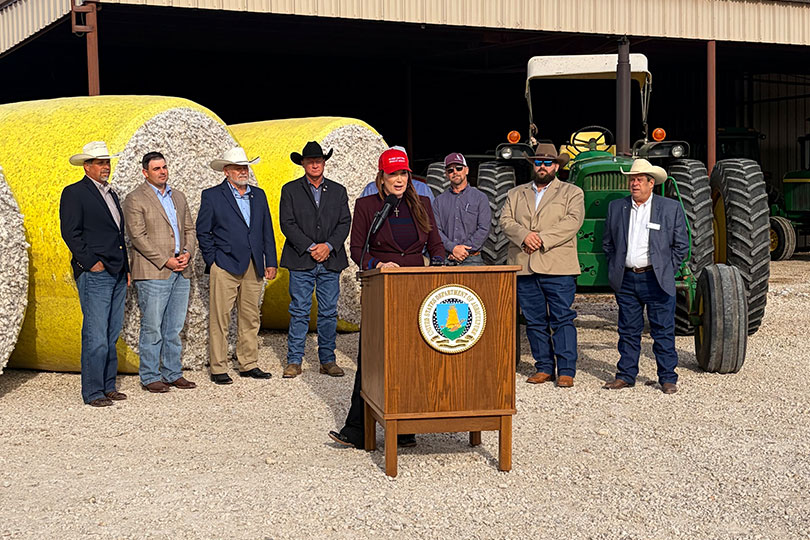
New crop insurance options and trade opportunities for American cotton growers were announced Oct. 16 by U.S. Secretary of Agriculture Brooke Rollins during a visit to Giesenschlag Farms in Caldwell.
The announcement followed a roundtable discussion with Texas farmers about the challenges their facing. Texas Farm Bureau (TFB) members participated in the discussion and attended the announcement.
The two actions expand the U.S. Department of Agriculture’s (USDA) Great American Cotton Plan, which was launched in May to strengthen the cotton industry, increase domestic demand and improve market opportunities.
“Our cotton growers have been squeezed by foreign competitors for too long, which is why we launched the Great American Cotton Plan in May,” Rollins said.
She noted the plan gives farmers more protection to manage their risks and improve opportunities for trade.
“We are not going to stop until we restore America’s cotton industry,” Rollins said.
Expanded crop insurance options
USDA’s Risk Management Agency (RMA) will allow farmers to purchase multiple endorsements on a crop insurance policy beginning with the 2027 crop year.
The change will provide cotton growers and farmers of other eligible crops with additional options to manage production risks.
The expanded flexibility builds on crop insurance improvements included in the Working Families Tax Cuts Act that was signed into law in 2025.
RMA plans to release final details to approved insurance providers and crop insurance agents by Nov. 30.
New cotton trade opportunities
USDA also announced plans to develop a new trade mechanism that encourages international buyers to purchase American cotton.
Beginning in 2027, USDA’s Foreign Agricultural Service will oversee a process that links purchases of U.S. cotton to preferential tariff treatment for apparel imports.
The initiative will focus on Bangladesh, Indonesia, Cambodia and Malaysia.
Under the proposed mechanism, participating countries could receive preferential tariff treatment on apparel produced using American cotton and textile inputs.
USDA said the approach is intended to expand export opportunities and strengthen demand for U.S.-grown cotton.
Support for cotton growers
The additional measures come as Texas cotton farmers continue to face low commodity prices and increased production costs.
“Texas cotton farmers are facing tremendous financial pressure, and they need stronger markets and better tools to manage risk,” Brant Wilbourn, TFB associate director of Commodity and Regulatory Activities, said. “Expanding crop insurance options and creating additional demand for U.S. cotton are positive steps, but more work is needed to address the economic challenges threatening the future of cotton production.”
The Great American Cotton Plan focuses on four priorities: promoting domestic cotton consumption, increasing domestic demand and production, improving cotton trade and protecting growers from financial risks.
When USDA announced the plan in May, the agency projected cotton farmers could face about $2.6 billion in losses across 9 million planted acres.
The plan also includes efforts to strengthen domestic textile manufacturing, encourage consumers to purchase cotton products and expand international market access.
USDA said it will continue working with cotton growers, manufacturers, retailers and industry organizations to strengthen the American cotton industry.
Leave A Comment