
An executive order signed by President Donald Trump directs federal agencies to expand regenerative agriculture, accelerate precision agriculture technologies and streamline approval of new agricultural innovations.
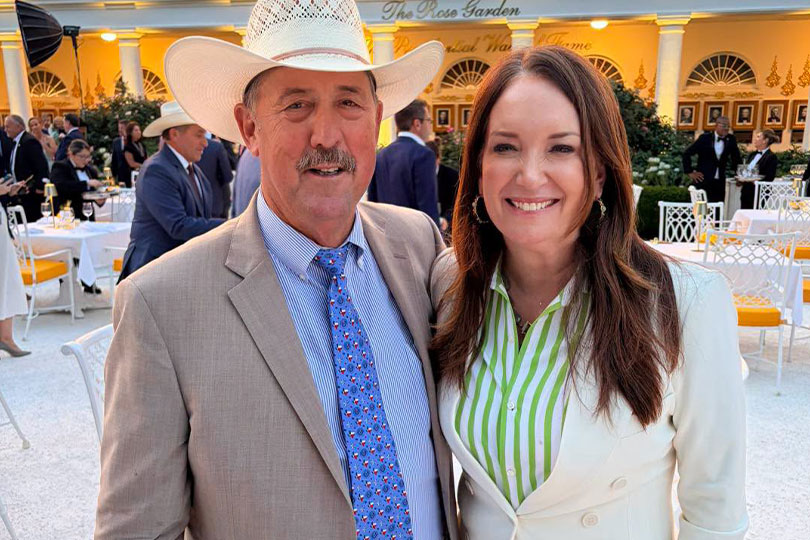
Trump signed the executive order on June 25 during a dinner with farmers and ranchers at the White House Rose Garden. Texas Farm Bureau President Russell Boening was among those in attendance.
“It was my honor to sign an executive order directing federal agencies to accelerate agricultural innovations that give farmers and ranchers the necessary resources to ensure American crops are the healthiest and the most abundant and the most affordable,” Trump said.
The executive order, Advancing Regenerative Agriculture and Strengthening American Farm Resilience, outlines a federal strategy aimed at strengthening farm resilience while encouraging conservation practices and reducing regulatory barriers for farmers and ranchers.
The order states it’s U.S. policy to promote continued advances in precision agriculture, increase federal investment in regenerative agriculture research, practices and education, and encourage private-sector innovation through reduced regulatory burdens and stronger public-private partnerships.
“American farmers and ranchers have always prioritized care of their land and are increasingly interested in adopting innovative conservation farming practices like regenerative agriculture,” the executive order states. “These practices strengthen soil health, lower input costs, improve chemical efficiency to reduce overall use, improve farm profitability, maintain yields, increase market value, expand access to new markets and strengthen rural economies.”
The U.S. Department of Agriculture (USDA) is charged with maximizing funding for its current Regenerative Pilot Program and evaluating opportunities to expand participation.
USDA is also instructed to use existing authorities to develop additional public-private partnerships. Those partnerships would increase farmers’ access to regenerative agriculture programs and share results from the pilot program with a broader audience.
USDA announced the $700 million Regenerative Pilot Program last year, with funding distributed through the Environmental Quality Incentives Program and Conservation Stewardship Program.
The order also includes several directives related to crop protection tools.
The U.S. Environmental Protection Agency is instructed to prioritize registration decisions for pesticide products that can serve as alternatives to older active ingredients. EPA is also directed to review available data on registered pre-harvest desiccation uses and ensure those products continue to meet applicable safety and environmental standards, including accurate labeling.
Leave A Comment