
By Julie Tomascik
Editor
Federal and state animal health officials are intensifying efforts to contain and eradicate New World screwworm as additional cases are confirmed in South Texas and response operations expand across the region.
Eight cases have now been confirmed in Texas since the first detection was announced June 3.
U.S. Secretary of Agriculture Brooke Rollins this week visited the site of the index case in Zavala County to meet with ranchers, animal health officials and agricultural stakeholders and discuss those efforts.
TFB leaders joined representatives from the U.S. Department of Agriculture, Texas Animal Health Commission (TAHC), Texas Parks and Wildlife Department, Gov. Greg Abbott’s office and local ranchers for the roundtable.
“It was a very good candid conversation with her staff,” Texas Farm Bureau District 10 State Director Stephen Bauer said. “Everybody was very responsive and very attentive to the questions and concerns that we had.”
Bauer noted USDA’s preparations before the Texas detection helped position federal and state agencies to respond quickly once the pest was confirmed.
“We’re far ahead today of where we would’ve been a year ago because of their efforts of working and pulling all the teams and stakeholders together,” he said.
Participants discussed prevention and treatment options available to livestock owners, animal movement protocols within infested zones, surveillance efforts and ongoing eradication strategies.
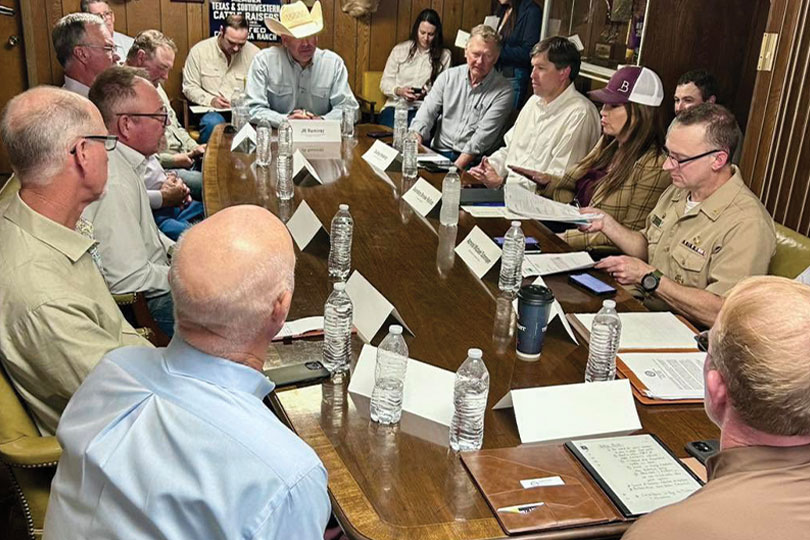
Much of the conversation focused on movement restrictions and producer concerns about how those protocols are being implemented.
“The main thing for producers is that you have to report,” TFB Vice President Warren Cude said. “There’s been misinformation going around that they’re going to lock you down because of the quarantine, and really it’s restricted animal movement. It’s a way they can slow that migration of the fly northward.”
The movement restrictions include inspections for animals moving outside an infested zone. TAHC staff issue an animal movement certificate documenting treatment or prevention measures and official animal identification before movement occurs.
“Any of these areas around the infestation zones need to be watching livestock and wildlife closely,” Cude said. “The quicker we identify an infestation, the quicker we can respond.”
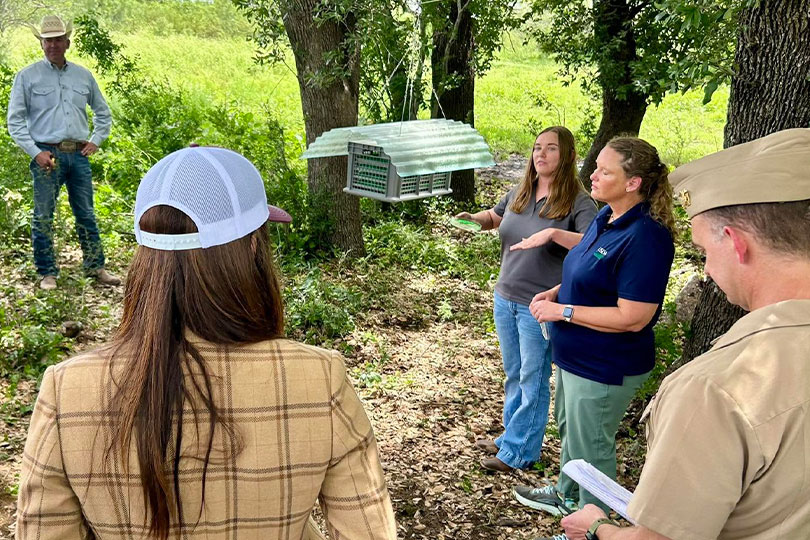
The group also observed a sterile fly ground dispersal operation. Sterile fly releases are a cornerstone of the eradication strategy and were used successfully to eliminate New World screwworm from the United States in the 1960s.
The meeting highlighted the importance of continued coordination among industry organizations and government agencies.
“All of these people are working together toward an end goal of pushing this thing back and controlling New World screwworm,” Bauer said.
Leave A Comment