
By Shelby Shank
Field Editor
Texas rice acreage continues to decline as farmers face low commodity prices, pest pressures, water issues and global competition.
The U.S. Department of Agriculture estimates 125,000 acres of rice were planted in Texas this year, but Texas A&M AgriLife Extension experts believe that number could fall to 100,000 acres when final acreage numbers are released.
The decline reflects national trends.
Arkansas, traditionally the nation’s largest rice growing state, is expected to plant about 850,000 acres this year, down from its historical average of 1.4 million acres. Mississippi is projected to plant roughly 50,000 acres compared to its historical average of 137,000 acres.
According to AgriLife Extension Agronomist Dr. Sam Rustom, low market prices driven by global oversupply are the primary reason for the decline. Increased rice production and competition from countries like India, Thailand and South America have placed pressure on domestic markets over the past decade.
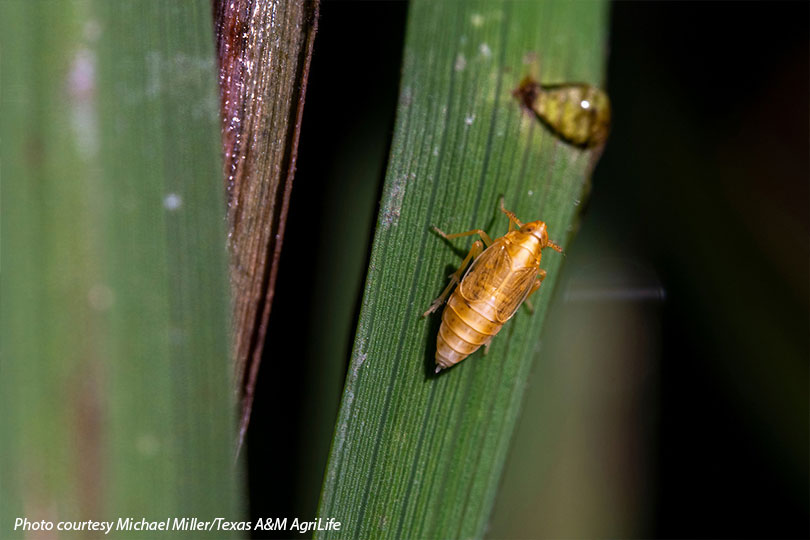
In addition to economic challenges, rice growers continue monitoring for rice delphacid, an invasive planthopper that caused significant damage to Texas rice fields in 2025.
The planthoppers feed on rice plants by extracting sap and depriving the crop of essential nutrients. Their feeding causes a condition known as “hopper burn,” which results in yellowing leaves and scarring on leaf blades.
The insects also produce a sugary substance called honeydew that promotes the growth of sooty mold. Severe infestations can lead to stunted growth, plant dieback and significant yield losses.
“Based on scouting observations from monitored fields in Wharton, Waller, Liberty, Chambers and Jefferson counties, insect pressure has remained relatively low across the Texas Rice Belt,” said Dr. Lina Bernaola, Texas A&M AgriLife Research entomologist. “Although rice delphacids have not been detected in our monitored fields, continued scouting is important as the crop progresses into later growth stages and environmental conditions change.”
Courier Insect Growth Regulator received a Section 18 Emergency Use Exemption earlier this year and will be the primary product used to manage this pest.
“Early detection remains critical because insect populations can increase rapidly under favorable conditions,” said Brant Wilbourn, Texas Farm Bureau associate director of Commodity and Regulatory Activities. “Texas rice growers are already facing challenges from low commodity prices and a competitive global marketplace. Staying ahead of rice delphacid through regular scouting, research and effective management tools will be critical for rice production in Texas.”
Leave A Comment