
By Julie Tomascik
Editor
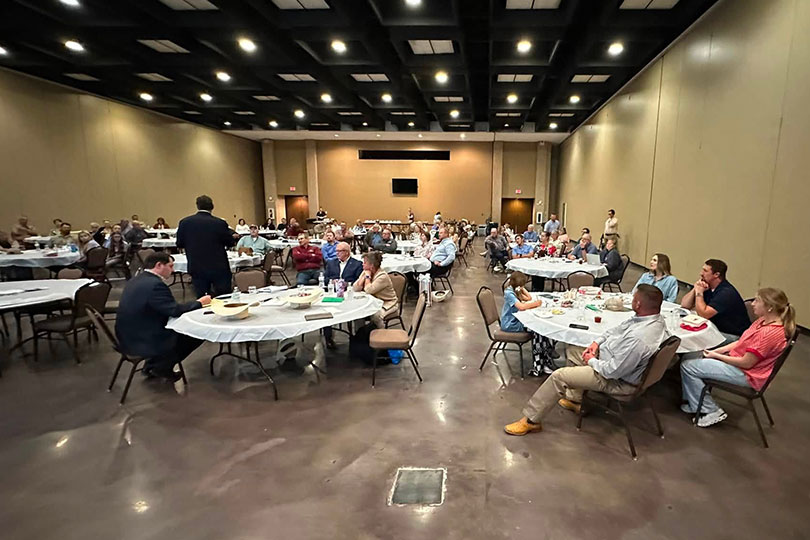
Data centers, 765-kilovolt (kV) transmission lines and water were among the topics discussed at Texas Farm Bureau (TFB) policy development meetings across the state this fall.
These meetings give members an opportunity to surface concerns and discuss potential policy changes.
“These meetings are an essential step in shaping our policy for the upcoming year because the process starts with our members,” said Brant Wilbourn, TFB associate director of Commodity and Regulatory Activities. “They bring forward the issues they’re seeing in their communities and on their farms and ranches. Those conversations help determine where our policy may need to be updated or strengthened.”
Over 700 county leaders representing 157 counties attended the district meetings.
The rapid expansion of data centers in Texas, many of which are sited in rural areas and on agricultural lands, was a consistent topic raised by members.
“Members are concerned about the amount of land, electricity and water these facilities require and what that increased demand could mean for agriculture and rural communities,” Wilbourn said.
The broader effects of population growth and industrial development on the state’s water supply also were discussed.
Years of severe drought combined with increasing demand are putting additional pressure on water resources. Farmers and ranchers discussed the need to ensure groundwater management decisions are based on sound science.
“Water is critical to agriculture, but it’s also becoming an increasingly important issue as Texas continues to grow,” Wilbourn said. “Our members want to make sure agriculture has a voice in those discussions and that groundwater policies recognize private property rights and the needs of farmers and ranchers.”
Conversations also focused on the development of 765-kV transmission infrastructure across Texas. Members raised concerns about the potential impacts of new transmission lines through farms, ranches and rural communities.
“Texas needs reliable electricity, but we also have to consider how new transmission infrastructure affects private property and agricultural operations,” Wilbourn said. “Our members want landowners to have a voice in the process and for routes to minimize impacts on productive agricultural land whenever possible.”
Crop protection tools also were discussed as the Make America Healthy Again movement gains momentum. Farmers and ranchers stressed that regulatory decisions should be guided by science, not politics.
Other topics included tariffs, staffing at county Farm Service Agency offices and support for beginning and young farmers and ranchers.
The next step in the process requires county Farm Bureaus to submit adopted policy resolutions from their annual meetings to the state office by Oct. 23. Those resolutions will then be considered by the TFB Resolutions Committee in November.
The committee’s recommendations will move forward to the TFB Annual Meeting in December, where voting delegates will make the final decisions that shape Texas Farm Bureau’s state and national policy positions for the year ahead.
Leave A Comment