
By Julie Tomascik
Editor
Texas farmers and ranchers now have a tool to manage pasture mealybug after the U.S. Environmental Protection Agency (EPA) granted an emergency exemption for the use of Centric 40WG insecticide.
The Section 18 crisis exemption allows Centric 40WG, which contains the active ingredient thiamethoxam, to be used in pastures to control the invasive pest. The exemption became effective Aug. 11.
“The approval gives farmers and ranchers an effective treatment option as they work to manage this invasive pest,” said Brant Wilbourn, Texas Farm Bureau associate director of Commodity and Regulatory Activities. “Pasture mealybug can cause significant damage to forage and hay fields, so having another tool available is important as producers work to protect their pastures and limit losses.”
Pasture mealybug was first detected in Texas in 2025 and has since been confirmed in 110 counties this year stretching from South Texas and the Gulf Coast into Central Texas and the Hill Country.
The pest is associated with a syndrome termed “pasture dieback,” a condition that kills patches of pasture grasses. It’s identified by reddening or yellowing leaves, stunted growth and root reduction.
The emergency exemption provides farmers and ranchers with a targeted insecticide option as researchers continue to study management strategies.
Centric 40WG may be applied at a rate of 2 to 3.44 ounces per acre. Applications should be based on scouting and locally determined economic thresholds, with no more than one application allowed per cutting. The maximum annual use is 10.32 ounces per acre.
The label establishes a seven-day pre-harvest interval before cutting treated pasture for hay and a zero-day interval for forage. Both ground and aerial applications are allowed under specified water-volume requirements.
Producers using Centric 40WG under the exemption must follow the Section 18 label and the EPA-registered product label.
The pest has been found to damage several forage grass species, including Bermudagrass, Bahia grass, Johnsongrass, sorghum-sudangrass, several bluestem species and St. Augustine. Broadleaf plants are not affected.
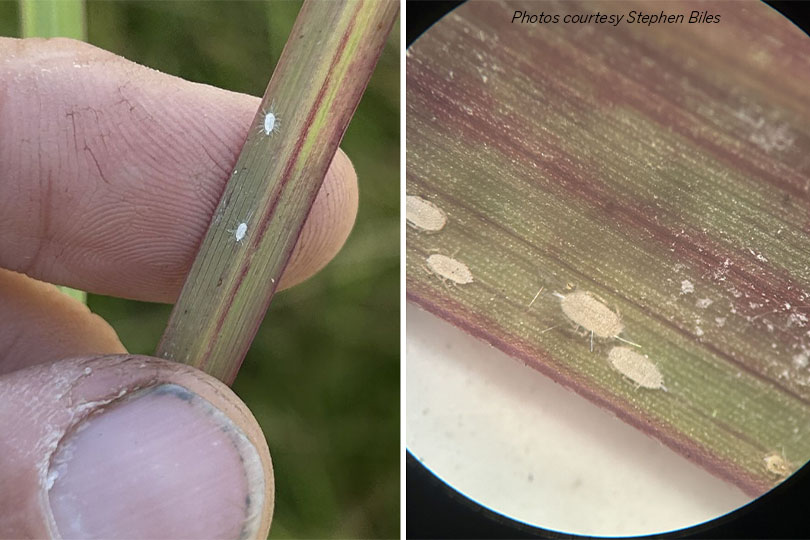
AgriLife Extension recommends farmers and ranchers regularly scout pastures. The insects may be found on grass blades and stems, near the base of plants, in thatch, below the soil surface or beneath dried cow patties.
Researchers also recommend cleaning equipment before moving from infested to uninfested pastures to reduce the risk of spreading the pest.
The Section 18 exemption is allowed under the Federal Insecticide, Fungicide and Rodenticide Act, which gives EPA authority to permit limited pesticide uses when an emergency condition exists.
More information on pasture mealybug identification, scouting and management is available in this fact sheet from Texas A&M AgriLife Extension.
Leave A Comment