
By Emmy Powell
Communications Specialist
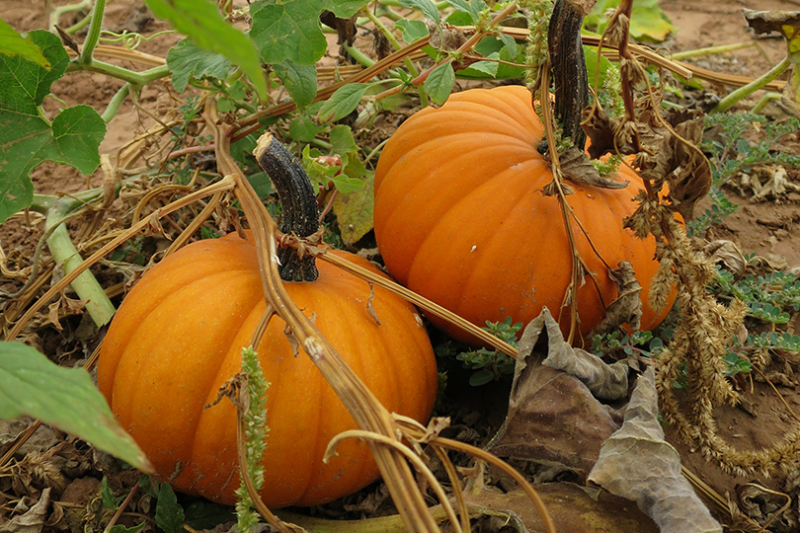
Texas pumpkin yields are below average due to extreme drought conditions this summer.
Yields in Floyd County, the Pumpkin Capital of Texas, are down 30% to 40% compared to a typical year, according to the Texas A&M AgriLife Extension.
“We were in an extreme drought throughout the summer,” Mark Carroll, Floyd County AgriLife Extension agent, said. “No rainfall for the pumpkin crop, and it greatly affected our yields.”
Texas farmers planted 1,200 acres of pumpkins this year.
Harvest began early September and wrapped up one to two weeks early because of low yields.
Pumpkin acreage in Texas varies from year to year, Carroll said, typically ranging from 700 to 1,600 acres.
Although pumpkins are irrigated, soil moisture before planting and early in the growing season helps establish the crop.
“Normally, you go into a growing season, you’ve got some subsoil moisture, and then you irrigate, and you can have a decent crop,” he said. “But we went into the growing season with no subsoil moisture.”
One benefit of the dry conditions was reduced pressure from fungal diseases. Carroll said farmers didn’t have to spray as frequently to manage the diseases.
Texas farmers grow more than 200 varieties, from traditional jack-o’-lantern to pie pumpkins and decorative varieties like Cinderella pumpkins.
Most of the state’s crop is grown for decorative or culinary use, Carroll said.
Pumpkins grown in Floyd County are shipped across the nation to meet seasonal demand for Halloween and Thanksgiving.
Despite the lower yields, pumpkin prices and demand have remained steady, Carroll said. However, high input costs continue to put pressure on farmers’ profit margins.
“Anytime inputs stay high, it compresses our farmers and makes profitability difficult,” he said.
Leave A Comment