
By Emmy Powell
Communications Specialist
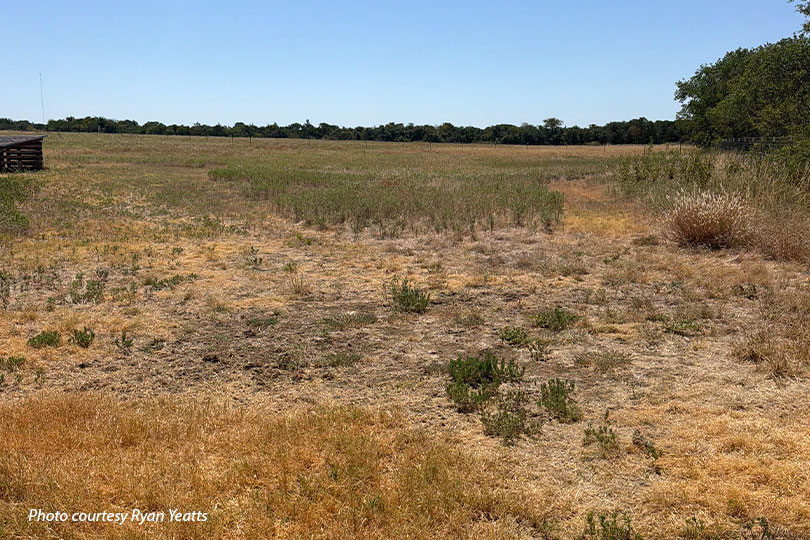
Hot, dry conditions are taking a toll on crops and pastures across much of Texas.
Drought has intensified in many areas following limited rainfall and triple-digit temperatures for several months. The conditions have reduced soil moisture, affected crop yields and pushed some ranchers to begin supplemental feeding earlier than normal.
The U.S. Drought Monitor shows 81% of the state is experiencing abnormally dry or drought conditions, and the U.S. Department of Agriculture’s (USDA) latest Crop Progress report reflects the effects of those conditions on crops, pastures and rangeland.
Crops
Conditions vary by region and crop, but drought and heat have created challenges for many farmers.
The High Plains and Rolling Plains saw limited rainfall, high winds and temperatures above 100 degrees, which led to reduced yields in irrigated sorghum and other summer crops. Some dryland crops failed altogether. Cotton and peanuts in the Rolling Plains also have been affected by declining soil moisture.
According to the USDA Farm Service Agency, 10% of Texas’ 3.7 million reported dryland crop acres had been declared failed as of Sept. 11.
Conditions have been more favorable in the Coastal Bend. Cotton harvest is wrapping up with few problems, but continued heat and dry conditions are depleting soil moisture needed for fall planting.
Dry conditions are creating challenges for wheat planting, as well. Seed supplies are reported at only 60% to 70% of normal following poor growing conditions for the 2026 crop.
“Texas farmers are navigating a difficult end to the summer growing season,” said Brant Wilbourn, Texas Farm Bureau (TFB) associate director of Commodity and Regulatory Activities. “The challenges vary by region, but the need for timely rainfall and adequate moisture is a concern for farmers across the state.”
Pasture and range conditions
Drought is also taking a toll on Texas pasture and rangeland. USDA reported 60% of Texas pasture and range in poor or very poor condition.
Reduced forage availability is putting additional pressure on livestock operations. Some ranchers have started supplemental feeding earlier than normal.
Water supplies in ponds, creeks and playa lakes are also declining.
“Dry conditions can put pressure on a cattle operation pretty quickly,” Tracy Tomascik, TFB associate director of Commodity and Regulatory Activities, said. “Less forage means higher feed needs, and declining stock water can further limit the options ranchers have. Ranchers may be thinking about rebuilding their herds, but many will be hesitant to add cattle until pasture and water conditions improve.”
More information
View current drought conditions on the U.S. Drought Monitor map.
View the Crop Progress and Conditions report.
Leave A Comment