
By Julie Tomascik
Editor
Domestic fertilizer production could see significant gains within the next two years, according to U.S. Secretary of Agriculture Brooke Rollins. But that increased supply may not be enough to lower prices for farmers and ranchers.
Rollins said recent policy efforts could increase nitrogen production by more than 30%, phosphate by over 200% and potash by more than 100%.
The comments come as farmers continue to face high fertilizer costs driven by global supply disruptions, including instability in the Middle East. Urea prices have more than doubled since mid-December, and diammonium phosphate prices are up nearly 20%, according to international market data.
The administration has taken several steps aimed at easing supply pressures.
That includes temporarily suspending the Jones Act to allow more flexibility in shipping fertilizer. The waiver, initially issued for 60 days, was recently extended another 90 days to keep fertilizer moving during peak demand.
The administration also loosened restrictions on fertilizer imports from Venezuela, a step Rollins said could help fill a significant portion of the U.S. urea supply gap this spring.
Additional efforts include regulatory changes aimed at increasing domestic urea production, as well as encouraging companies to boost output during the current planting season.
Rollins said some fertilizer companies are already responding. One company delayed maintenance at a Louisiana facility to increase urea supply that would have otherwise been unavailable this spring.
But the secretary pointed to consolidation in the fertilizer industry as a long-standing issue contributing to higher prices. Fewer companies in the market have limited competition and reduced pricing transparency.
According to U.S. Department of Agriculture (USDA) data, there were nearly 50 U.S. nitrogen fertilizer producers in the 1980s.
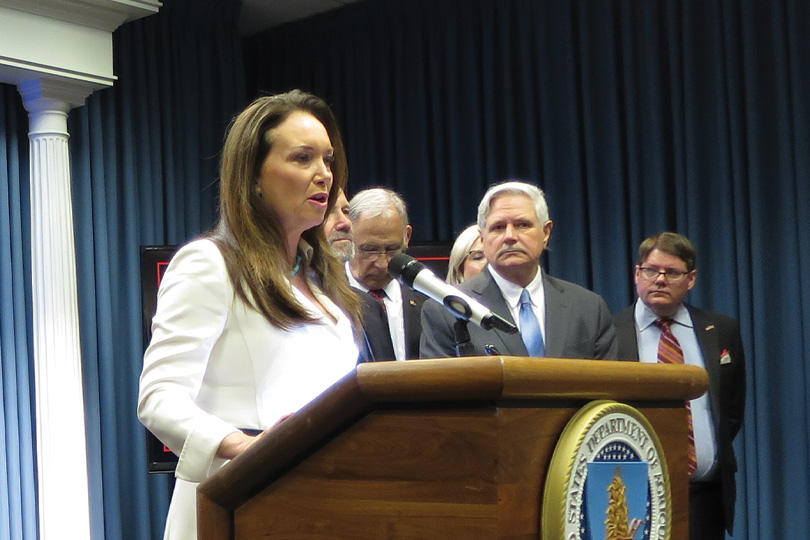
“Today, four companies control 75% of the domestic nitrogen fertilizer market, and just two firms control almost all of the U.S. potash market,” Rollins said during a press conference on April 28. “American farmers need more options and more predictability going forward to keep family farms producing.”
Despite recent policy changes, fertilizer prices remain elevated.
“This is not a new problem that just happened in the last 60 days, and this is what we’re working to solve for the long term,” she said.
USDA is also working to move forward dozens of fertilizer production projects through a federal expansion program aimed at strengthening domestic supply.
Leave A Comment