
By Julie Tomascik
Editor
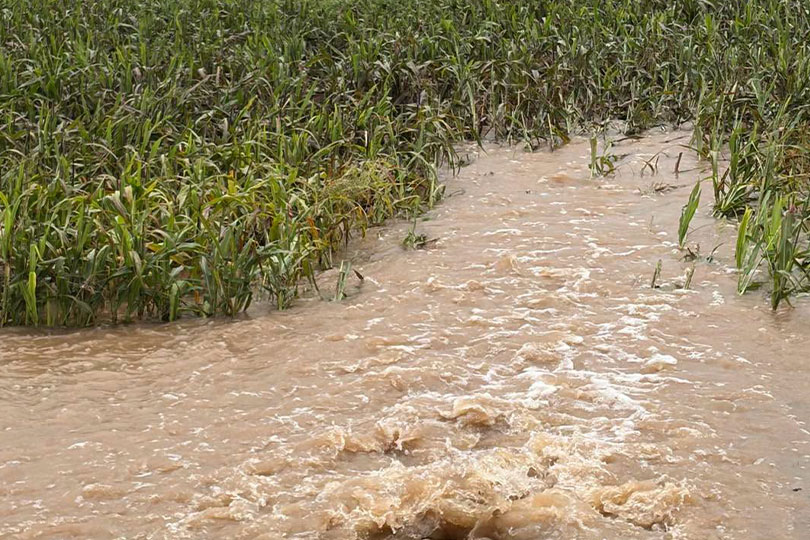
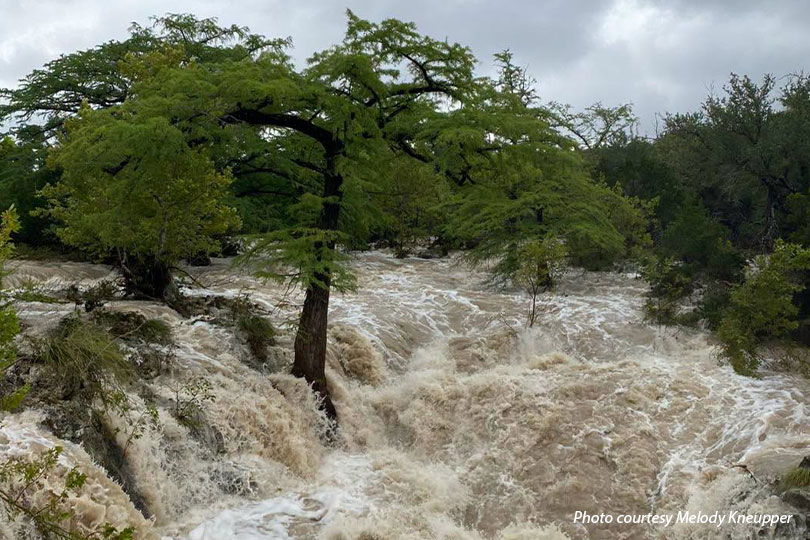
Days of torrential rain have triggered catastrophic flooding across the Texas Hill Country and South Texas. The storms have damaged crops and fences, stranded livestock and prompted numerous water rescues.
The National Weather Service issued its highest risk category for excessive rainfall this week, warning that portions of the U.S. Highway 90 corridor west of San Antonio could receive 10 to 20 inches of rain.
The greatest threat extended across Medina, Uvalde, Frio, Kinney, Maverick, Zavala and surrounding counties. Rapidly rising waters forced evacuations and road closures.
Uvalde County Farm Bureau President Jess Yeaman said his ranch near Concan has received more than 15 inches of rain so far.
“We’ve had a tremendous amount of property damage and crop damage in our local communities,” Yeaman said. “Houses have been damaged by flooding.”
His ranch sustained washed-out roads and damaged fences, but his livestock survived.
“We’ve been able to locate all of our livestock, and they’re all accounted for,” Yeaman said. “Thankfully, family is safe.”
Yeaman said nearly every major agricultural commodity grown in Uvalde County has been affected.
“We grow multiple vegetables. We grow row crops. We have corn, small grains, milo, cotton and lots of hay planted right now, and all of those crops are going to be negatively impacted by rain event of this size,” he said.
Floodwaters also damaged infrastructure throughout Uvalde County and the region.
Highways 90 and 83 were temporarily closed in places, county roads were washed out, and low-water crossings became impassable.
“I know for a fact that everyone’s taken some damage to fences and roads,” Yeaman said. “Infrastructure is going to be damaged by a water event of this size.”
In the neighboring county, Medina County Farm Bureau President Ronnie Muennink said his farm near Hondo received 8 to 10 inches of rain over three days.
He said the flooding is another reminder of how quickly conditions can change in Texas.
“We were that ugly red spot on the drought map with the most extreme drought,” Muennink said.
The timing of the rainfall worked out better for Muennink than it did for other farmers and ranchers. He had already completed his first hay cutting before the storms arrived, but grain harvest has been delayed across the region.
“It hit me perfectly,” he said. “There’s a lot of people in the area that have just started harvesting milo, so it’s delaying them a little bit. The cotton is still a little behind, and the corn’s almost ready. It’s good for some and not good for everyone, but we just take it.”
Although the flooding has caused widespread damage, the hope is that the moisture will help replenish area water supplies after years of drought.
“We should be grateful for the regeneration of our aquifer,” Yeaman said. “We just wish it wouldn’t have come all at once.”
Despite the devastation, Muennink and Yeaman expressed optimism that rural communities will recover.
“We’re a resilient bunch here,” Yeaman said. “We’ll get after it and try to make things back to normal as quickly as we can.”
Muennink echoed those sentiments.
“Prayers go out to the people that are having to deal with this right now,” he said. “We’ll just try to help those that need help and see that we get through this.”
Leave A Comment