
By Jessica Domel
Multimedia Reporter
With the U.S. beef cattle herd at a 75-year-low due to years of drought and the closure of the U.S.-Mexico border due to New World screwworm concerns, U.S. beef production is forecast to fall once again in 2026.
The U.S. Department of Agriculture (USDA) forecasts total red meat and poultry production will reach 108.4 billion pounds in 2026, a 1% increase over last year. Total production fell last year, primarily due to lower beef production.
“Beef production is expected to decline again in 2026, although not as severely,” Michael McConnell, USDA livestock analyst for the World Agricultural Outlook Board, wrote. “Growth in pork, broilers and turkey production, however, are expected to offset the decline.”
A recent cattle report from USDA showed an increase in the number of animals outside feedlots, which Anthony Fischer, USDA Ag Economist, said does not necessarily indicate a turn in the cattle cycle, but rather reflects slow pace of placements last year, as well as more cattle available in grazing programs and backgrounding operations.
“Given the high supply of animals outside feedlots, it’s expected to have an impact on placements and marketings, particularly in the first half of the year,” Fischer said. “As for cattle on feed, cattle were marketed at an historically slow pace in 2025.”
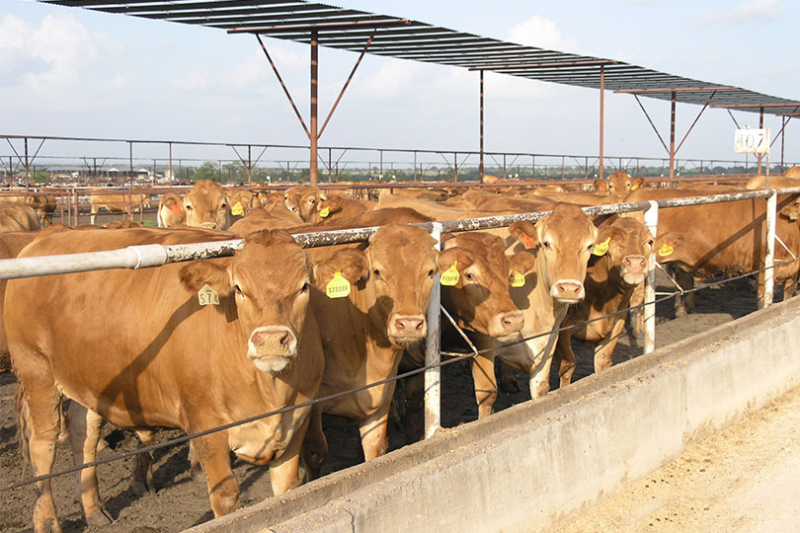
Fischer told the USDA Ag Outlook Forum feedlots have been managing throughput in order to utilize pen space and absorb pen costs.
“Cattle are usually marketed at a much brisker pace from August through the end of the year, but that wasn’t the case this year,” Fischer said.
As a result of cattle staying on feed longer, cattle weights have increased, adding a layer of support to beef production.
“Right now, we’re looking at box beef cutout prices at historically elevated levels,” Fischer said. “They’ve added a layer of support and underpin fed steer prices and ultimately feeder steer prices as feedlots pay more for a dwindling supply of animals.”
Prices of boxed beef and fed cattle continue to rise as margins fluctuate between packers and feedlots.
“The USDA expects fed steer prices to remain elevated,” Fischer said.
In 2026, steer and heifer slaughter is expected to remain constrained by declining feedlot inventories.
Cow slaughter is also expected to fall, but at a lower rate, per McConnell’s report.
Cattle prices are forecast higher in 2026. Feeder cattle prices for 750-800 pound calves in 2026 are forecast to average $363 per hundredweight, up 13% from the 2025 average.
“Strong consumer demand for protein is expected to support prices in the livestock and poultry sectors, as fed cattle, hog, broiler and turkey prices are all expected to average higher in 2026 than in 2025,” McConnell wrote.
Leave A Comment