By Julie Tomascik
Editor
The U.S. Department of Agriculture (USDA) reopened another southern border port to cattle imports from Mexico as part of its phased approach to restoring livestock trade while protecting against New World screwworm (NWS).
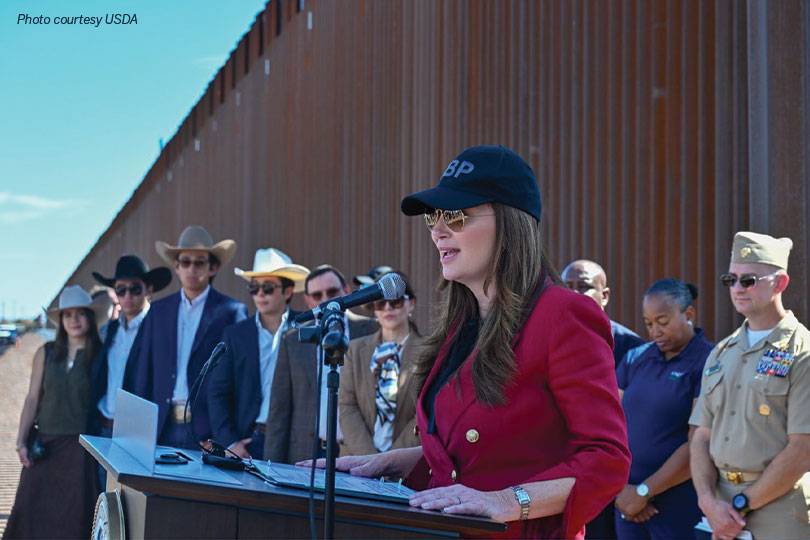
The Columbus, New Mexico, port of entry reopened Oct. 26. It’s the third border crossing to resume cattle imports following months of restrictions due to the spread of NWS in Mexico.
“It was great to be in Columbus today as our phased reopening of southern livestock ports continues, with strict safeguards in place to protect American livestock,” U.S. Secretary of Agriculture Brooke Rollins said in a post on X ahead of the reopening. “We will continue using every tool at our disposal to keep New World screwworm out of the United States and protect the livelihoods of our American ranchers.”
Under the updated import protocols, cattle from Mexico must undergo multiple inspections and meet animal health requirements before entering the U.S.
USDA’s Animal and Plant Health Inspection Service (APHIS) continues to evaluate animal health conditions and the effectiveness of prevention measures as additional ports reopen.
The agency also resumed imports of horses and other equines from Mexico through the Santa Teresa port Oct. 26. Equines must undergo inspections and treatment before export, followed by a seven-day quarantine at a USDA-approved facility on the U.S. side of the border.
Quarantine facilities on the Mexican side of the border remain closed.
USDA will evaluate the effectiveness of the updated safeguards at Santa Teresa before considering additional ports for equine imports.
The next port scheduled to reopen to cattle imports is Nogales, Arizona, on Nov. 30, pending favorable animal health conditions and completion of required inspection arrangements.
USDA previously reopened the Douglas, Arizona, port on Aug. 24 and the Santa Teresa, New Mexico, port on Sept. 24.
Federal and state officials continue efforts to control NWS in the U.S. and Mexico.
NWS larvae infest wounds and feed on the living tissue of warm-blooded animals, including livestock, wildlife and pets. Infestations can cause serious injury or death if left untreated.
Additional port reopening decisions will depend on animal health risks, operational readiness and the effectiveness of measures to prevent the spread of NWS.
More information on NWS and livestock import requirements is available at screwworm.gov.
Leave A Comment