
By Emmy Powell
Communications Specialist
Hot, dry weather is taking a toll on crops across the Texas South Plains.
Farmers are relying heavily on irrigation to keep crops growing, but weeks of high temperatures and little rainfall are testing those resources.
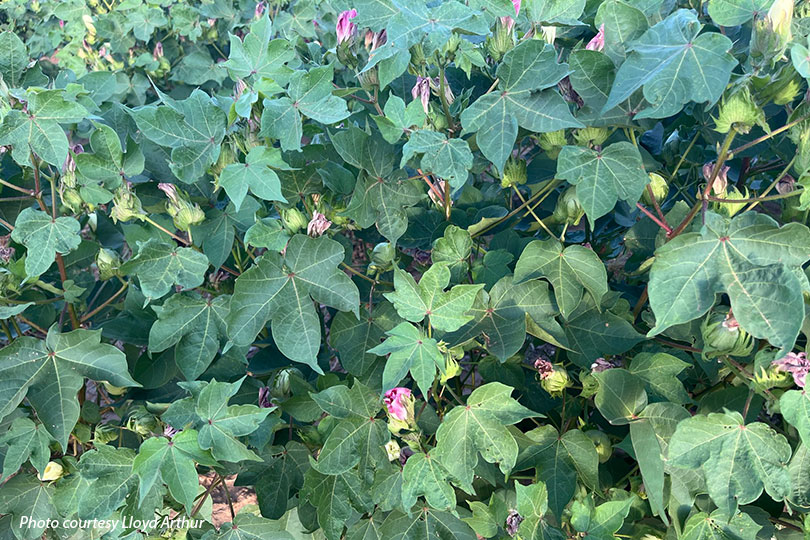
“We are in peak bloom with our irrigation,” Lloyd Arthur, a cotton farmer and Crosby County Farm Bureau member, said. “We’ve had tremendous heat since July, and we haven’t had any significant moisture since May during planting.”
According to the latest U.S. Drought Monitor, Crosby County is experiencing moderate drought. Severe to exceptional drought stretches across other parts of the Texas Panhandle and South Plains.
The conditions have been especially difficult for dryland cotton. Arthur said his dryland cotton crop is unlikely to be harvested. His irrigated cotton has held on better, but yield potential is declining.
“I believe right now in my immediate area, all the irrigated cotton will be harvested, but we are losing yield daily until we get a rainfall to help out,” he told the Texas Farm Bureau Radio Network.
Arthur said the area has received just over 5 inches of rain since Jan. 1. Most fell between mid-May and early June and helped farmers get cotton planted and established.
Rainfall has been limited since then, meaning irrigation has carried much of the crop through the summer. Arthur said his farm typically applies about 8 inches of irrigation water during the growing season. This year, some fields have already received 10 to 12 inches.
“It’s not too late to have some help from rainfall if it was to come along to finish out the crop,” Arthur said. “But we probably have at least another 20 days of irrigation if we don’t get rain, which is beginning to get expensive for the pumping cost.”
Those irrigation demands come as water levels in the Ogallala Aquifer continue to decline. Farmers have adopted improved water management practices to make better use of limited supplies.
“We’ve done better water management and techniques that we have learned and experienced through research that has helped us push our declining water more so that we can basically make as much or more with less,” he said.
Another dry year is adding to several years of difficult conditions. Arthur considers 2021 the last wet year in his area.
“We have been promised by the weatherman that El Niño is coming in, which usually gives us a wetter year, but we’re not seeing that until late fall into winter,” Arthur said. “Mother Nature is one of those issues that we have in farming that we have no control over. So, we just take it day by day.”
Leave A Comment