
By Shelby Shank
Field Editor
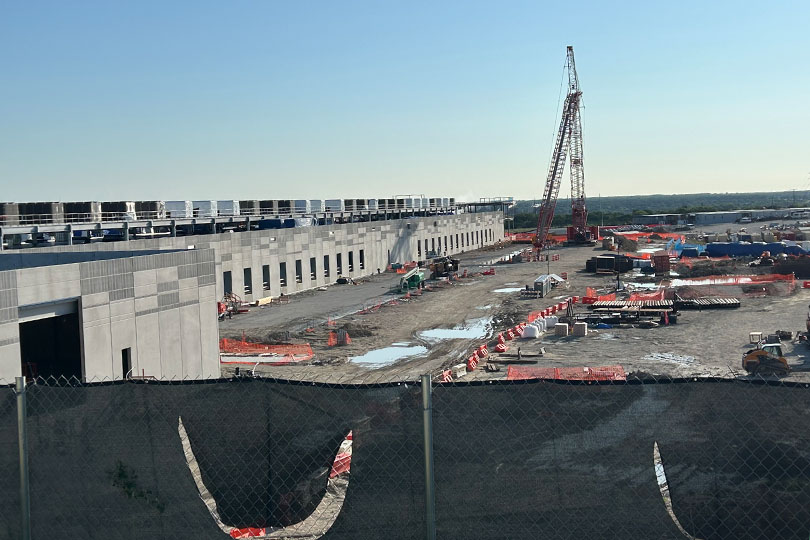
Texas is experiencing a surge in data center development, and Gov. Greg Abbott is directing state regulators to ensure the rapid expansion doesn’t come at the expense of homeowners, businesses and rural communities.
Abbott directed the Public Utility Commission of Texas (PUC) and the Electric Reliability Council of Texas (ERCOT) to take immediate steps to protect residential ratepayers from the costs of data center expansion.
“Data centers must operate in ways that reduce costs for residential electricity customers, do not drain water needed for our communities and take into consideration the needs of our neighborhoods,” Abbott said.
In a letter to PUC Chairman Thomas Gleeson and ERCOT CEO Pablo Vegas, Abbott directed the PUC to require date centers to fully fund the electric infrastructure necessary for their operations instead of shifting those costs to residential customers.
Abbott also instructed PUC and ERCOT to identify additional ways to protect residential and small business ratepayers. The agencies must submit recommendations to the governor by July 17 and begin taking steps to reduce residential ratepayers’ transmission costs by July 31.
He also said he’ll work with lawmakers in the next session to codify those protections, including requiring water-efficient cooling systems, better reporting of electricity and water use, phase out outdated tax incentives and adopt other practices that protect neighboring communities, such as setbacks and noise reduction.
Abbott has also taken a stronger stance on where future facilities should be located, calling for restriction on new data centers in rural communities.
“We must prohibit them from building AI data centers in rural Texas neighborhoods,” Abbott said. “Any AI data center even thinking about coming here, they must bring their own money, bring their own power, reuse their own water and do it in a way that reduces the cost of electricity for residents across our state.”
Many of those concerns were discussed during Texas Farm Bureau’s (TFB) Summer Conference, where State Rep. Ken King joined former U.S. Rep. Bill Flores, chair of ERCOT, and Will McAdams, president of McAdams Energy Group, for a panel discussion on the opportunities and challenges of data center development.
The conversation focused on concerns from farmers and ranchers, including electricity demand, water use, land conversion and the infrastructure needed to support the industry’s rapid growth across Texas.
King said the scale of proposed projects has grown far beyond what state officials anticipated a few years ago.
“PUC and ERCOT came to my office and said Texas needs to be prepared for maybe 10 additional gigawatts of power coming into the grid in the next five to 10 years,” King said. “Today, PUC and ERCOT are examining over 400 gigawatts of proposed new power.”
King said lawmakers must balance the economic opportunities created by data center development with protections for rural communities.
“Texas hasn’t seen this kind of financial development since the discovery of oil and gas,” he said.
Many communities still don’t have enough information about projects proposed in their area. “Data centers have done a horrible job explaining what they’re going to do in your community,” King said.
Texas is expected to become one of the nation’s leading destinations for new data center development.
That growth has been fueled in part by state incentives, including a sales tax exemption that, according to reports, exceeds $1 billion annually. Proponents argue the incentives attract investment and innovation, but questions remain about sustained impacts and the return for taxpayers and local communities.
“Currently, Virgina is ground zero for data centers, but Texas is quickly becoming ground zero,” King said. “If even 20% of what we’re talking about builds out, Texas will surpass Virginia on the number of data centers.”
McAdams said rural Texas is attractive to data center developers because of available land, access to natural gas, electric transmission and fewer development restrictions than urban areas.
“They look to rural Texas for freedom to fully develop their plans,” McAdams said. “They like rural Texas because they have the ability to build their own campus, their own complex and their own configuration.”
Many projects are expected to rely on a combination of onsite natural gas generation, renewable energy, battery storage and grid connections to meet their power needs.
Flores said Texas has significantly strengthened grid protections since Winter Storm Uri. Large industrial users, including data centers, are now expected to provide backup generation and reduce their power consumptions before residential customers experience outages.
Panelists noted that existing state agencies, including the Texas Commission on Environmental Quality and local groundwater conservation districts, already oversee wastewater discharges and groundwater withdrawals. Lawmakers continue exploring whether additional safeguards are needed as development expands.
Many counties and landowners have pushed for greater local authority over where data centers can be built.
A recent analysis by the Texas Tribune found nearly half of planned data centers in Texas are proposed for unincorporated areas, where county governments have limited authority over development, up from 12% now.
Similarly, public polling has shown that data centers are extremely unpopular amongst all Texans and especially those living in rural areas, nearly two-thirds of which opposed construction of the facilities in their community, according to a recent University of Texas/Texas Politics Project poll.
Several counties have considered moratoriums on new data centers, though Hill County reversed its decision after facing a $100 million lawsuit from a developer.
Cities have broader zoning power and are passing new regulations that attempt to keep large industrial facilities out. The city of San Marcos recently became the first to outright ban them.
Earlier this year, TFB submitted a letter to Lt. Gov. Dan Patrick and House Speaker Dustin Burrows outlining concerns over data center development and urging a balanced approach that protects agriculture, landowners and rural communities while supporting economic growth.
TFB also supports maintaining state oversight and regulatory authority over these facilities.
Leave A Comment