
By Julie Tomascik
Editor
Members of Texas Farm Bureau’s (TFB) Commodity Advisory Committees toured U.S. Department of Agriculture (USDA) facilities in the Rio Grande Valley to see firsthand how officials are working to combat New World screwworm and cattle fever ticks.
The group visited the screwworm dispersal facility, toured cattle fever tick research labs and saw where a new sterile fly production facility will be built. The visit provided insight into prevention, research and response efforts underway to protect the livestock industry.
The tour was coordinated by TFB and made possible through the organization’s relationship with USDA.
“These opportunities don’t happen without those connections,” Tracy Tomascik, TFB associate director of Commodity and Regulatory Activities, said. “It’s important our members can see this work firsthand, ask questions and understand how these programs protect their operations and the broader livestock industry.”
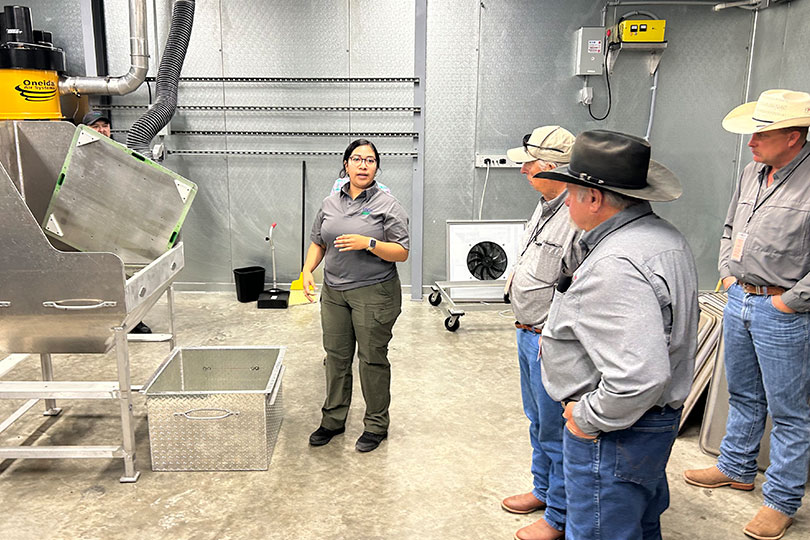
At the screwworm dispersal facility, members observed how sterile flies are received, processed and prepared for release.
“They’re getting flies in from Panama as pupae, dyeing them, hatching them and preparing them for release,” Rodney Kott, a Gillespie County rancher and chairman of TFB’s Sheep and Goat Commodity Advisory Committee, said. “The only really effective control for screwworm is releasing sterile flies.”
The flies are produced using the Sterile Insect Technique, which interrupts the pest’s life cycle when released. Sterilized male flies mate with wild females, but no viable offspring are produced, which leads to reduced populations over time.
Inside the facility, TFB members saw the process up close—from temperature-controlled storage rooms to hatching and marking the flies for tracking after release.
“They explained the entire process from the time the flies come in until they’re dispersed,” said Harriet Lamm, a Live Oak County rancher and member of TFB’s Animal Health Advisory Committee. “Actually seeing it makes a big difference. You can read about it, but when you see it, it really sticks.”
Members also viewed the site of a new sterile fly production facility that will expand domestic capacity and strengthen response efforts if the pest moves further north into the U.S.
Currently, all sterile New World screwworm flies are produced in Panama at a facility that’s jointly managed and funded between USDA and the Panama Ministry of Agriculture Development. Additional capacity is expected in the coming months from a renovated facility in Mexico, and the USDA facility in Texas will be completed in late 2027.
“You hear a lot of concern about what could happen,” Kott said. “After going through the tour, I feel more confident we’ll be able to stay on top of it.”
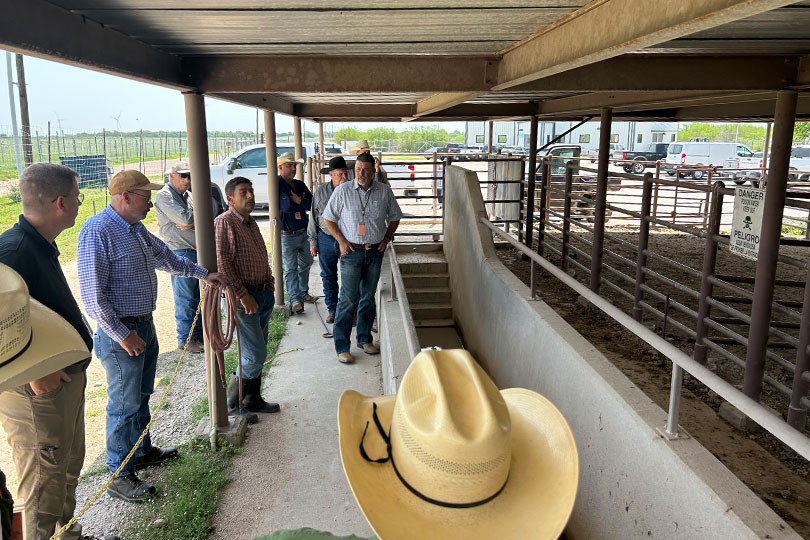
The group also toured USDA’s cattle fever tick research facility, where scientists study tick resistance, treatment options and how the pests interact with livestock and wildlife.
Researchers collect ticks from the field and test them to determine resistance to pesticides and guide treatment strategies for ranchers.
“They’re doing a lot of good research on cattle and wildlife,” Lamm said. “They can now identify resistance much quicker with new technology.”
Members walked through laboratories, animal handling facilities and test pastures where researchers evaluate how ticks spread and respond to different environments and treatments.
The research is critical as resistance to existing products continues to develop.
“If we’re going to continue to produce and stay profitable, we have to keep improving,” Kott said. “The only way we’ll develop new strategies is through research.”
Both pests pose serious risks for ranchers.
Screwworm infestations can quickly become fatal if left untreated, while fever ticks can spread disease and require ongoing management.
The tour highlighted the importance of early detection, rapid response and continued investment in research and infrastructure.
“These programs are critical to protecting animal health and our food supply,” Tomascik said. “And having informed members who understand the challenges and the solutions makes our organization stronger.”
Leave A Comment