
By Shelby Shank
Field Editor
For Richard Beyer, every decision on his Matagorda County farm now comes down to one question: Can he afford it?
Shrinking margins, volatile markets and rising input costs have pushed the row crop farmer into survival mode. Every dollar he spends on the farm is heavily scrutinized.
Beyer has farmed for 25 years, since he returned home after college.
“I grew up farming with my dad, and after college, I came back home and started my own operation,” Beyer said.
He’s seen a lot of changes over 25 years, but the last few have been especially challenging.
“We’ve really had to start scrutinizing every expenditure because of how tight the margins are,” Beyer said. “With the price of markets being so depleted, we really have to try to save where we can.”
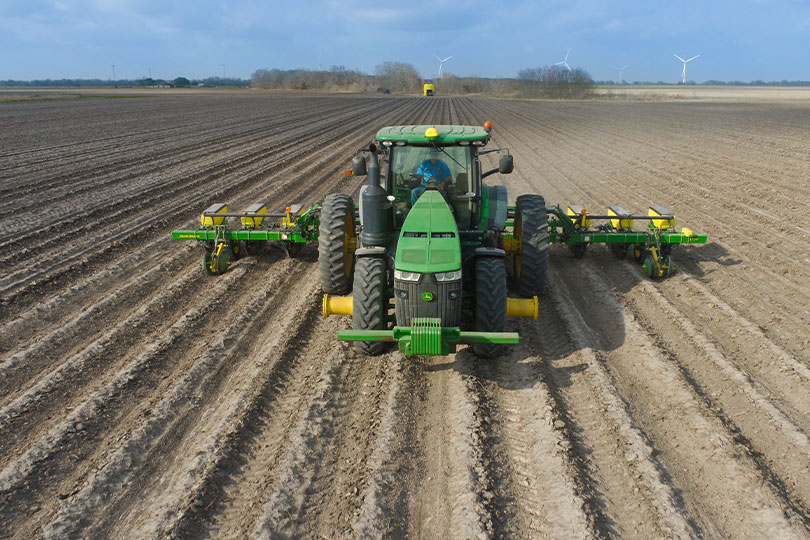
That financial pressure is especially evident when it comes to his farm equipment. Instead of upgrading machinery, Beyer has relied on repairs to keep older tractors running.
“It’s cheaper to make repairs than it is to upgrade the tractors right now,” he said. “We haven’t been able to upgrade our equipment in several years because it’s just not affordable. The cost of parts and supplies is astronomical right now, but you also can’t afford to buy anything new.”
Profitability, or the lack of it, remains Beyer’s biggest challenge. Market volatility has made it increasingly difficult to know when, or if, to sell his crops.
“Each day you wake up, and there’s so much volatility in the market, you don’t know if you should sell or not,” he said.
Rising input costs have only added to the strain. Since 2020, inflation has outpaced returns as the costs of seed, fertilizer, chemicals, fuel, equipment and labor have soared.
The only assistance Beyer has received has come through the U.S. Department of Agriculture and Farm Service Agency programs.
“Those payments helped us lower our debt load, paying off lines of credit and helping manage the interest from high interest rates,” he said. “But more comprehensive support is needed. Price support on commodities would make the biggest difference for us.”
Beyer noted the need for stronger trade agreements to help move surplus commodities, along with updated reference prices that better reflect today’s production costs. While inflation related legislation in the One Big Beautiful Bill increased some reference prices, farmers and ranchers are still operating under an outdated farm bill budget that no longer aligns with current expenses.
Despite the challenges, hope remains the driving force for Beyer.
“Farming gets in your blood. It really does. I know that sounds cliché, but that’s really what it is,” he said. “It’s the faith and hope of knowing that we’ve got some better days coming. We know the good work we’re doing matters. We’re helping feed and clothe the world.”
Leave A Comment