
By Emmy Powell
Communications Specialist
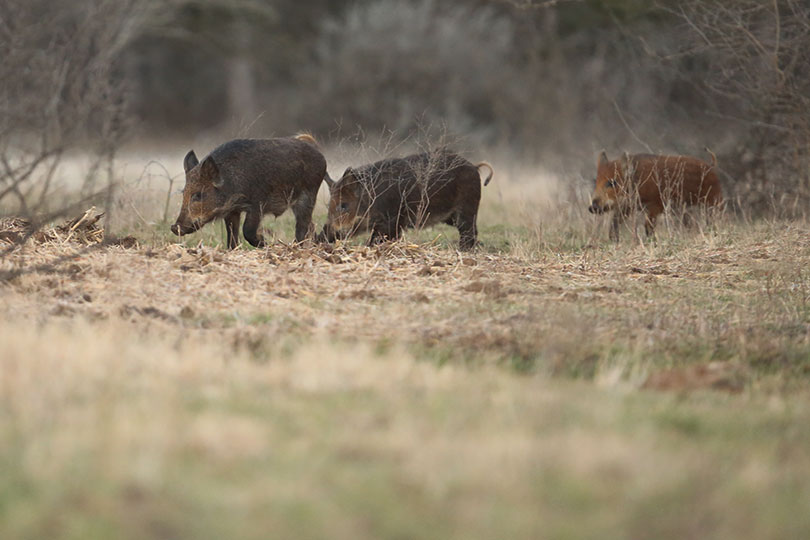
An invasive species that already costs Texas billions each year is now tied to an even greater threat. Feral hogs, with a population that continues to explode across the state, could play a role in the spread of New World screwworm, heightening concerns for livestock and wildlife.
They cause an estimated $1.6 billion in annual agricultural losses across 13 states.
“Feral hogs destroy crops and pastureland, but they also contaminate water sources and spread diseases and pests like African swine fever and eventually New World screwworm,” Tracy Tomascik, Texas Farm Bureau associate director of Commodity and Regulatory Activities, said.
In 2024, the feral hog population totaled 2.9 million in Texas alone. They are found in nearly all counties in the Lone Star State.
The National Feral Swine Damage Management Program and the National Wildlife Research Center estimate feral hogs cause about $85 million in livestock losses each year through predation, disease exposure, veterinary costs and reduced productivity.
The northward movement of the New World screwworm has intensified monitoring efforts along the U.S.-Mexico border as part of the U.S. Department of Agriculture’s five-pronged strategy. The pest has not been detected in Texas, but wildlife species like feral hogs could complicate containment if the parasite moves northward into the U.S.
“The feral hog problem goes far beyond nuisance,” Tomascik said. “They influence planting decisions, strain infrastructure and expose livestock to new risks. Adding the potential spread of screwworm only magnifies the threat.”
Feral hogs also pose broad ecological challenges by killing small livestock, damaging wildlife habitat, spreading invasive plants and disturbing water systems. Their intelligence and rapid reproduction make long-term control difficult.
“If screwworm were to gain a foothold in wildlife, including feral hogs, eradication would become exponentially harder,” Tomascik said.
Due to their invasive nature, a hunting license is not required in Texas to hunt feral swine on private property with landowner consent.
Federal eradication programs, state-led efforts and improved baiting and trapping tools remain critical to managing the escalating threat.
Leave A Comment