
By Emmy Powell
Communications Specialist
Texas ranchers are encouraged to scout pastures and hayfields for fall armyworms, which can quickly damage forage.
Cooler temperatures and rain events across the state in early October created favorable conditions for fall armyworm activity.
“Ranchers should check their pastures and hayfields regularly, especially after rainfall,” Tracy Tomascik, Texas Farm Bureau associate director of Commodity and Regulatory Activities, said. “Catching an infestation early can help ranchers determine the best course of action.”
Fall armyworms are most active during the late evening and early morning, as well as during cool, cloudy weather. During hot days, the larvae may hide low in the plant canopy, beneath fallen leaves or near the soil surface.
Ranchers can check for armyworms by walking through fields and inspecting the grass and surrounding vegetation.
Frequent scouting is important because armyworms can consume large amounts of forage as they approach maturity.
“Armyworms can be difficult to spot when they’re small, but they consume more forage as they grow,” Tomascik said. “That’s why it’s important for ranchers to check their fields regularly rather than wait until they notice visible damage.”
Management decisions depend on the severity of the infestation, the stage of forage growth and the value of the crop.
In some situations, more than two to three armyworms per square foot, each measuring at least one-half inch long, may warrant insecticide treatment. If hay is near harvest, cutting early may be an alternative. Ranchers should follow all pesticide label instructions.
“Ranchers should evaluate each situation and determine what makes the most sense for their operation,” Tomascik said. “Identifying an infestation early and understanding the available management options can help limit forage losses.”
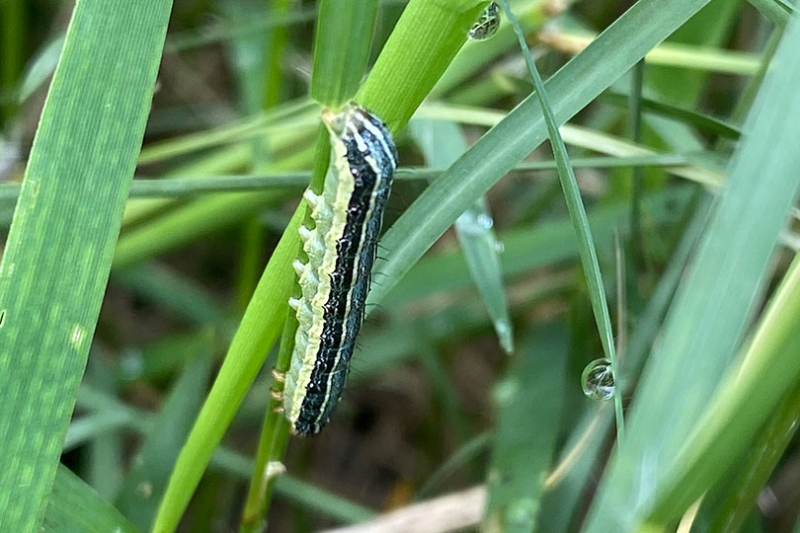
Fall armyworm larvae are green, brown or black with light-colored stripes and a white, inverted Y-shaped marking on the head. The larvae are small when they hatch and may go unnoticed.
For more information, view Texas A&M AgriLife Extension’s Fall Armyworm Control in Pastures booklet.
Leave A Comment