
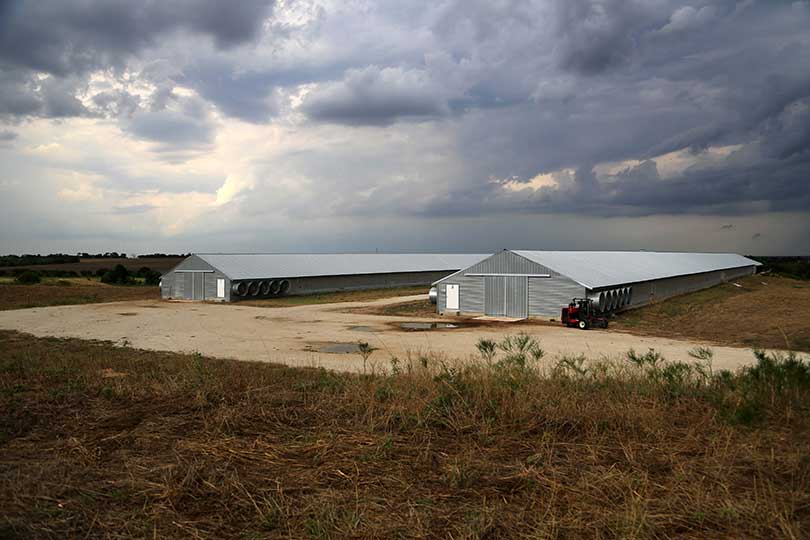
Chicken prices have fallen slightly since the highs in 2025, but Texas A&M AgriLife Extension Service experts say the trend may not last with slowing production, disease concerns and fertility challenges having a potential impact.
U.S. broiler production increased from 46.5 billion pounds in 2024 to 47.5 billion pounds in 2025 and is projected to reach 47.6 billion pounds this year. Production has already risen 3.5% since Jan. 1, but economists say lower prices could slow output moving forward.
AgriLife Extension economist and professor in the Texas A&M Department of Agricultural Economics, David Anderson, said chicken continues to benefit from strong consumer demand, especially as beef prices remain high and Americans seek more protein in their diets.
“Chicken remains a value relative to beef and continues to experience strong demand on the grocery and restaurant side,” Anderson said. “Chicken continues to benefit from creative products and ideas to expand its market share among proteins.”
Wholesale boneless, skinless chicken breast prices reached $2.77 per pound in mid-2025 before falling to $1.16 per pound by the end of the year. However, retail prices remain slightly higher.
The January Consumer Price Index showed chicken breasts averaging $4.17 per pound, compared to $3.97 a year earlier. Chicken legs averaged $1.74 per pound, down slightly from $1.79 last year.
While strong demand is supporting the market, potential production challenges remain.
The industry continues to closely monitor highly pathogenic avian influenza (HPAI), also known as bird flu, according to Greg Archer, AgriLife Extension poultry specialist and associate professor in the Department of Poultry Science.
Although biosecurity measures remain a top priority for farms, the disease continues to pose risks to poultry production.
“The industry is really pushing biosecurity to stay on top of the disease,” Archer said. “It’s a concern that isn’t going away, so the focus is limiting its impact on production.”
Archer said outbreaks among breeder flocks, which produce fertilized eggs for broiler hatcheries, could have the greatest impact. While broiler farms can recover relatively quickly, rebuilding breeder flocks can take more than a year, creating ripple effects throughout the supply chain.
Another concern for the poultry industry is declining fertility in breeder flocks.
Hatchability currently averages about 75%, meaning roughly nine out of every 12 eggs produce viable chicks. However, a 2025 Texas A&M AgriLife Research study shows fertility rates could decline to 60% by 2050.
With the U.S. producing more than 9 billion broilers annually, declining fertility would require significantly more eggs to maintain production levels.
“Fertility rates have been an issue, and avian influenza outbreaks are a threat that compounds the potential impact in a way that consumers would notice,” Archer said.
Anderson expects broiler production to slow later this year as market forces respond to lower prices. If production contracts, he said, prices will likely rise again.
“I expect to see some contraction, and that typically means prices will go higher,” Anderson said. “It will be interesting to see how beef, pork and other proteins trend as we get closer to grilling season, but it’s safe to say chicken will remain a value option in relation to beef.”
Leave A Comment