
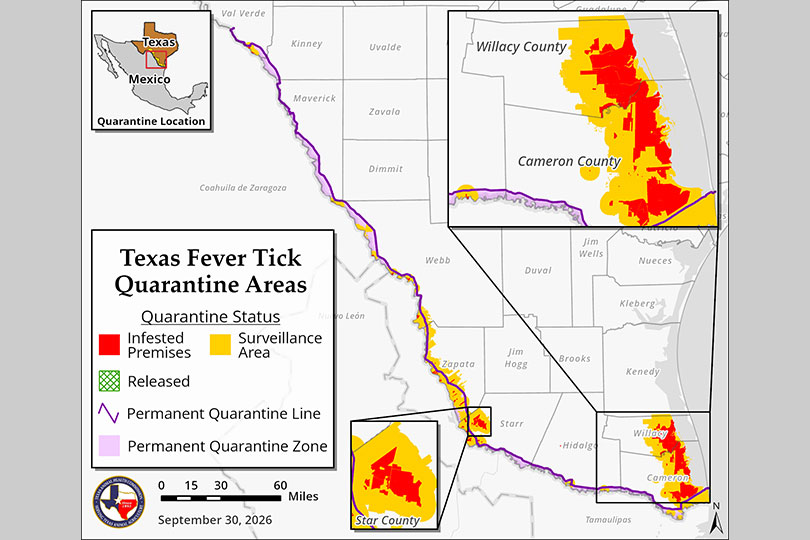
Texas hunters are being reminded of additional requirements in cattle fever tick quarantine zones as hunting season gets underway.
Landowners, wildlife property managers, lessees, hunters or anyone harvesting, relocating or capturing native or exotic free-ranging animals on a quarantined premises are required to arrange for inspection and treatment of these animals.
A representative from Texas Animal Health Commission (TAHC) or the U.S. Department of Agriculture (USDA) must inspect and treat carcasses, hides, capes or the animals themselves before they are removed from the premises.
“Cattle fever ticks are an ectoparasite that continue to pose a threat to livestock and wildlife in Texas,” Dr. Bud Dinges, TAHC executive director and state veterinarian, said. “We maintain a simple process for hunters to get an inspection before leaving a fever tick quarantine zone that helps protect the rest of Texas and the nation from these pests and the disease they spread.”
Currently, fever tick quarantines are established in Cameron, Starr, Val Verde, Maverick, Hidalgo, Webb, Willacy and Zapata counties.
Systematic quarantine areas that permanently serve as a buffer area for fever ticks must also continue to meet appropriate requirements.
Hunters are required to have the hides of the following animals tested if they’re harvested in a cattle fever tick quarantine area: white-tailed deer, nilgai, antelope, black buck, axis deer, red deer, gemsbok, aoudad, Texas Dall sheep and other exotics.
Cattle fever tick quarantine zones help prevent the unintentional transmission of ticks to uninfested areas, TAHC said. Before moving an animal carcass or other parts, such as hides, capes, or heads, from a quarantined premises, a permit must first be issued.
Once issued, the movement permit must accompany the shipment at all times. It is required to contact a county representative to get an inspection, carry out this process and obtain this permit for movement.
For more information about fever ticks, fever tick wildlife inspections and contact information to request TAHC and USDA wildlife inspections, visit tahc.texas.gov/animal_health/feverticks-pests.
Leave A Comment