
By Julie Tomascik
Editor
Invasive pests are damaging Texas crops, pastures and livestock, and those growing threats are prompting calls from Texas Farm Bureau (TFB) for continued research and coordinated control efforts.
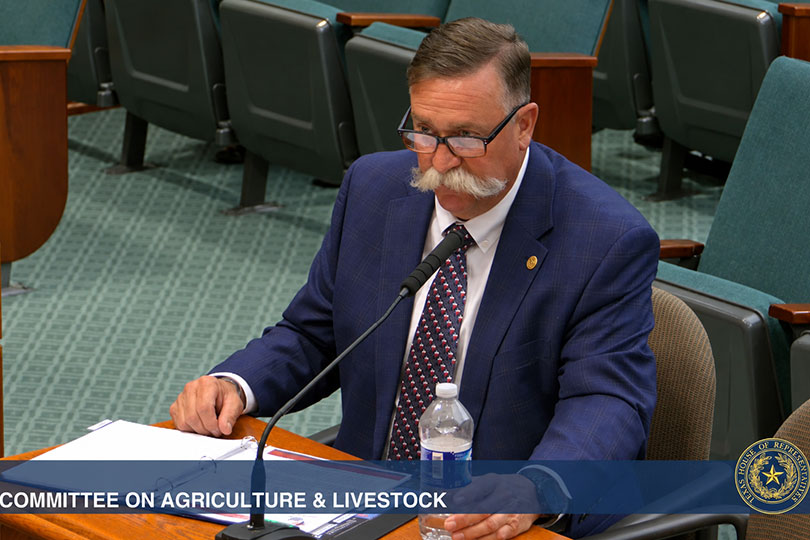
TFB District 4 State Director James Foster outlined the challenges facing farmers and ranchers during an Oct. 2 hearing of the Texas House Committee on Agriculture & Livestock.
Feral hog damage
Feral hogs remain the most economically damaging invasive animal species affecting Texas agriculture. They destroy crops and pastureland and damage fencing and water infrastructure.
Foster has experienced those losses firsthand.
“A sounder of hogs will destroy an entire field overnight, turning months of investment, time and labor into a significant financial loss,” Foster said. “Over the years, I’ve had to replant crops that have been destroyed by feral hogs. This year alone, they have destroyed about 40 acres of a 250-acre field that I grow corn on.”
In one year, feral hogs cost Foster more than $100,000 in damages and losses.
Farmers and ranchers across the state face similar losses, and TFB said a more coordinated approach is needed to reduce feral hog populations and prevent their spread.
“Feral hogs are a statewide problem that no single landowner, county or agency can solve alone,” Foster said.
The organization supports stronger enforcement of existing movement laws and dedicated funding for research, education, population control and eradication. TFB also supports a per-head assessment on the sale or processing of wild pigs as one potential funding source.
Pasture mealybug spreads
Pasture mealybug, first reported causing widespread pasture damage in 2025, has now been confirmed in more than 110 counties. The pest attacks Bermudagrass, bahiagrass, Johnsongrass, sorghum-sudangrass, bluestems and other grasses.
Infested grasses can become stunted and discolored as root systems weaken and forage production declines. Severe infestations can lead to pasture dieback.
Management options remain limited, with only two insecticides currently available for use. Researchers, Texas A&M AgriLife Extension specialists and industry partners are studying treatment options, natural enemies and whether some forage species are more tolerant to the pest.
Pests threaten rice, cotton crops
Rice and cotton farmers also face emerging insect threats.
Rice delphacid has spread throughout the Texas Rice Belt and caused significant yield losses. Texas rice farmers reported an estimated 17% yield loss across the main and ratoon crops. In many areas, the ratoon crop was a complete loss.
Two insecticides are available through Section 18 emergency exemptions to help manage the pest as researchers work toward longer-term solutions.
Cotton jassid has been detected on nursery plants and in Texas cotton fields. The insect can stunt plant growth and cause plants to prematurely shed fruiting structures, which leads to yield and quality losses.
“Early detection remains our best defense, and ensuring producers have access to effective management tools will be essential as these threats continue to evolve,” Foster said.
New World screwworm response
New World screwworm was first detected in Texas in June and remains a threat to livestock and wildlife. TFB supports continued investment in sterile fly production, research and treatment options to prevent the pest from becoming established.
“The sterile fly program successfully eliminated screwworm from the United States decades ago and remains the cornerstone of long-term control and eradication efforts,” Foster said.
He also highlighted the need for continued collaboration among livestock owners, veterinarians, researchers and state and federal agencies to respond quickly to detections and limit the pest’s impact.
Continued response needed
The range of invasive pests affecting Texas agriculture reinforces the need for continued surveillance, research and rapid response efforts, Foster said.
TFB supports continued collaboration among farmers and ranchers, researchers, Extension specialists and state and federal agencies to identify threats early and provide effective management tools.
Foster also testified on efforts to promote Texas agricultural products and expand market opportunities. He highlighted the beef checkoff and GO TEXAN program as tools to build demand and connect consumers with Texas agriculture.
Leave A Comment