
By Julie Tomascik
Editor
Texas farmers and ranchers met with congressional lawmakers and staff during the August recess to discuss challenges facing agriculture and the need for action in Washington, D.C.
“August recess meetings give farmers and ranchers an opportunity to talk about what is happening in agriculture and discuss those challenges with their members of Congress,” said Laramie Adams, associate director of Government Affairs for Texas Farm Bureau (TFB). “Those conversations help lawmakers better understand how federal policy decisions affect agriculture and rural communities.”
More than 30 meetings were held across the Lone Star State. County Farm Bureau leaders and members highlighted the current realities of farming and ranching, including rising input costs, low commodity prices and continued uncertainty surrounding farm policy.
Those economic pressures are tightening margins across agriculture. Fertilizer and other crop input costs remain elevated, while prices for many commodities have fallen from recent highs.
Farm Bureau members told lawmakers those conditions underscore the need for a strong farm safety net.
“Passing a new, five-year farm bill remains a priority for Farm Bureau,” Adams said. “Farmers need policies that provide some certainty and help give them the tools to manage risk. Hearing directly from our members puts a face and a story behind the numbers that lawmakers see in Washington.”
Labor challenges are adding to the financial strain for many farmers.
Members discussed the need for agricultural labor reform that provides access to a reliable workforce and addresses the rising costs and regulatory burdens associated with the H-2A guestworker program.
New and emerging pest threats are creating additional challenges, as well.
New World screwworm was detected in Texas in early June. Pasture mealybug was first identified in the state last year.
The New World screwworm outbreak has increased concerns about animal health and livestock movement. Ranchers stressed the need for continued federal resources for surveillance, sterile fly production and other eradication efforts.
Pasture mealybug infestations have damaged pastures in several areas of the state and led to reduced forage available for cattle and other livestock. Farmers and ranchers discussed the need for research and treatment options to help control the pest.
Market access is another part of the economic picture for Texas agriculture.
Exports provide an important market for many Texas agricultural commodities. Farmers and ranchers encouraged lawmakers to maintain existing trade relationships and pursue new opportunities for U.S. agricultural products.
The meetings also gave lawmakers opportunities to see some of those challenges firsthand.
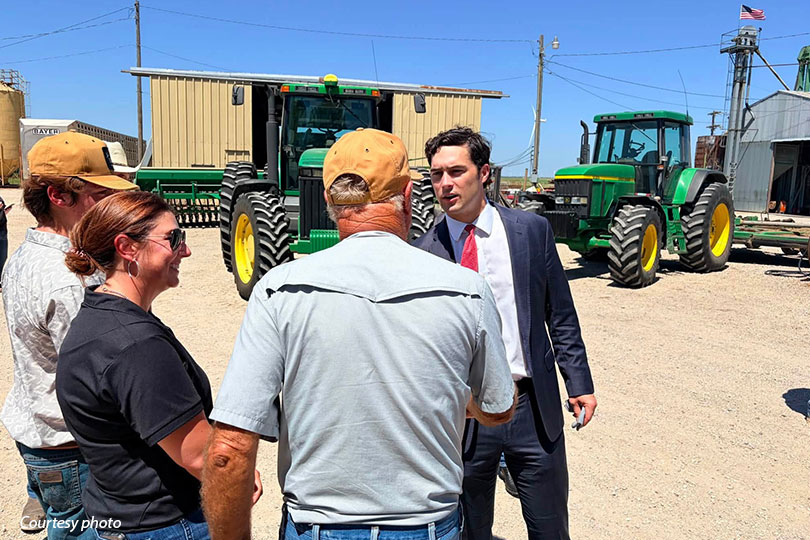
Cooke County Farm Bureau member Jared Bayer hosted U.S. Rep. Brandon Gill at his family’s farm during the recess.
“It’s an honor to have him out on our farm, and it makes you feel good that they are listening to their people, finding out what’s going on and letting us know what they’re doing to help,” Bayer said. “It gives them a better idea of what to address when they see firsthand what’s happening in agriculture.”
Adams said those conversations are an important part of TFB’s grassroots advocacy efforts.
“Our members are the best advocates for agriculture because they can explain how these issues affect their farms, their families and their communities,” Adams said. “These meetings build relationships with lawmakers and staff and ensure Texas agriculture has a voice when Congress returns to Washington.”
Leave A Comment