
By Julie Tomascik
Editor
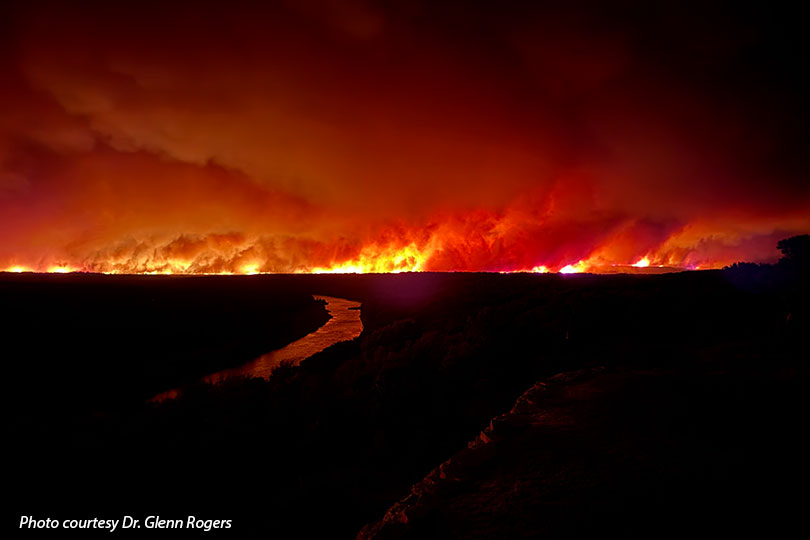
The Ross Fire continues to threaten farms, ranches and communities in Palo Pinto and Jack counties as firefighters work to contain the massive wildfire.
As of Sept. 1, the fire had burned 90,048 acres and was only 31% contained.
It began Aug. 24 in Palo Pinto County and has since become one of the largest wildfires recorded in North Texas.
Palo Pinto County rancher Dr. Glenn Rogers was preparing to board a flight when he learned about the fire. He returned home and spent much of the night moving cattle away from the flames.
By about 4 a.m., Rogers, his wife and daughter had to evacuate as the fire moved toward their home.
“We looked outside and they were coming directly toward us across the river,” Rogers said. “We didn’t get anything except our pets, and we just got out of there as quick as we could.”
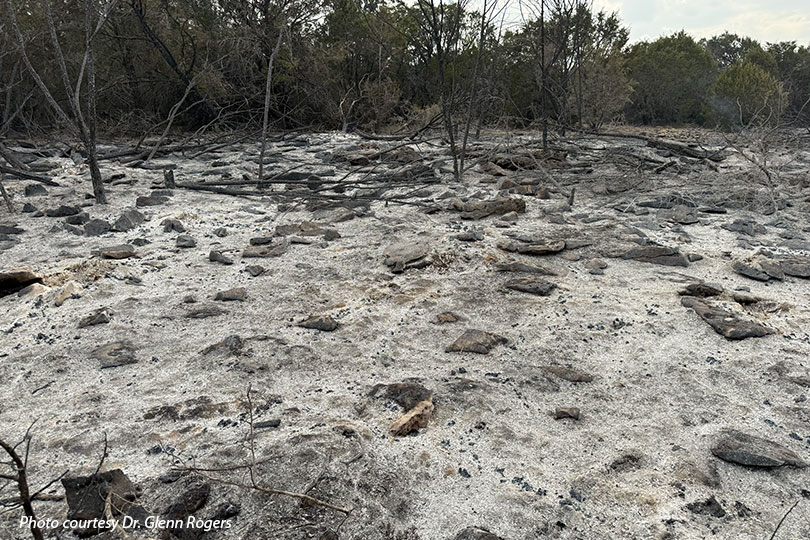
The family expected to return to find their home destroyed. Instead, the fire burned around it and left the house standing.
One of Rogers’ ranches burned completely, and several hundred acres burned at his home place. He lost one bull to smoke inhalation, but the rest of his cattle have been accounted for.
A group of 70 heifers also survived after finding refuge near a stock tank as fire swept through their pasture. Rogers said other ranchers in the area have lost cattle, horses and hay.
Fences also sustained extensive damage.
“We haven’t had a chance to get around and assess exactly how many miles we’re going to have to replace, but we know there’ll be a considerable amount of work to do to replace those fences,” Rogers told the Texas Farm Bureau Radio Network.
The wildfire followed a wet spring and early summer that produced abundant grass. Rainfall then stopped, and weeks of triple-digit heat dried out the vegetation.
“We had very good growing conditions and then suddenly have all the tall, dead grass that’s perfect for one of these wildfires to set in,” Rogers said.
Rogers, a Palo Pinto County Farm Bureau member and past county president, said support has poured into the affected communities. People have offered hay, equipment and their time to help ranchers recover.
Local volunteer fire departments, he noted, will also need support after the fire is contained.
“These kind of events are hard on fire equipment,” Rogers said. “And after this is all done and people have forgotten about it, that equipment has to be repaired.”
Rogers and other ranchers are still watching the fire and hoping for rain.
“We’re still seeing a number of fires popping up, and we expect to see that until it rains,” he said.
Leave A Comment