
Texas’ forest industry continues to provide a significant boost to the state’s economy.
According to the latest data from Texas A&M Forest Service, the industry directly contributed $27.4 billion in economic output and supported more than 73,000 jobs in 2024.
“We’re a huge state that is home to eight of the 15 fastest-growing cities in the nation,” said Aaron Stottlemyer, head of the Forest Analytics Department at Texas A&M Forest Service. “That growth, and the need for housing in particular, places demand on the forest sector for wood construction materials.”
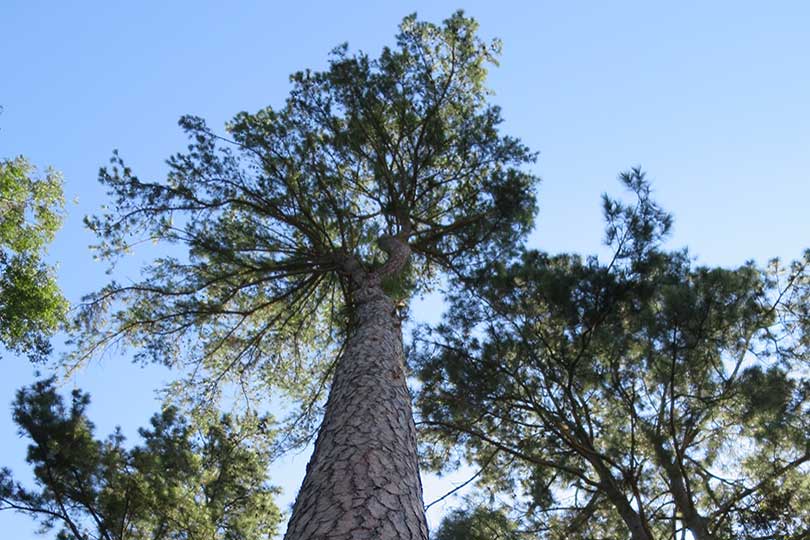
Texas has more than 55 million acres of forestland, but the state’s timber industry is concentrated on about 12 million acres of productive pine forests across 43 East Texas counties.
Harvested timber consistently ranks among Texas’ top 10 agricultural commodities by value.
About 85 sawmills across the state transform raw timber into lumber, plywood and oriented strand board. Texas is also a top producer of wood panels, according to Stottlemyer.
But the Texas forest industry extends well beyond lumber and other building materials. Secondary manufacturers use wood pulp to produce paper, paperboard and other value-added wood products. This sector helps provide stability when fluctuations in the housing market that affect demand for solid wood products like lumber and panel.
“These secondary manufacturers take wood pulp and turn it into value-added products like paper and paperboard products,” he said. “Those companies comprise a huge market share of the Texas forest sector.”
Secondary manufacturing accounts for more than 65% of the state’s forest sector economy.
International trade provides another important market for Texas forest products. In 2024, the state’s international forest product exports totaled $2.1 billion, with Mexico and Canada serving as the largest trading partners.
Much of the timber supporting the industry comes from private landowners. More than 90% of East Texas timberland is privately owned, and family forest owners manage nearly 60% of those acres.
Those landowners face several challenges despite the overall strength of the industry.
Unlike many agricultural commodities, timber requires a long-term investment. Trees often take 20 to 30 years to reach harvest, although forest management practices such as thinning can provide periodic income while improving overall forest health.
Oversupply of small-diameter pine trees and a shrinking market for those products following the closure of pulp and paper mills Adds to the economic pressure.
“An issue across the entire nation is an oversupply of small-diameter pine trees and lack of new markets,” he said. “We’ve seen an unprecedented closure of pulp and paper mills across the South, and we’re not seeing investments in new facilities or manufacturers to take the place of those that we’ve lost.”
The imbalance is significant. East Texas forests are growing nearly 300% more wood volume than is harvested annually.
Smaller family forest owners also face economic hurdles because harvesting contractors often require a minimum acreage before moving equipment to a property, making it more difficult for owners of smaller tracts to market their timber.
New markets could help create additional demand. Texas A&M Forest Service is exploring opportunities for forest products in biochar, sustainable aviation fuel produced from forest biomass, renewable energy products and carbon markets.
In addition to supplying wood products, Texas forests provide important environmental benefits, including wildlife habitat, recreation, carbon storage and improved air and water quality AgriLife experts noted.
“We cannot talk about water without talking about forests and what the forestry sector does in terms of ensuring that the citizens of our state continue to have access to clean drinking water,” Stottlemyer said.
As the state’s population continues to grow, the combination of strong wood product demand, innovative markets and sustainable forest management is expected to keep Texas’ forest industry an important part of the state’s agricultural economy for years to come.
Leave A Comment