
By Emmy Powell
Communications Specialist
Texas farmers and ranchers are urged to remain vigilant as pasture mealybug continues to spread. The pest poses a growing threat to hay production and grazing pastures across the state.
According to Texas A&M AgriLife Extension, the invasive pest, first confirmed in Texas last year, has now been identified in 70 counties, and researchers believe its range is likely more widespread than current reports indicate.
“Pasture mealybug is still a relatively new pest for Texas, but we’re already seeing the damage it can cause,” Brant Wilbourn, Texas Farm Bureau associate director of Commodity and Regulatory Activities, said. “Awareness is one of the best tools producers have right now. The earlier an infestation is identified, the better prepared farmers and ranchers can be to monitor their fields and work with specialists.”
Pasture mealybugs are associated with “pasture dieback”, which causes grasses to yellow or turn reddish before eventually dying.
The insects feed by sucking sap from grasses while injecting toxins into the plant, which weakens it and makes it more susceptible to disease. Even low populations of the pest can lead to significant pasture decline under favorable conditions.
AgriLife researchers have documented damage in Bermudagrass, Bahia grass, Johnsongrass, hay grazer, several bluestem species and St. Augustine grass. They believe, however, the pest’s host range is likely much broader.
Broadleaf forage species, such as legumes and brassicas, are not affected.
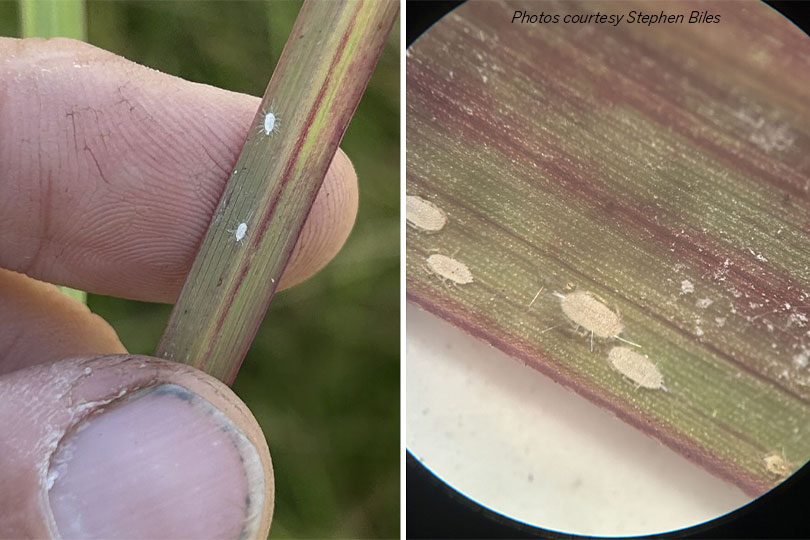
Pasture mealybugs are small, white, waxy insects that are easiest to spot on grass blades during the spring before populations reach damaging levels.
The pests may also be found around the base of plants, in the soil, beneath thatch or underneath dried cow patties. Farmers and ranchers should pay close attention to areas where grass appears yellowed, reddened or stunted despite adequate rainfall.
“Healthy forage is the foundation of many livestock operations,” Wilbourn said. “When producers begin losing productive pasture or hay acreage, those losses can quickly impact both forage supplies and input costs.”
AgriLife experts note there are currently no proven insecticides specifically labeled to effectively control pasture mealybug in Texas. There is one product, Sefina, labeled that shows some ability to suppress smaller populations. An emergency use exemption has been submitted to EPA to allow the use of Centric to help control the population in infested areas.
Researchers are evaluating potential control options, but current recommendations focus on careful scouting, reducing the movement of the pest and maintaining good pasture management practices. Studies also suggest cleaning equipment before moving between fields may help reduce the spread of infestations.
The pest may spread through wind, contaminated machinery, livestock and even clothing, making biosecurity an important consideration for producers working in affected areas.
“While researchers continue looking for effective management tools, farmers and ranchers can make a difference by regularly scouting their fields and reporting suspected infestations,” Wilbourn said. “Every report helps researchers better understand where this pest is occurring and how it is spreading.”
If pasture mealybugs are found in a pasture, contact the local Extension office or one of the state’s pasture mealybug specialists: Stephen Biles, Danielle Sekula, José Santiago-González or David Kerns.
If pasture mealybugs are found infesting turf, contact Caixing Xiong.
Scientists are actively working to better understand the pest’s distribution, evaluate management strategies and identify effective control options.
For more information about pasture mealybugs, reference this fact sheet.
Leave A Comment