
By Julie Tomascik
Editor
Congress is considering legislation aimed at strengthening the nation’s response to New World screwworm. Texas Farm Bureau District 1 State Director Jared Blankenship told a U.S. House subcommittee this week that coordination among federal agencies is critical to prevention and eradication efforts.
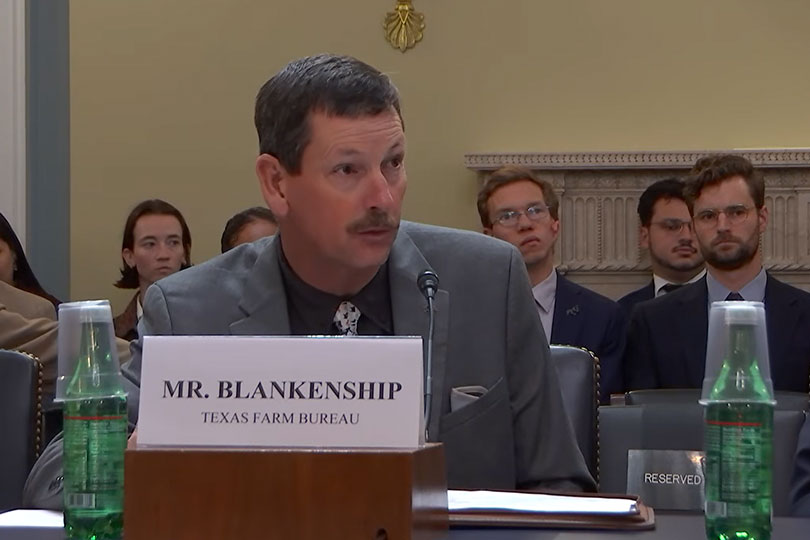
Blankenship testified Tuesday, July 21, before the U.S. House Natural Resources Committee’s Subcommittee on Water, Wildlife and Fisheries in support of the SAFE CATTLE Act. The bill, which was introduced by U.S. Rep. Ronny Jackson of Texas earlier this year, would establish a formal partnership between the U.S. Department of Agriculture (USDA) and the Department of the Interior to coordinate surveillance, prevention and eradication efforts on federal lands.
“By formalizing this partnership, Congress can strengthen our nation’s ability to detect, contain and eliminate New World screwworm before it becomes a larger threat to livestock, wildlife and rural communities,” Blankenship said.
The legislation would require USDA and the Department of the Interior to enter into a memorandum of understanding outlining each agency’s responsibilities for surveillance, prevention, control and eradication of New World screwworm in wildlife populations on federal lands. He said the formal partnership would improve communication and coordination between agencies while helping ensure resources are deployed quickly when new detections occur.
“The bill recognizes that USDA leads animal health efforts while the Department of the Interior manages wildlife and federal lands that can play an important role in prevention and eradication activities in wildlife,” he said.
The SAFE CATTLE Act brings the agencies together through a formal agreement, but it doesn’t create a new program or add unnecessary bureaucracy.
“Instead, it strengthens the framework for agencies already engaged in this effort,” Blankenship said. “It increases transparency to ensure Congress can provide responders with the resources they need to eliminate this devastating pest. Those are practical steps that will help protect producers moving forward.”
Texas confirmed its first New World screwworm case in nearly 60 years in June, prompting an aggressive response from state and federal officials. Since then, sterile fly releases, increased surveillance and movement restrictions have been implemented to help contain the pest and prevent its spread.
“Texas Farm Bureau believes the SAFE CATTLE Act is exactly the type of commonsense legislation Congress should support,” Blankenship said. “It reinforces the strong work already underway, clearly defines responsibilities and strengthens the tools available to those on the front lines of this effort.”
He noted the importance of continued investments in sterile fly production and dispersal, surveillance efforts and producer outreach to prevent the pest from becoming established in the United States.
“I want to recognize the outstanding work already being done by USDA Secretary Brooke Rollins, the Trump administration, state animal health officials and many industry partners,” he said. “Producers across Texas appreciate the leadership, resources and attention that have been devoted to addressing New World screwworm. The SAFE CATTLE Act builds on that momentum and helps ensure federal agencies remain focused on the shared goal of eradication.”
The bill was left pending by the committee.
Leave A Comment