
By Shelby Shank
Field Editor
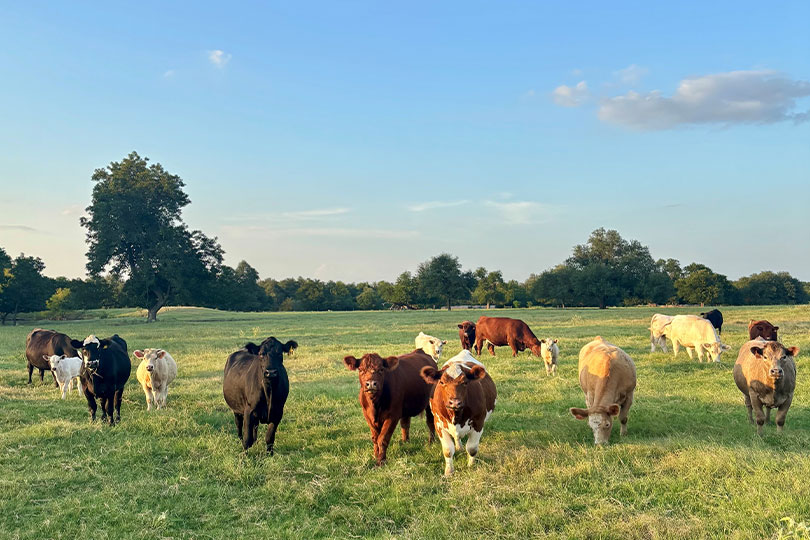
Texas pastures and rangeland remain in good shape well into summer thanks to abundant rainfall, but rising temperatures and humidity are increasing the risk of heat stress for livestock.
Additional rounds of heavy rain and localized flooding are forecast for parts of Texas this week, while other areas continue to contend with hot, dry conditions more typical of mid-summer.
The latest U.S. drought monitor map shows drought conditions have improved across large portions of East, Central and South Texas.
Since mid-May, drought coverage has decreased by 24%, with conditions improving by at least one category across much of Texas. Only about 0.5% of the state in the northeastern Panhandle remains in exceptional drought.
However, those improvements are expected to slow as Texas enters its hottest months. The National Weather Service’s seasonal drought outlook projects little additional improvement through September and anticipates drought expansion across portions of Central Texas.
“We’re in pretty decent shape across a big portion of the state,” Tracy Tomascik, Texas Farm Bureau (TFB) associate director of Commodity and Regulatory Activities, said. “We’ve benefited from some substantial rainfall events in late spring and early summer, and as a result, forage conditions are relatively good in regard to quantity.”
While pasture growth has been strong, forage quality varies depending on management.
“The quality is a little bit on the downside in pastures and hay meadows that were not harvested early on in the year,” he said. “The grass has gotten a little bit older and certainly a little lower in nutritional quality on average.”
The recent stretch of drier weather allowed many hay producers to make significant progress with harvest before another round of rain moved into the forecast.
“The recent stretch of drier weather allowed hay producers to make significant progress before additional rainfall arrived,” Tomascik said. “The heat and wind over the last couple of weeks really helped move the hay season into full swing.”
Conditions have also been favorable in West Texas, where earlier spring rainfall has supported forage growth.
The rainfall has also replenished stock tanks across Texas.
“We’ve benefited from a water surplus,” Tomascik said. “As we keep an eye on our livestock, one of our top priorities is to keep water available to them.”
Even with improved pastures and water supplies, prolonged heat can quickly become one of the biggest threats to livestock.
Heat stress occurs when cattle cannot dissipate enough body heat to maintain a normal body temperature. Environmental factors such as air temperature, humidity, solar radiation, wind speed and precipitation all contribute to the risk.
When the temperature and humidity index exceeds 80, cattle can experience heat stress. If evening temperatures remain above 70 degrees, cattle may struggle to cool off from the daytime heat accumulated from solar radiation or wind speed.
Effects of heat stress can lead to many harmful damages and impacts, even death, for cattle. Feed consumption will decrease, reducing growth or weight gain, and cattle will become restless in the heat.
It’s important for ranchers to be aware and to recognize symptoms of heat stress in livestock.
The first sign of heat stress is increased breathing, followed by panting and slobbering. As heat stress becomes more severe, cattle will begin to tremble and lose coordination.
To help prevent heat stress, ranchers should provide additional water sources and avoid handling, transporting or processing cattle except in the early morning hours.
“We’ve been fortunate to enter summer with improved forage and water supplies across much of the state, but ranchers can’t let their guard down when it comes to heat stress,” Tomascik said. “Providing plenty of cool water and access to shade for cattle during this intense heat is crucial in preventing heat stress.”
Leave A Comment