
By Jessica Domel
Multimedia Reporter
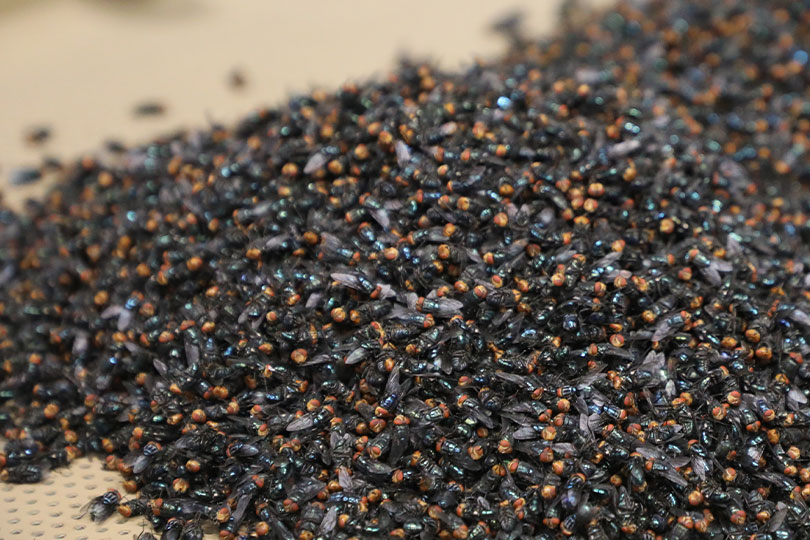
The number of sterile flies available to combat New World screwworm (NWS) in the United States is about to rise.
According to U.S. Secretary of Agriculture Brooke Rollins, a sterile fruit fly production facility that is being outfitted to create sterile NWS flies is expected to open soon.
“The Metapa facility was a fruit fly facility in Mexico that Mexico agreed to let us pay for (and) let us outfit. We started that last summer, and it’s ready this month,” Rollins told the U.S. Senate Committee on Agriculture, Nutrition and Forestry June 10. “That will be another 100 million flies (weekly) that are coming online. There’s a lot of movement and a lot of money that has been invested to prepare for this.”
The production facility is located in Metapa, Mexico, in the state of Chiapas near Mexico’s border with Guatemala.
The U.S. Department of Agriculture (USDA) invested $21 million in the renovation of the facility.
“We are using every single tool at our disposal,” Rollins said.
Once open, it will be the second NWS sterile fly production facility in the world.
“You need about 500 million sterile flies to eradicate,” Rollins said. “Once it was pushed past the Darien Gap back in the 60s and 70s, we stopped making the sterile flies. We got down to a hundred million in Panama.”
The Metapa facility is forecast to produce about 100 million sterile NWS flies each week.
A third facility is being constructed at Moore Air Base in the Rio Grande Valley of Texas to complement the recently-opened sterile fly dispersal facility at the same location.
“I said, ‘We’ve got to build our own facility in America that will produce between 300 and 400 million flies per week so that we never let this happen again,” Rollins said. “Understanding that it is a radiated facility, it normally takes a couple of years for permitting. (Secretary of War) Pete Hegseth and the Army Corps of Engineers permitted that facility in just 60 days, I believe. We shaved years off that timeline.”
That production facility is expected to open in 2027.
In the meantime, crews at Moore Air Base are currently dispersing flies flown in from Panama.
Using the Sterile Insect Technique, the sterile NWS flies are released into areas where the pest has been detected or is suspected to be present.
The sterile male flies mate with the wild female NWS flies, which only mate once in their roughly 21-day lifespan.
The resulting eggs do not hatch, helping reduce the overall NWS population.
It’s the same method that successfully pushed NWS to the biological barrier at the Darien Gap between Colombia and Panama decades ago.
Rollins said that barrier was breached in 2022 and put the U.S. in the situation it is in today with more than 15 confirmed NWS cases as of June 21.
“We know this development is a serious threat, but it did not catch us off-guard,” Rollins said. “We’ve established the 20-kilometer movement zone and expedited targeted release of sterile flies in the affected areas. We’ve increased trapping for flies along the border and ramping up surveillance.”
Since January 2025, Rollins said the administration has invested more than $1 billion to battle NWS.
“We have been forward leaning,” Rollins said.
She emphasized budget cuts have not impacted USDA’s NWS efforts.
“When we walked in the door in January 2025, the last USDA had an equivalent of 10 full-time employees working on the New World Screwworm,” Rollins said. “A week before it was even confirmed, we had over 110 full-time staff that we had staffed up over the last 15 months in preparation—almost a 1,000% increase in over a year in preparation. In short, we’re using every single tool at our disposal, working very closely with our governor, Gov. Greg Abbott, and all of the teams on the ground in Texas, in New Mexico and across this country.”
Leave A Comment