
By Jessica Domel
Multimedia Reporter
Now that the farm bill has made it through the U.S. House of Representatives, U.S. House Agriculture Committee Chairman Glenn “GT” Thompson (R-PA) is focusing on legislation to reform the H-2A agricultural guestworker visa program.
“We got Whole Milk for Healthy Kids.’ Then, of course, Farm Bill 1.0 passed last July, and Farm Bill 2.0 is now in the Senate,” Thompson said. “Year-round E15 passed out of the House, and we’re working on the workforce next.”
The chairman said he plans to release a discussion draft of legislation that will modernize the H-2A program and better meet agriculture’s year-round labor needs.
The bill, Thompson said, is based on recommendations from a bipartisan Agricultural Labor Working Group report.
As for the timing, Thompson said the draft will be released soon.
“We’re going to release it for one last discussion draft because I think it’s so important that you’re a part of this, but we’re not going to keep it open long, three weeks and then I’m going to bust my tail getting bipartisan signatures on it,” Thompson told TFB members in mid-May. “I’ve already worked with Jim Jordan (R-OH), who’s chairman of Judiciary. He’s looking forward to running the bill and getting it.”
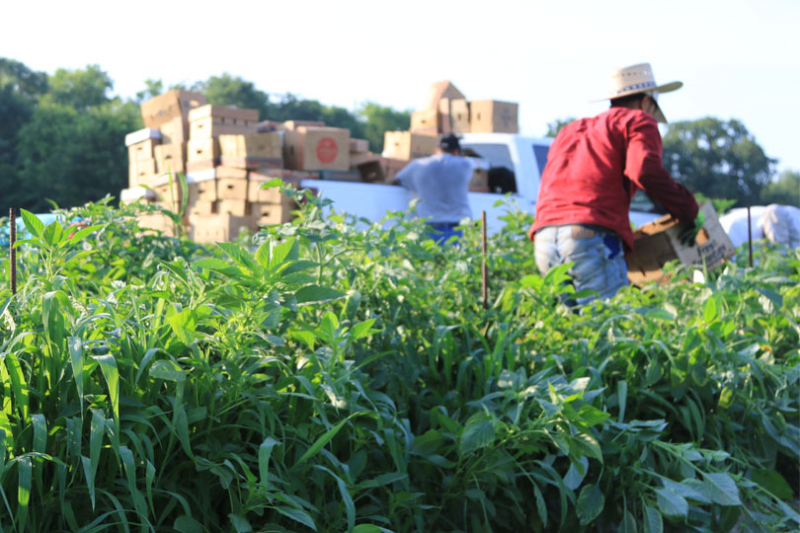
Addressing agricultural labor challenges remains a priority issue for Texas Farm Bureau (TFB). Demand for H-2A visas continues to increase as farmers and ranchers struggle to find a reliable workforce.
“Ag labor is continuous issue that has not been resolved. More and more of our Texans are using H-2A workers or the program simply because they can’t get workers through any other route, but nothing changes the fact that the program is flawed,” Laramie Adams, TFB associate director of Government Affairs, said. “It’s filled with red tape and bureaucracy. We have to make sure that that red tape is cut. It shouldn’t be this difficult. It’s something that has been talked about for over 30 years now.”
Thompson noted that if Congress is successful in passing ag labor legislation, it would mark the first major overhaul of the agricultural workforce system since the Reagan administration.
Leave A Comment