
By Jessica Domel
Multimedia Reporter
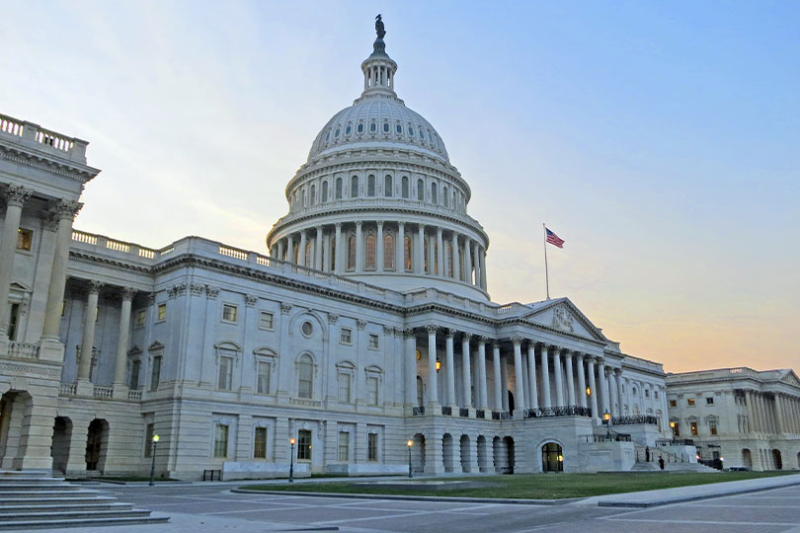
Nearly 300 Texas Farm Bureau (TFB) members are in Washington, D.C. this week meeting with lawmakers, their staff and cabinet officials about issues impacting agriculture.
It’s part of TFB’s annual National Affairs Awards Trip and comes as farmers and ranchers continue facing economic uncertainty, high input costs and delays in federal policy action.
A top priority for TFB members is passage of a modernized farm bill.
“They’re going to talk about the need to get the farm bill finished,” Laramie Adams, TFB associate director of Government Affairs told the Texas Farm Bureau Radio Network. “What was done in the Working Families Tax Cuts was very good for increasing the farm safety net and getting some of that done, but the job remains. Texas farmers and ranchers are still waiting at a time when input costs are extremely high and commodity prices are fluctuating, and in most cases, very low.”
Farmers and ranchers are operating under the third extension of the 2018 Farm Bill and urging them to support a full, five-year farm bill.
“We owe it to our farmers and ranchers to get a farm bill done,” Adams said. “Our almost 300 members who will be in Washington are going to be pushing that message very bluntly with their Congressional members, their staff and cabinet officials.”
The U.S. House of Representatives passed the House Ag Committee’s version of the farm bill in a 224-200 vote April 30.
The Senate Committee on Agriculture, Nutrition and Forestry is expected to release a framework of their version of a farm bill sometime in June.
TFB members will hear from the chair of both the House and Senate Ag Committees, U.S. Rep. Glenn “GT” Thompson (R-PA) and U.S. Sen. John Boozman (R-AR), Tuesday afternoon.
In addition to the farm bill, TFB members will discuss the current farm economy and the need for timely disaster and economic assistance.
“We’re going to be talking about input costs, and we’re hearing that there could be a supplemental coming together on weather disaster assistance and then also economic assistance,” Adams said. “We cannot stress enough how important it is to get assistance delivered before the end of the year. Honestly, it’s already too late, but our farmers and ranchers are patient people or they wouldn’t be in the business they’re in, but we owe it to them.”
Net farm income has fallen more than 30% below its 2022 peak.
Costs for fuel, fertilizer and other inputs have risen 30-70% since 2020, while commodity prices remain low.
More than 140,000 family farms nationwide were lost from 2017-2022, including nearly 18,000 in Texas.
“It’s not farmers’ and ranchers’ fault Congress has failed to pass a farm bill for over three years now,” Adams said. “They have been talking about the struggles they have been going through and have been put on the backburner. Enough is enough. We need our lawmakers to deliver on assistance because of their failure to get a farm bill passed.”
TFB members will also discuss the importance of prioritizing strong, enforceable trade agreements, addressing unfair trade practices and unfair non-tariff barriers, as well as expanding export opportunities for U.S. agricultural products.
The need for an updated agricultural labor program is also a priority.
“Ag labor is a continuous issue that has not been resolved. More and more of our Texans are using H-2A workers or the program simply because they can’t get workers through any other route, but nothing changes the fact that the program is flawed,” Adams said. “It’s filled with red tape and bureaucracy, and we have to make sure that red tape is cut.”
Thompson previously told TFB Radio Network he hopes to move ag labor legislation forward following House passage of the farm bill, including reforms to the H-2A guestworker visa program.
“It’s time for Congress to come together on some issues and quit being so divided and get to work on the issues the matter,” Adams said. “Ag labor is a major national food security issue. I saw a stat not long ago that there were hundreds of thousands of vacancies in the agriculture job force and they only had about 200 Americans apply.”
That highlights the need for a guestworker program that works for both ag laborers and farmers and ranchers, Adams noted.
The threat of New World screwworm entering Texas from Mexico is a key issue, as well.
“New World screwworm is something that we have to be talking about constantly because people need to know how serious of a threat it is to our state, our nation, our beef herd, livestock herd and also our wildlife community,” Adams said. “A lot of it for us at this stage is education, letting folks know that yes, we need to be alert but not alarmed on this and let the consumers know that their food is safe no matter what.”
TFB members will emphasize the need for continued funding for surveillance, prevention and rapid response programs, along with maintaining strong animal health provisions in the farm bill to protect U.S. livestock.
“We have to watch for animal threats like this continuously as they knock on our door, and we need to be vigilant and make sure we’re prepared,” Adams said.
While in D.C., the group will also hear from U.S. Secretary of Agriculture Brooke Rollins and Deputy Secretary of Agriculture Stephen Vaden.
TFB leaders say the annual visits help strengthen relationships with lawmakers and keep agricultural priorities at the forefront long after the trip ends.
Leave A Comment