
By Shelby Shank
Field Editor
Students from across Texas recently learned how wheat is transformed into flour during Texas Farm Bureau’s (TFB) Farm From School program.
Each month, kindergarten through fifth-grade students virtually “meet” with a farmer or rancher through Farm From School on a video conferencing app.
The final session of the spring semester focused on wheat milling, giving students a look at the journey from grain to a finished product.
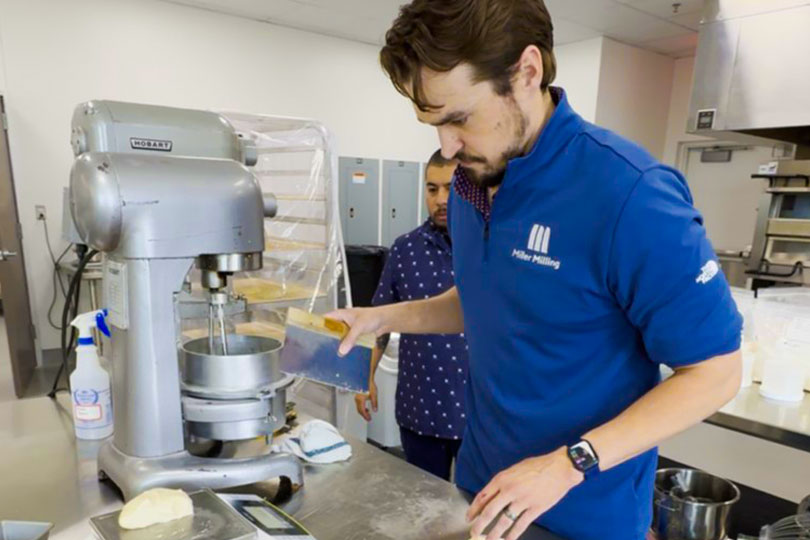
The session featured Carter Wands with Miller Milling Co. in Saginaw. He walked students through the wheat milling process and demonstrated how flour is used in baking.
Wands explained how wheat is classified and tested before milling.
“There are five different classes of wheat, such as hard red winter, hard red spring, soft white, soft red winter and durum,” Wands said. “And they’re all grown in different regions.”
Each class serves a different purpose. Durum wheat is commonly used for pasta, while hard red winter is a staple for bread making. Hard red spring is used for stronger baked goods like sourdough and pizza dough, and soft wheat varieties are often used for cakes, cookies and noodles.
Before milling begins, wheat samples are carefully tested using advanced technology.
“We have our WGA, which is an electronic machine that uses lasers to determine the protein of the wheat,” Wands said. “Once we have that information, we know how to properly mill our wheat samples.”
After testing, the wheat kernels are soaked overnight to soften them before going through roller mills, where flour is separated and collected.
Students also learned about the structure of a wheat kernel.
“There are three main components of a wheat kernel. The endosperm, bran and germ,” Wands said. “The endosperm makes up about 75% to 80% of the kernel and is where the flour comes from.”
Wands taught students about wheat’s versatility, noting protein levels determine how flour performs in baking.
Bread flour typically contains 10% to 12% protein, and stronger artisan breads range from 12% to 14%. Softer baked goods like cakes and cookies use wheat with 6% to 8% protein.
During the session, students saw the technology used to test flour performance through baking.
“We use mixing bowls, dough sheeters and even a tortilla press,” Wands said. “After mixing, the dough rests, is shaped and placed in a proofer with heat and humidity to help it rise before baking.”
Wands said one of his favorite parts of his job is the variety.
“Every day is different. We’re working with different wheat types, baking different products and interacting with customers across the country,” he said.
More information
This spring, K-5 classes also learned about onion production, peanut shelling and peaches.
Students in 6-12 learned about bull production in February, and the remaining session will focus on forestry.
Sign up for the fall 2026 program will open in June.
Visit texasfarmbureau.org/aitc for more information and the latest announcements on TFB’s Ag in the Classroom activities.
Leave A Comment