
By Shelby Shank
Field Editor
Warm temperatures and limited rainfall are shaping spring planting decisions for farmers across much of Texas, leaving many watching the forecast and hoping moisture arrives.
For Chad Hahn, a row crop farmer in Goliad County, planting season started under dry conditions that make every decision feel like a gamble.
“We had a little bit of rain a few weeks ago,” Hahn said. “But it’s always like that, where it should have been here sooner. Now, we’re scrambling, trying to get everything done.”
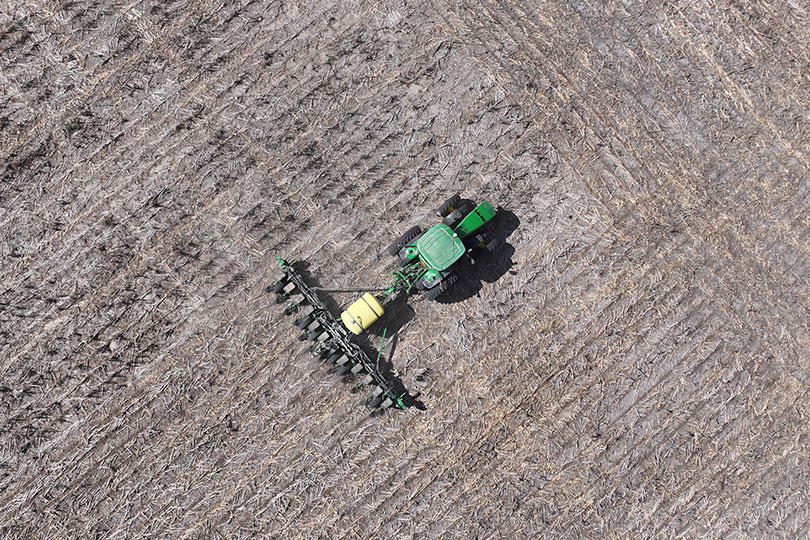
Hahn has been farming for three decades and for the last 25 years, he’s relied on no-till practices to help conserve moisture and maintain soil health.
The lack of rainfall, however, has made planting more difficult this year.
“It’s pretty dry on top,” Hahn said. “We’ve got some subsoil moisture, but a lot of the stubble hasn’t had any moisture since we harvested it.”
Like many farmers across South Texas, Hahn is hoping forecasted rain arrives soon.
Dry conditions have been a recurring challenge in recent years. Hahn said the past eight years have often felt like a cycle of extremes, between feast or famine.
“We’re always waiting on rain,” he said. “Sometimes we’ll make a decent crop off one good rain if the timing is right.”
That timing can make all the difference.
“Everybody is always wanting to plant earlier, but a couple of years ago, the best crop we ever had, the later it was planted, the better it did,” Hahn said. “It was just all about the timing.”
This spring, rainfall has been sparse. Hahn’s area received about a half inch of rain in late February—just enough to consider planting but not enough to feel confident.
“It was almost better if it didn’t rain at all or if we got two inches,” he said. “Half an inch is just enough to make you try something, but it doesn’t make you comfortable with the decision.”
The larger concern is the lack of subsoil moisture.
“There’s nothing deep to go on,” Hahn said. “We can plant, and it’ll come up. But how long is it going to last before it needs another rain? You just don’t know.”
Subsoil moisture acts as a reserve that crops can draw from during dry periods. Without it, young plants are more vulnerable if additional rain doesn’t arrive soon after emergence.
“You’re planting on faith,” Hahn said. “You’re hoping it comes up and that rain shows up when you need it.”
Though there is uncertainty, Hahn continues to plant each year in hopes that there will be something to harvest.
“Once you start doing something like this, it gets in your blood. You just can’t not do it,” he said.
For Hahn, planting represents the start of a long season where months of work lead to a single opportunity to harvest the crop.
“You work all year trying to get it there,” Hahn said. “Your whole income is based on that one plant and everything you do throughout the year to grow it. It’s a sense of accomplishment. You put in the effort all year long, and hopefully you get to harvest it in the end.”
Leave A Comment