
By Emmy Powell
Communications Specialist
Students across Texas learned how peanuts travel from the field to their favorite snacks during the March Farm From School program.
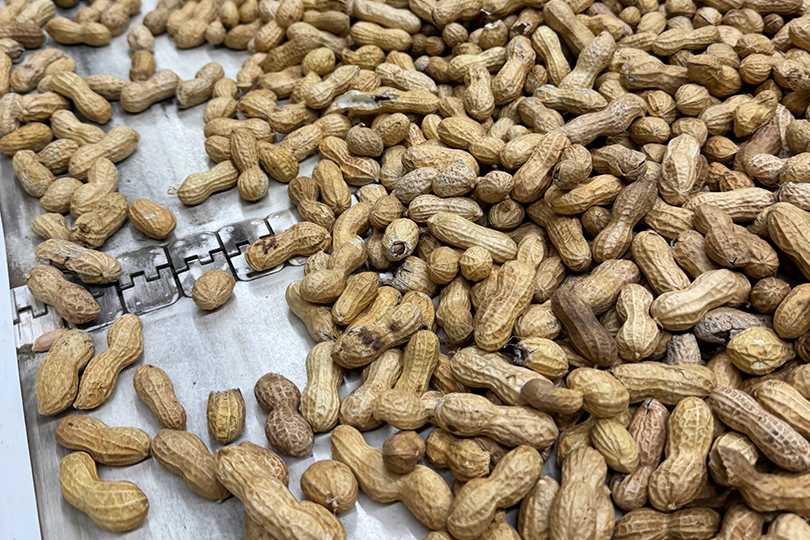
The virtual field trip featured a behind-the-scenes look at Trico Peanut, a peanut buying point and shelling facility, where students discovered the many steps required to clean, process and prepare peanuts for food products.
During the visit, Trico Peanut General Manager Pete Froesse explained to kindergarten through fifth grade classrooms that peanuts are unique compared to many other crops.
“The peanut actually grows in the ground,” he said. “It’s not really a nut. It’s actually a legume, which means it’s part of the bean family.”
Farmers plant seeds in the spring, and the plants grow throughout the summer. Then, peanuts are harvested in the fall in a two-step process. Farmers dig up the plants and then use specialized equipment to flip the plants upside down, so the peanuts can dry in the field before they are collected.
Once harvested, peanuts are transported to a buying point where they are weighed and graded. Representatives from the U.S. Department of Agriculture (USDA) collect samples from each load to evaluate quality and ensure the peanuts are safe for consumers.
“The USDA makes sure everything is fair for the farmer and the buyer,” he said. “They check the peanuts to make sure they’re good quality and safe to eat.”
Students also learned how peanuts are cleaned and processed inside the shelling facility.
Large machines remove sticks, rocks and other debris that may have been picked up during harvest, and specialized equipment removes the shells and sorts the peanuts by size.
The facility processes about 180 tons of peanuts each day.
“Everything that comes in from the field has to be cleaned up,” Froesse said. “Our job is to remove the rocks, sticks and other material so that when you open a bag of peanuts, all you see are the good peanuts.”
Students also learned that nearly every part of the peanut is used. Peanut shells can be used as livestock feed, while lower-grade peanuts may be crushed to produce peanut oil.
“The neat thing about peanuts is that nothing goes to waste. Everything we have is used for something,” Froesse said.
The visit concluded with a look inside a cold storage facility where peanuts are kept at cool temperatures to maintain quality and prevent pest infestations until they are shipped to companies that make peanut butter, candy and other peanut products.
“Our job is to keep the peanut just as good as the farmer made it,” he said. “We want to make sure when it reaches you, it’s still a great peanut.”
More information
This spring, K-5 classes will also virtually visit a peach orchard and a wheat mill in upcoming sessions.
Students in grades 6-12 learned about bull production in February, and the remaining session will focus on forestry in May.
Sign up for the fall 2026 program will open in June.
Visit texasfarmbureau.org/aitc for more information and the latest announcements on TFB’s Ag in the Classroom activities.
Leave A Comment