
By Shelby Shank
Field Editor
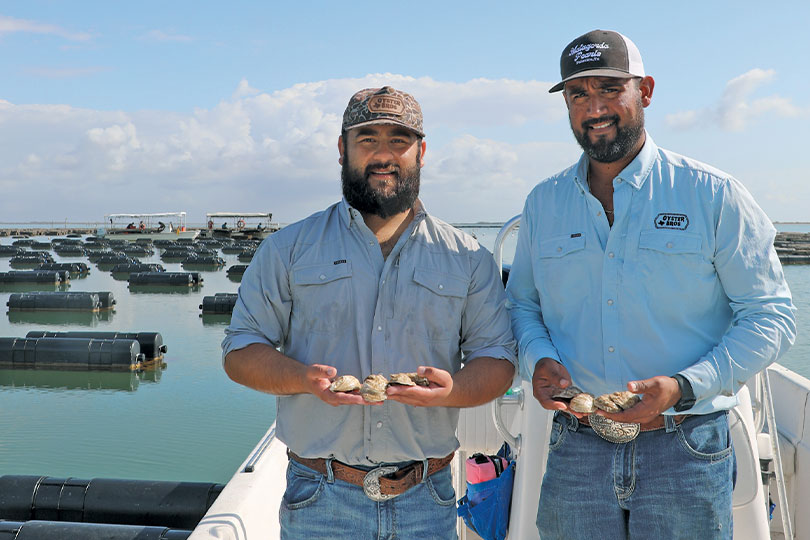
Boats line the harbor in Matagorda Bay where brothers David and Jacob Aparicio—like generations along the Gulf before them—are making their living from the water. Only this time, it’s with oysters.
In Palacios, the brothers are cultivating boutique, off-bottom oysters, helping steer a new chapter for Texas’ coastal seafood industry.
From shrimp boats to oysters
The brothers’ story begins not with oysters, but with shrimp.
“Our grandfather started shrimping in the ’70s when he purchased his first shrimp boat,” Jacob said. “He later purchased the fish house we still operate from today.”
Their father and uncles eventually took over the family fleet. But as imported shrimp undercut domestic prices, profit margins tightened across the Gulf.
“There wasn’t a lot of room for growth when we wanted to get into the business,” Jacob said.
Then, an unexpected opportunity surfaced: oyster mariculture, which is the farming of oysters in saltwater.
A new opportunity in Matagorda Bay
For decades, oyster farming wasn’t permitted in Texas. That changed in 2019 when lawmakers passed HB 1300, which officially authorized oyster mariculture in state waters. The law allowed producers to grow oysters in floating baskets instead of relying solely on harvesting wild oysters from public reefs.
Texas was the last coastal state to adopt mariculture, but its long shoreline offered opportunity.
Interest grew as chefs became more familiar with East Coast oysters and realized similar methods could work in Texas. The Gulf’s warm, nutrient-rich waters allow oysters to grow quickly, reaching a three-inch harvest size in seven to nine months, compared to years in colder regions.
For the Aparicio brothers, their background in shrimping gave them an advantage.
“Knowing our bay systems helped out a lot with the farm selection and where we picked our sites,” Jacob said.
The brothers started small with five acres and 500,000 oysters. Their operation eventually expanded to 12 acres, laying the foundation for one of Texas’ first oyster farms. Now, they grow about 4 million oysters a year, shipping them across Texas and throughout the U.S.
From seed to shuck
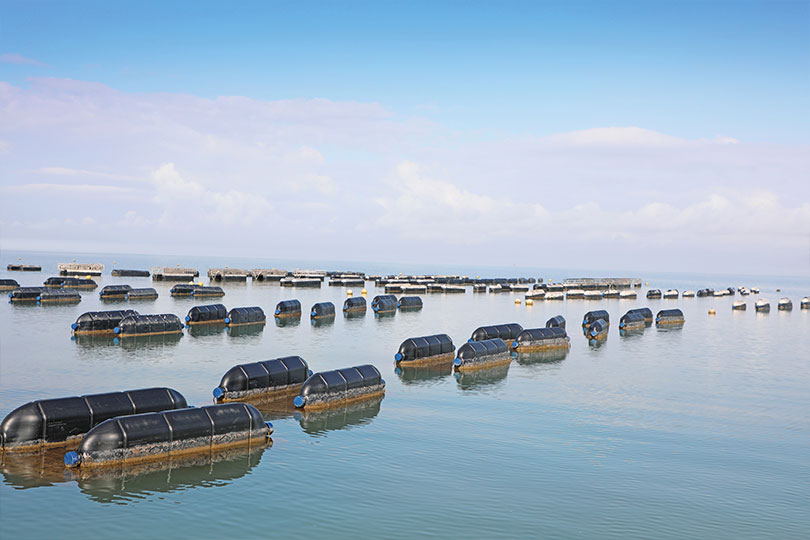
The Aparicio brothers selected their main farm site in Matagorda Bay for its natural protection from the wind and water flow, or “flush,” from the Gulf.
“You want very nutrient-rich water so your oysters will grow well and feed well,” David said.
Currents moving across the bay help balance salinity and deliver nutrients, allowing the oysters to thrive even through heavy rains or droughts.
The oysters begin in a hatchery, move to a nursery and then are placed in mesh bags inside floating baskets anchored to lines along the bay floor but suspended near the surface.
“They’re about the size of quinoa when we get them. Once they’re about the size of your pinky, they’re big enough they can survive in raw water,” Jacob said.
As the oysters grow, the brothers sort and grade them by size, dividing the crowded bags to give the oysters more room to grow.
They also “dry” the oysters by lifting the bags out of the water for short periods. This helps strengthen the abductor muscle, which keeps the shell closed.
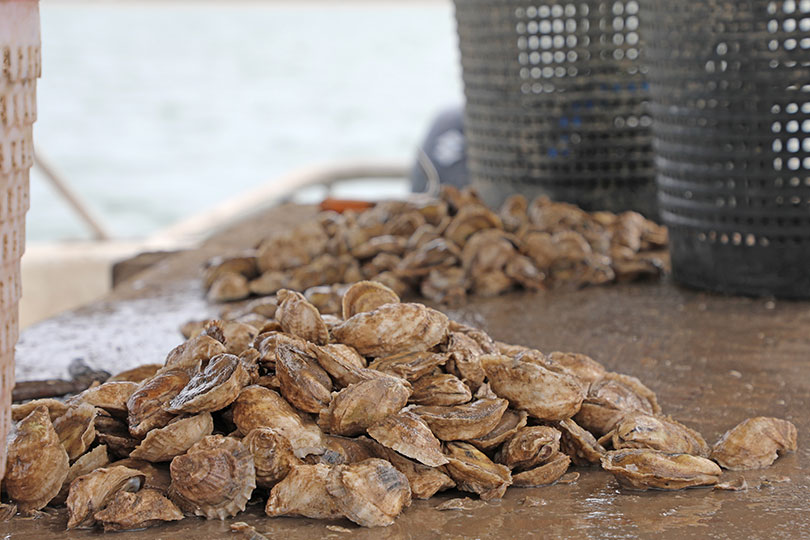
Harvest is done by hand. Oysters are selected based on size and shape for each order, placed on ice and transported back to the fish house or delivered directly to the customer.
“Growing our oysters the way we do allows us to handcraft and pick oysters for certain customers,” Jacob said.
Matagorda Pearl
Their signature oyster, the Matagorda Pearl, is named for its home in Matagorda Bay and reflects the unique character of Texas waters.
Slightly larger at two-and-a-half to three inches, these off-bottom oysters are cleaner, more deeply cupped and distinct from traditional dredged oysters.
Like wine, oysters reflect their environment.
“They’re all the same species, but an oyster from Matagorda Bay is going to taste different from Aransas Bay, Galveston Bay or even Louisiana and Alabama,” David said.
That difference is known as merroir—a take on the wine term terroir—shaped by salinity, water temperature and the natural minerals and algae in each bay.
“Oyster lovers can taste the flavor of the bay and the oyster liquor that it holds in it,” David said. “That’s how we have different brands of oysters, like how we came up with the Matagorda Pearl.”
Building a new legacy
What started in shrimp has evolved into something bigger—pioneering oyster farming in Texas.
When the Aparicio brothers stepped into oyster mariculture, few Texans had heard of it.
“Whenever we went into restaurants, nobody knew what oyster mariculture was,” David said. “There were some people who knew because the East has been doing it forever. But when they heard that Texas was doing it, they got interested.”
In many ways, they weren’t just building a business. They were helping introduce a new industry to the Texas coast.
“My favorite part is seeing our oysters reach customers’ hands and know it’s a Texas oyster we handcrafted ourselves,” David said.
Family has always been at the heart of their work. David and Jacob grew up on the water together and now work closely with their wives, uncles and cousins. Each of them brings something different to the business.
“We’ve built a really good thing here, but this is all for our kids to take over,” Jacob said. “If they don’t want to be oyster farmers, that’s fine, but at least we can support them in whatever journey they take.”
Do their oysters produce pearls too?