
By Julie Tomascik
Editor
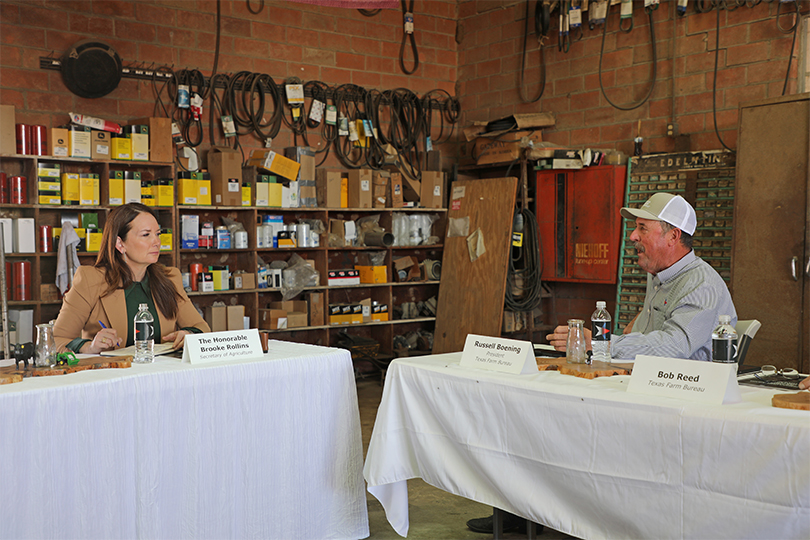
U.S. Secretary of Agriculture Brooke Rollins met with farmers and ranchers at Texas Farm Bureau President Russell Boening’s family farm this week to discuss agricultural challenges and the administration’s deregulation efforts.
The roundtable conversation focused on the struggling farm economy, trade, water, labor and regulatory concerns, as well as commodity-specific issues impacting Texas farmers.
“There’s always optimism in farm country, but there’s also a lot of anxiety and apprehension right now,” Boening said.
Farmers expressed appreciation for the U.S. Department of Agriculture’s (USDA) Farmer Bridge Assistance Program but emphasized continued financial strain as input costs remain elevated and commodity prices lag.
Trade was another major topic, with farmers stressing the importance of maintaining and expanding international markets.
Cotton farmers discussed the Buying American Cotton Act, which would provide a tax credit to the first U.S. entity that sells an eligible article in the U.S. in its final condition. The bill, they said, would give domestic cotton a competitive edge.
Farmers also highlighted the need for a financial incentive to take drought-stressed cotton to harvest and help ensure gins have cotton to process.
Rice growers emphasized the urgency of water shortages and warned that without reliable supplies, rice production along the Texas coast would continue to decline. South Texas farmers also voiced concerns about persistent drought and Mexico’s failure to fully meet its water delivery obligations under the 1944 Water Treaty.
Farmers pointed to staffing shortages at local Farm Service Agency offices and the need to ensure those offices are adequately staffed to assist with navigating disaster aid and farm programs.
During the visit, Rollins outlined the administration’s deregulatory agenda, including updates to the Waters of the U.S. rule to better reflect the U.S. Supreme Court’s Sackett decision and provide clearer definitions for farmers and ranchers.
“Overregulation is taxation by other means, and the thick rulebooks created by Washington bureaucrats often result in thinner harvests and higher costs, which take a toll on both farmers and consumers,” Rollins said. “In collaboration with other agencies, this agenda cuts red tape, frees up America’s farmland for unprecedented innovation and reduces costs at the checkout line.”
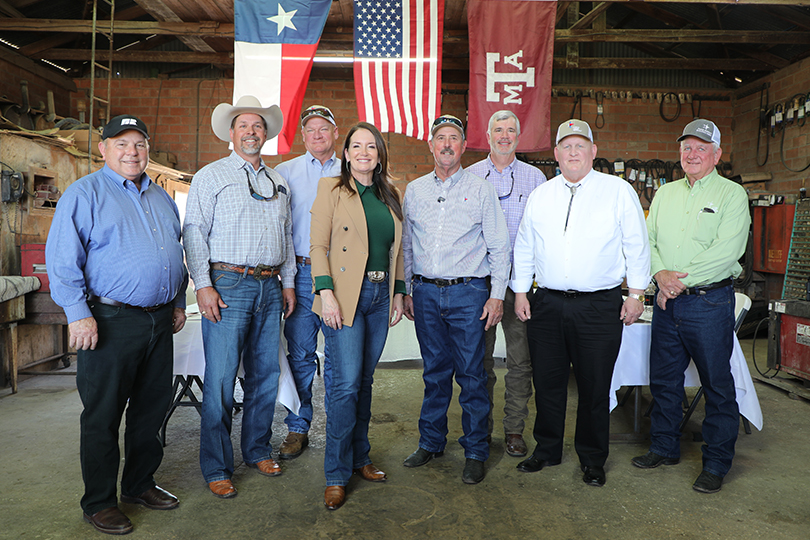
U.S. House Agriculture Committee Chairman Glenn “GT” Thompson also participated in the roundtable.
“Well, part of it’s because we’re using what God gave us, two ears and one mouth,” Thompson said. “To sit here and to be able to listen and to take those real life experiences that people are living with, the struggles that our farmers and ranchers are dealing with, I mean, I call that tripartisanship. I also call it legislating from the outside in, where this is where we really give birth to what is needed to be done from a policy perspective,” Thompson said. “We take it back to Washington versus doing something in Washington and never asking people out in farm country what they need.”
For Boening, hosting the secretary at his family’s dairy reinforced the value of connecting policymakers directly with farmers.
“It’s an honor. It’s a privilege to have her come down and visit with us,” Boening said. “Anytime you can sit down one-on-one and talk about the things affecting our farms and ranches, it goes a long way in strengthening those relationships.”
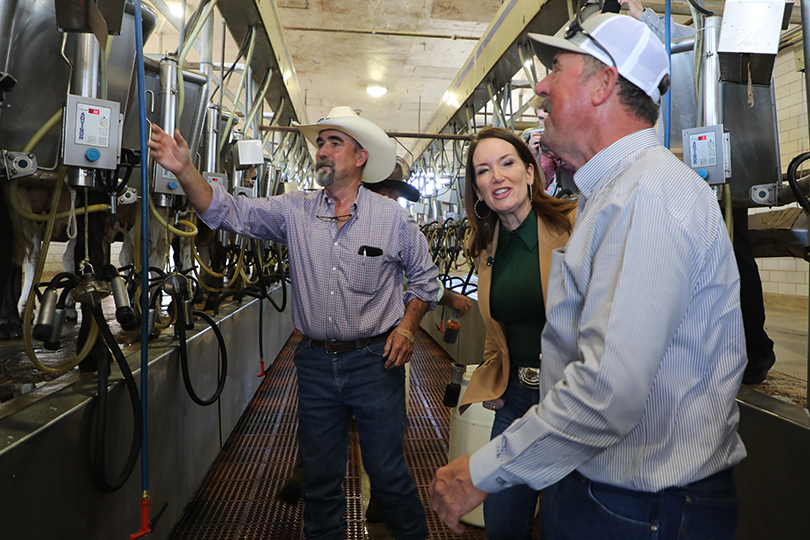
After the roundtable, Rollins toured the dairy and stepped into the milking parlor.
“She really hadn’t been in a dairy barn and actually had the opportunity to attach a milking machine to a cow,” Boening said. “She was quite excited to do it.”
The roundtable and tour were held Feb. 26 in South Texas.
Texas Farm Bureau members in attendance included TFB Secretary-Treasurer Brian Adamek and Bob Reed. The South Texas Cotton and Grain Association was represented by Jon Whatley and Matt Huie. American Farm Bureau Federation President Zippy Duvall also participated.
Leave A Comment