
By Shelby Shank
Field Editor
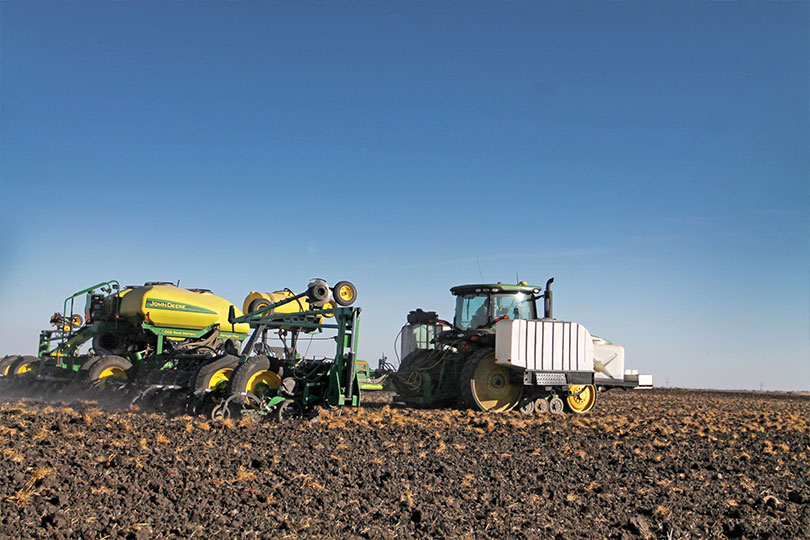
Texas row crop farmers are heading into planting season navigating early weather uncertainty, shifting price relationships in major commodities and ongoing economic pressure from high input costs.
The drier start is a stark contrast to last year’s wetter-than-normal conditions. La Niña conditions that have kept much of Texas warm and dry since last fall are expected to weaken by March, but dry conditions could continue into key planting periods across the state.
“Intensifying drought changes the outlook,” said Brant Wilbourn, Texas Farm Bureau associate director of Commodity and Regulatory Activities. “Farmers are coming into planting season with more uncertainty around moisture. That lack of rain and subsoil moisture increases the risk of lower yields and more volatile prices early in the marketing year.”
Farmers also face the challenge of rising input costs that continue to outpace market prices, tightening profit margins.
The pricing dynamics for cotton, corn, soybeans and wheat are expected to influence planting decisions and market behavior, especially in the Corn Belt and export-driven oilseed markets.
Corn remains the primary price driver for grain commodities and continues to shape planting decisions in the Midwest.
U.S. corn plantings reached about 98.8 million acres in 2025, an increase of more than 8 million acres from 2024. Markets will closely watch whether those acres shift toward soybeans as relative prices adjust.
“Soybean prices may strengthen in 2026 due to competitive returns and trade positioning,” Wilbourn said. “But global supply remains heavily influenced by Brazil, now the world’s largest soybean exporter and a key factor in U.S. soybean pricing.”
Although the U.S. accounts for just over 6% of global wheat production, it represents 11% of world wheat exports.
A smaller U.S. winter wheat crop could lend upward price support, though geopolitical developments could quickly alter that outlook, economists noted. If the war in Ukraine were to end, it could pressure global wheat prices to lower.
Overall, Wilbourn noted drought concerns, shifting planting decisions in the Midwest and global soybean and wheat markets are shaping the 2026 outlook for Texas farmers.
Leave A Comment